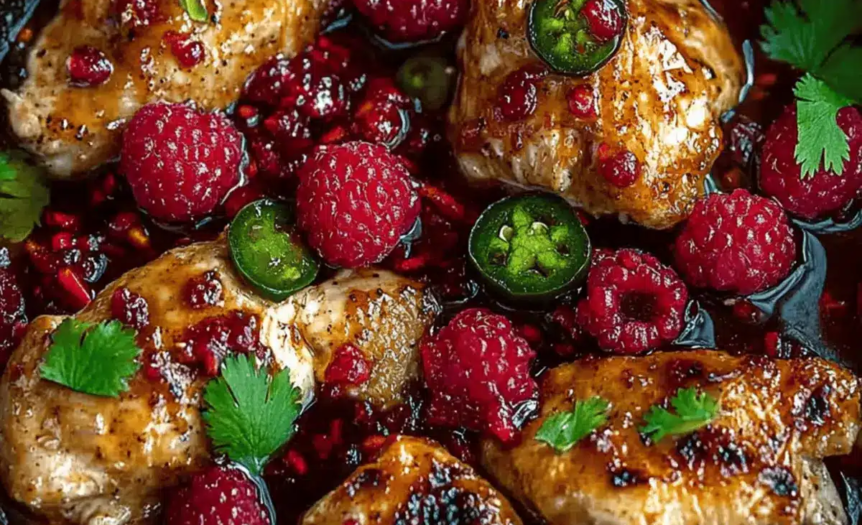
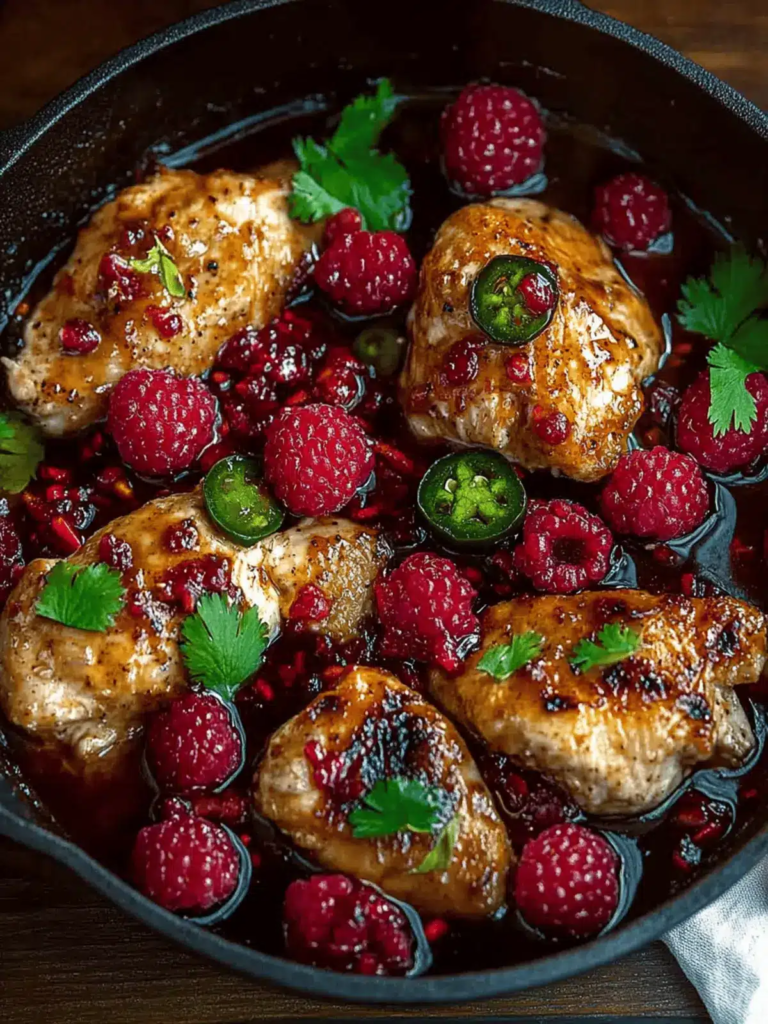
Sweet and Spicy Jalapeño Raspberry Chicken is a bold, single-pan dinner that balances the jammy sweetness of raspberry preserves with the bright heat of fresh jalapeño and the savory depth of soy sauce, Dijon mustard, and garlic — all built into a glossy pan glaze that coats juicy seared chicken thighs in under 25 minutes. The technique centers on developing a proper sear on the seasoned chicken first, then using the fond left in the pan as the flavor base for the glaze, so every caramelized bit from the sear is incorporated into the sauce rather than wasted. Fresh raspberries are added at the final stage to retain their structure and provide bursts of tart, fruity brightness against the richer, reduced glaze beneath them.
Why You’ll Love This Recipe
- A Genuinely Unexpected Flavor Combination That Works – Raspberry and jalapeño occupy opposite ends of the flavor spectrum, but the preserves’ sweetness, the jalapeño’s vegetal heat, and the soy and mustard’s savory backbone create a glaze that is more sophisticated and balanced than any single element suggests on its own.
- 25 Minutes From Prep to Plate – A 10-minute prep and 15-minute cook time make this one of the faster skillet dinners available without sacrificing the depth of flavor that usually requires much longer cooking.
- Chicken Thighs Stay Juicy by Design – Boneless, skinless chicken thighs have significantly more intramuscular fat than breasts, making them forgiving of the high-heat sear and resistant to drying out even when cooked to the full 165°F safety threshold.
- One Skillet, Minimal Cleanup – The chicken, glaze, and fresh raspberry topping are all finished in the same pan, with the fond from the sear actively improving the glaze rather than requiring a separate pot or sauce pan.
- Visually Striking Without Extra Effort – The deep ruby glaze, vibrant whole raspberries, and bright green jalapeño slices produce a plate that looks restaurant-finished with no garnish work beyond what the recipe already requires.
- Easily Adjustable Heat Level – Removing the jalapeño seeds before slicing produces a mild, family-friendly version; leaving them in or adding extra red pepper flakes pushes the heat meaningfully without requiring any other changes to the recipe.
Ingredients You’ll Need
For the Glaze
- 1 cup raspberry preserves – the sweet, jammy backbone of the glaze that provides body, natural fruit pectin for shine, and the defining flavor of the dish; use a good-quality preserve with visible fruit content for the best result.
- 2 tbsp extra virgin olive oil – emulsifies into the glaze to add richness and a smooth, rounded finish that prevents the preserve from reducing into an overly sticky, candy-like consistency.
- 2 tbsp soy sauce – introduces umami and saltiness that anchors the sweetness of the preserves and prevents the glaze from tasting one-dimensional; use low-sodium if sodium is a concern.
- 1 tbsp apple cider vinegar – provides the acidity that lifts the entire glaze, cutting through the fat and sweetness to keep each bite bright and fresh rather than cloying.
- 1 tbsp Dijon mustard – adds a sharp, tangy complexity and acts as an emulsifier that helps the oil and preserve-based glaze bind into a cohesive, glossy sauce.
- 2 cloves garlic, minced – delivers aromatic savory depth that grounds the fruit-forward glaze in a more savory direction and complements the soy sauce’s umami.
- 1 tsp kosher salt – seasons the glaze at the sauce level rather than relying solely on the soy sauce for salt, allowing more precise overall seasoning control.
- ½ tsp black pepper – adds mild heat and aroma that ties the glaze’s spice notes to the chili powder on the chicken beneath.
- ¼ tsp red pepper flakes – introduces a background heat that builds gradually through the glaze, reinforcing the fresh jalapeño without duplicating its specific character.
For the Chicken
- 1 lb boneless, skinless chicken thighs – the ideal cut for this preparation; their fat content ensures they remain moist through the high-heat sear and the final glaze return, and their irregular surface area creates more caramelized edges than a uniform breast.
- 1 tsp kosher salt – seasons the chicken at the surface before searing so the crust itself is flavorful, not just the glaze applied afterward.
- ½ tsp black pepper – adds gentle warmth to the sear crust that echoes the pepper in the glaze.
- ½ tsp chili powder – introduces a warm, earthy spice layer to the chicken surface that bridges the savory sear and the sweet-spicy glaze, adding complexity without competing with it.
- 2 tbsp extra virgin olive oil – the cooking fat for the sear; provides a sufficient smoke point for medium-high heat cooking and contributes a mild fruitiness that complements the raspberry glaze.
For the Topping
- 1 medium jalapeño, thinly sliced – added directly to the glaze in the pan so it softens slightly and absorbs some of the raspberry flavor while still retaining a fresh, crisp heat; removing seeds produces a milder result.
- 1 cup fresh raspberries – stirred in gently at the end to preserve their structure; they warm through and soften slightly in the glaze without breaking down, providing bursts of fresh, tart fruit flavor and visual vibrancy that the preserves alone cannot replicate.
Step-by-Step Instructions
Step 1: Mix the Glaze — Combine the raspberry preserves, olive oil, soy sauce, apple cider vinegar, Dijon mustard, minced garlic, kosher salt, black pepper, and red pepper flakes in a medium bowl. Whisk or stir vigorously until all ingredients are fully incorporated into a smooth, cohesive glaze with no pockets of unmixed mustard or preserves. Set aside.
Step 2: Season the Chicken — Combine the kosher salt, black pepper, and chili powder in a small bowl and stir to mix. Pat the chicken thighs dry with a paper towel — removing surface moisture is essential for achieving a proper sear rather than steaming — then apply the seasoning mixture evenly to both sides of each thigh, pressing it lightly into the surface.
Step 3: Sear the First Side — Heat the olive oil in a large nonstick skillet over medium heat until shimmering. Add the seasoned chicken thighs in a single layer, working in batches if necessary to avoid crowding the pan. Sear undisturbed for 5 minutes until the bottom surface is deep golden brown and releases cleanly from the pan without sticking — forced early release tears the crust and compromises the fond.
Step 4: Flip and Finish Cooking — Flip each thigh carefully and reduce the heat to medium-low. Continue cooking for an additional 5 minutes until the internal temperature at the thickest point reaches 165°F on an instant-read thermometer. Medium-low heat on the second side allows the interior to cook through gently without burning the seasoned crust developed on the first side.
Step 5: Rest the Chicken — Transfer the cooked chicken thighs to a plate and tent loosely with aluminum foil. The rest period keeps the chicken warm while the glaze is prepared and allows the internal juices to redistribute so they remain in the meat rather than running out when the chicken is returned to the pan.
Step 6: Build the Glaze in the Same Pan — With the skillet still over medium heat, add the thinly sliced jalapeño and the prepared raspberry glaze mixture. Stir gently, scraping up all the browned bits from the chicken sear off the bottom of the pan — this fond is concentrated flavor that enriches the glaze significantly and should be fully incorporated.
Step 7: Add the Fresh Raspberries — Add the fresh raspberries to the skillet and stir very gently to coat them in the warm glaze without crushing them. The goal is for the berries to warm through and soften slightly at the edges while maintaining enough structure to provide distinct bursts of fresh fruit flavor on the finished plate.
Step 8: Return the Chicken and Glaze — Nestle the rested chicken thighs back into the skillet and spoon the raspberry jalapeño glaze generously over the top of each piece. Cook for approximately 1 minute until the chicken is heated back through and thoroughly coated, then remove from heat and serve immediately.
Recipe Notes & Tips
- Dry the Chicken Before Seasoning – Patting the thighs completely dry with a paper towel before applying the spice rub removes the surface moisture that would cause steaming rather than searing in the pan, which is the difference between a pale, soft exterior and a genuinely caramelized crust.
- Don’t Move the Chicken During the First Side – The 5-minute sear works precisely because the chicken is left in undisturbed contact with the hot pan. Moving or pressing it interrupts the Maillard reaction and prevents the crust from developing properly.
- Scrape the Pan Thoroughly When Adding the Glaze – The brown bits left after searing — the fond — contain the most concentrated flavor in the entire recipe. Incorporate every bit of it into the glaze as it heats, as this is what gives the sauce its depth and complexity beyond the preserve base.
- Add Fresh Raspberries Last and Handle Gently – Fresh raspberries are structurally delicate and break down quickly in heat. Adding them in the final 1 to 2 minutes and stirring minimally preserves their shape, texture, and the visual appeal they bring to the finished dish.
- Seed the Jalapeño for a Family-Friendly Version – The heat of a jalapeño is concentrated in the white membrane and seeds. Removing both before slicing reduces the heat dramatically while retaining the pepper’s fresh, vegetal flavor and visual contribution to the dish.
- Use a Thermometer, Not Timing Alone – Chicken thigh thickness varies considerably. An internal reading of 165°F is the only reliable indicator of both safety and optimal juiciness — thicker thighs may need an extra 1 to 2 minutes beyond the stated time.
Nutritional Information
- Prep Time: 10 minutes
- Cook Time: 15 minutes
- Total Time: 25 minutes
- Servings: 4
- Calories: 320 kcal per serving
- Fat: 16 g (Saturated 2 g | Monounsaturated 10 g | Polyunsaturated 2 g) | Carbohydrates: 18 g | Fiber: 2 g | Sugar: 10 g | Protein: 29 g
- Sodium: 800 mg | Cholesterol: 90 mg | Potassium: 500 mg
Nutritional values are estimates. Sodium content will vary based on the soy sauce brand used; substituting low-sodium soy sauce reduces sodium meaningfully without altering the flavor profile.
Perfect Pairings
- Steamed Jasmine or Basmati Rice – A neutral, fluffy rice base absorbs the raspberry jalapeño glaze beautifully and provides a clean backdrop that lets the bold sauce remain the focus of the plate.
- Roasted Asparagus or Broccolini – The slight bitterness and char of oven-roasted green vegetables balances the sweetness of the raspberry glaze and adds a textural contrast to the tender, sauced chicken.
- Creamy Polenta or Mashed Cauliflower – A smooth, rich base of polenta or mashed cauliflower provides a creamy counterpoint to the sweet-spicy glaze and soaks up every drop of the pan sauce effectively.
- Crisp Dry Rosé or Sparkling Water with Lime – A chilled dry rosé mirrors the berry notes of the dish without amplifying the sweetness; sparkling water with lime provides a clean, citrus-edged non-alcoholic pairing that cuts through the richness of the glaze.
Ideal Occasions
- Weeknight Family Dinners – The 25-minute total time and single-skillet execution make this achievable on any weeknight, and the sweet-spicy flavor profile appeals broadly across different palates and age groups.
- Casual Dinner Party Entertaining – The vibrant ruby glaze and fresh berry presentation make this dish look far more elaborate than the preparation time requires, making it well-suited for impressing guests without spending the evening in the kitchen.
- Seasonal Summer Cooking – When fresh raspberries are at peak availability in late spring and summer, this recipe puts them to work in a savory context that showcases their flavor in a way most home cooks wouldn’t think to try.
- Valentine’s Day or Date Night Dinners – The deep red color, fresh raspberries, and the balance of sweet and spicy make this a visually and thematically fitting choice for a romantic dinner that comes together quickly without the stress of a complicated recipe.
Storage & Serving Tips
- Refrigerator Storage – Store leftover chicken and glaze together in an airtight container for up to 3 days. The glaze continues to penetrate the chicken during refrigeration, and the flavor is often even more developed the next day.
- Avoid Storing Fresh Raspberries in the Leftover Glaze – If anticipating leftovers, hold back a portion of the fresh raspberries and add them only to portions being served immediately. Stored raspberries break down in the glaze and lose their texture and visual appeal.
- Reheating – Reheat gently in a skillet over medium-low heat with a tablespoon of water or chicken broth added to loosen the glaze, which thickens considerably during refrigeration. Microwave reheating works but can unevenly heat the glaze and cause the chicken to toughen if overheated.
- Serve on a Warmed Plate – The raspberry glaze cools and sets quickly once plated. Warming the serving plates briefly before plating keeps the glaze fluid and glossy through the meal rather than thickening and dulling within the first few minutes on the table.
Creative Variations to Try
- Blackberry or Strawberry Preserve Swap – Replace the raspberry preserves with blackberry or strawberry preserves for a variation that retains the sweet-spicy framework while producing a distinctly different fruit character — blackberry adds deeper, earthier notes while strawberry brings a lighter, more floral sweetness.
- Honey Glaze Variation – Substitute half the raspberry preserves with raw honey for a thinner, more floral glaze that caramelizes more aggressively in the pan and develops a deeper amber color with slightly more char at the edges.
- Serrano or Habanero Upgrade – Replace the jalapeño with a thinly sliced serrano for moderate additional heat, or a small amount of habanero for a fruity, tropical heat that pairs particularly well with the raspberry base and pushes the dish toward a more assertive spice profile.
- Pork Tenderloin Version – Apply the same seasoning, searing technique, and glaze to sliced pork tenderloin medallions for a variation that works equally well — pork’s mild sweetness and affinity for fruit-based sauces make it a natural alternative to chicken thighs in this preparation.
Troubleshooting Common Issues
- Glaze is too thick and caramelizing too fast in the pan – The heat is too high or the preserves are very high in sugar. Reduce to medium-low when adding the glaze and stir constantly, adding a tablespoon of water to thin it if it begins to stick or darken too quickly.
- Chicken is releasing liquid in the pan rather than searing – The pan was not hot enough before the chicken was added, or the thighs were not dried before seasoning. The released moisture causes steaming rather than browning — increase the heat and allow the liquid to evaporate fully before the sear can resume.
- Glaze tastes too sweet – Add an additional half tablespoon of apple cider vinegar and a small splash of soy sauce to the pan to rebalance the acidity and salt against the sweetness of the preserves.
- Fresh raspberries are dissolving into the glaze – They were added too early or stirred too aggressively. Add them in the final minute of cooking only, fold them in with a single gentle turn, and remove the pan from heat promptly to preserve what structure remains.
Why This Recipe Works
The foundation of this recipe is the principle of flavor contrast — specifically, the way that sweetness, heat, acidity, and umami each make the others more perceptible when properly balanced. Raspberry preserves alone would be cloying as a chicken glaze; soy sauce alone would be flat and salty. The combination, mediated by apple cider vinegar’s acidity and Dijon mustard’s emulsifying sharpness, produces a sauce where each flavor element amplifies the others rather than competing. Cooking the chicken thighs first and building the glaze in the same pan is the technique decision that elevates the dish beyond a simple sauté: the fond left from the sear is essentially concentrated, caramelized chicken and spice flavor, and dissolving it into the raspberry glaze with the jalapeño creates a sauce with the depth of something that has been simmering far longer than a 25-minute recipe has any right to produce. Chicken thighs are the correct choice over breasts for this preparation because their higher fat content makes them resistant to drying out during both the initial sear and the brief return to the pan in the glaze — a leaner breast would risk toughening during the second heat exposure. At 320 calories per serving with 29 grams of protein, this is a dish that delivers genuine nutritional substance alongside its visual and flavor ambition.
Final Thoughts
Sweet and Spicy Jalapeño Raspberry Chicken earns its place as a weeknight staple because it delivers a level of flavor sophistication — fruity, spicy, savory, tangy, and bright all at once — that most 25-minute recipes cannot approach. The contrast between the sweet raspberry glaze and the jalapeño’s clean heat is the kind of combination that makes people ask for the recipe immediately, and the fact that it comes from pantry-accessible ingredients cooked in a single skillet makes it one of the more repeatable impressive dinners in this format. At 320 calories and 29 grams of protein per serving, it balances indulgence and nutrition without requiring any modification. For a lighter version, serving the glazed chicken over cauliflower rice or steamed greens rather than a starch-based side reduces total calories while keeping the flavor of the dish entirely intact.