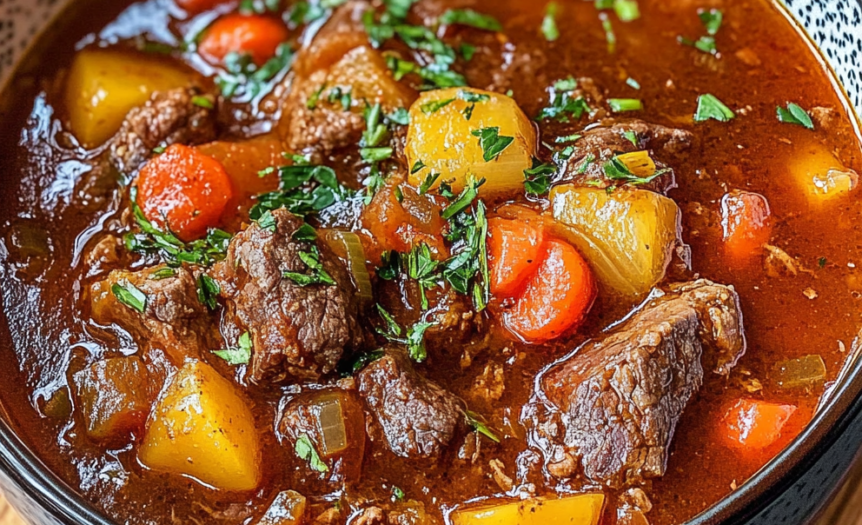
This classic homemade beef stew delivers all the comforting flavors of traditional slow-cooked stew in one pot, featuring tender chunks of beef, hearty vegetables, and a rich, savory broth that develops incredible depth through proper browning and simmering techniques. The result is a soul-warming meal that transforms simple ingredients into something extraordinary through patience and technique. If you enjoy this style of hearty, one-pot comfort food, you might also like chicken and dumplings, pot roast, or other braised dishes that create maximum flavor through slow, gentle cooking.
Why You’ll Love This Recipe
- Ultimate comfort food – delivers the soul-warming satisfaction that only a perfectly executed beef stew can provide, with tender meat and vegetables in rich, flavorful broth
- True one-pot convenience – everything cooks in a single Dutch oven from browning to simmering, minimizing cleanup while maximizing flavor development
- Budget-friendly luxury – transforms affordable cuts of beef into melt-in-your-mouth tenderness through proper technique and time rather than expensive ingredients
- Perfect for meal prep – tastes even better the next day as flavors continue to develop, making it ideal for batch cooking and busy week planning
Ingredients Breakdown
Chuck roast: The ideal cut for stew due to its perfect balance of meat and marbling that breaks down into incredibly tender, flavorful pieces during long cooking. Chuck roast has enough connective tissue and fat to remain moist and develop rich flavor without becoming dry or stringy. Cut the meat into uniform 2-inch pieces for even cooking and appealing presentation. Avoid lean cuts like sirloin, which will become tough and dry during the extended cooking time needed for proper stew development.
Root vegetables: Carrots, potatoes, and onions form the classic vegetable trio that provides sweetness, earthiness, and substantial texture. Choose firm, fresh vegetables without soft spots or sprouting. Cut them into large, uniform pieces that will hold their shape during long cooking while becoming tender throughout. The vegetables should be substantial enough to provide satisfying bites while absorbing the rich beef flavors from the braising liquid.
Tomato paste: Adds concentrated umami depth and helps create the rich, complex flavor base that distinguishes exceptional stew from ordinary versions. The tomato paste should be cooked briefly with the aromatics to develop its flavor and remove any raw taste. This concentrated ingredient provides acidity that balances the rich beef while adding color and depth that enhance the overall eating experience.
Beef broth: Forms the flavorful liquid base that becomes the soul of the stew through reduction and concentration during cooking. Use high-quality, low-sodium beef broth for the best flavor and control over salt levels. The broth should have good body and flavor, as it will concentrate during cooking and become the foundation that ties all other ingredients together into a cohesive, satisfying meal.
Fresh herbs: Thyme, bay leaves, and parsley provide aromatic complexity that elevates the stew from simple to sophisticated. Use fresh thyme for the best flavor, though dried works well too. Bay leaves add subtle depth but should be removed before serving. Fresh parsley added at the end provides color and bright flavor that balances the rich, hearty elements.
Step-by-Step Instructions
- Cut 2 pounds chuck roast into uniform 2-inch pieces, trimming excess fat but leaving some for flavor. Pat the beef completely dry with paper towels and season generously with 2 teaspoons salt and 1 teaspoon black pepper. Let the seasoned meat sit at room temperature for 15-20 minutes while you prepare other ingredients.
- Heat 2 tablespoons vegetable oil in a large Dutch oven or heavy-bottomed pot over medium-high heat until shimmering. The pot should be large enough to hold all ingredients comfortably without overcrowding. Add the beef pieces in a single layer, working in batches if necessary to avoid overcrowding.
- Brown the beef thoroughly on all sides, about 3-4 minutes per side, without moving the pieces too often. Proper browning develops deep flavor through the Maillard reaction and creates fond (browned bits) that will enhance the final stew. Transfer browned beef to a plate and set aside, leaving the fond in the pot.
- Reduce heat to medium and add 1 large diced onion to the same pot. Cook for 4-5 minutes, stirring occasionally, until softened and lightly caramelized. The onion should absorb some of the fond from the bottom of the pot, adding flavor while deglazing naturally.
- Add 4 minced garlic cloves and 2 tablespoons tomato paste to the pot, cooking for 1-2 minutes until fragrant and the tomato paste darkens slightly. This brief cooking removes the raw taste from the garlic and develops the tomato paste’s flavor, creating a more complex base.
- Pour in 1/4 cup dry red wine (optional) or additional broth to deglaze the pot, scraping up any browned bits from the bottom with a wooden spoon. These fond bits are crucial for flavor development and should be completely incorporated into the liquid.
- Return the browned beef to the pot along with any accumulated juices. Add 4 cups beef broth, 2 bay leaves, 1 tablespoon fresh thyme (or 1 teaspoon dried), and 1 teaspoon salt. The liquid should just cover the meat – add more broth or water if needed.
- Bring the mixture to a simmer, then reduce heat to low, cover, and cook for 1 1/2 hours, stirring occasionally. The beef should be starting to become tender but not falling apart yet. Maintain a gentle simmer rather than a rolling boil for the most tender results.
- Add 3 large carrots cut into 2-inch pieces and 1 1/2 pounds potatoes cut into large chunks. Continue simmering covered for another 30-45 minutes until the beef is fork-tender and the vegetables are cooked through but still hold their shape.
- In a small bowl, whisk together 3 tablespoons all-purpose flour with 1/4 cup cold water to create a slurry. Stir this mixture into the stew and simmer uncovered for 10-15 minutes until the liquid thickens to a rich, coating consistency.
- Remove bay leaves and taste for seasoning, adjusting with salt and pepper as needed. The stew should be well-balanced with rich, deep flavors and proper consistency. Stir in 2 tablespoons chopped fresh parsley just before serving for color and brightness.
Perfect Texture: What to Look For
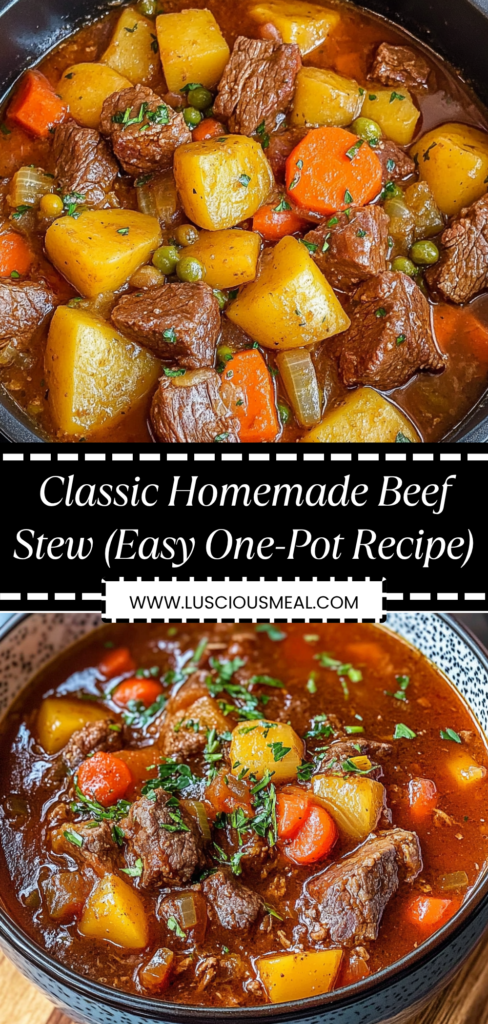
Properly executed beef stew should have meat that’s fork-tender and easily breaks apart while still maintaining its shape rather than falling into shreds. The vegetables should be cooked through and tender but not mushy, holding their shape and providing satisfying texture contrast. The broth should be rich and flavorful with enough body to coat a spoon lightly without being overly thick or gluey. When served, each spoonful should contain a good balance of tender meat, vegetables, and flavorful broth that ties everything together harmoniously.
Customization Options
This classic recipe serves as an excellent foundation for numerous variations. For deeper flavor, add mushrooms with the onions or include celery for additional aromatic vegetables. Different root vegetables like parsnips, turnips, or sweet potatoes can replace or supplement the traditional carrots and potatoes. For international variations, add different herb combinations like Italian herbs or rosemary, or incorporate regional ingredients like Worcestershire sauce for English-style stew or paprika for Hungarian influences.
Practical Tips
Browning success: Don’t overcrowd the pot when browning meat, which causes steaming rather than proper searing. Pat meat completely dry and use enough oil to prevent sticking. The goal is deep, even browning that creates maximum flavor development through caramelization.
Temperature control: Maintain a gentle simmer throughout cooking rather than a rolling boil, which can make meat tough and vegetables mushy. The liquid should barely bubble, creating the gentle heat needed for proper braising and tenderization.
Thickening options: If you prefer a thicker stew, increase the flour slurry or mash some of the potatoes against the side of the pot to naturally thicken the broth. For a lighter consistency, simply omit the flour thickening step.
Make-ahead benefits: This stew improves significantly when made a day ahead and reheated gently. The flavors continue to develop and meld, creating even richer taste. Store refrigerated and reheat slowly, adding liquid if needed to restore proper consistency.
Common Questions
Can I use a slow cooker instead? Yes, brown the meat and aromatics in a skillet first, then transfer everything to a slow cooker and cook on low for 6-8 hours. Add vegetables during the last 2 hours to prevent overcooking.
Why is my meat tough? Tough meat usually results from insufficient cooking time or too high heat. Chuck roast needs long, gentle cooking to break down connective tissue. Continue simmering until fork-tender, which may take longer than specified depending on the specific cut.
How do I fix a stew that’s too thin? Create a flour slurry (flour mixed with cold water) and stir into the simmering stew, or mash some of the potatoes to naturally thicken the broth. Simmer uncovered to reduce liquid through evaporation.
Can I freeze leftover stew? Yes, cool completely and freeze for up to 3 months. The potatoes may become slightly grainy when thawed, but the flavor remains excellent. Thaw overnight in refrigerator and reheat gently, adding liquid if needed.
Serving Suggestions
This hearty stew serves beautifully as a complete meal on its own, though crusty bread or dinner rolls make excellent accompaniments for soaking up the rich broth. For a more substantial meal, serve over mashed potatoes, egg noodles, or rice. The stew pairs wonderfully with simple green vegetables like steamed broccoli or a fresh salad that provides textural contrast.
For entertaining, serve in warmed bowls with a sprinkle of fresh herbs and perhaps a dollop of sour cream or horseradish cream for those who enjoy additional richness. Red wine that complements the flavors in the stew makes an excellent beverage pairing, while the comfort food nature makes this perfect for casual family gatherings or cold weather entertaining.
Nutritional Benefits
This classic stew provides exceptional nutritional value by combining lean protein, complex carbohydrates, and plenty of vegetables in satisfying proportions. The beef contributes complete protein, iron, and B vitamins essential for energy metabolism and muscle maintenance. The variety of vegetables adds fiber, vitamins, and minerals while the long cooking method makes nutrients more bioavailable.
The one-pot cooking method helps retain water-soluble vitamins that might be lost through other cooking methods. The substantial vegetable content means this hearty meal provides genuine nutrition alongside comfort food satisfaction. The high protein and fiber content creates lasting satiety, while the complex flavors and satisfying textures support mindful eating habits that can contribute to overall wellness and satisfaction with wholesome, home-cooked meals.