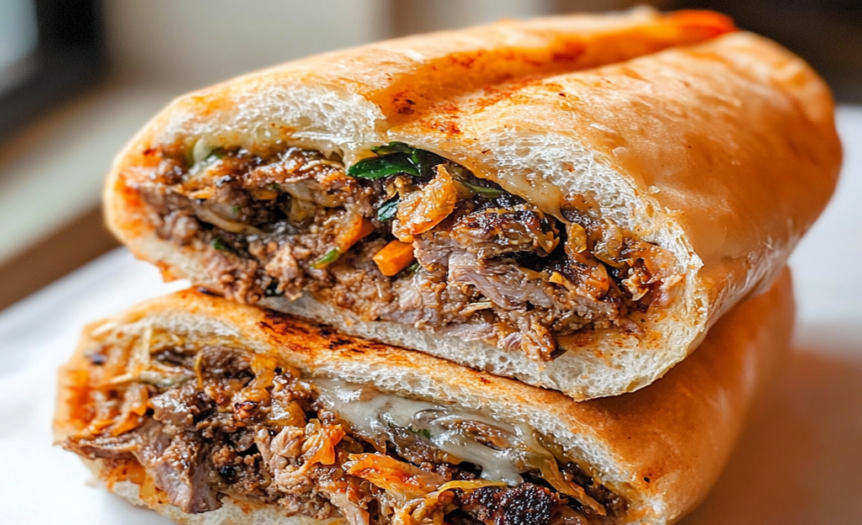
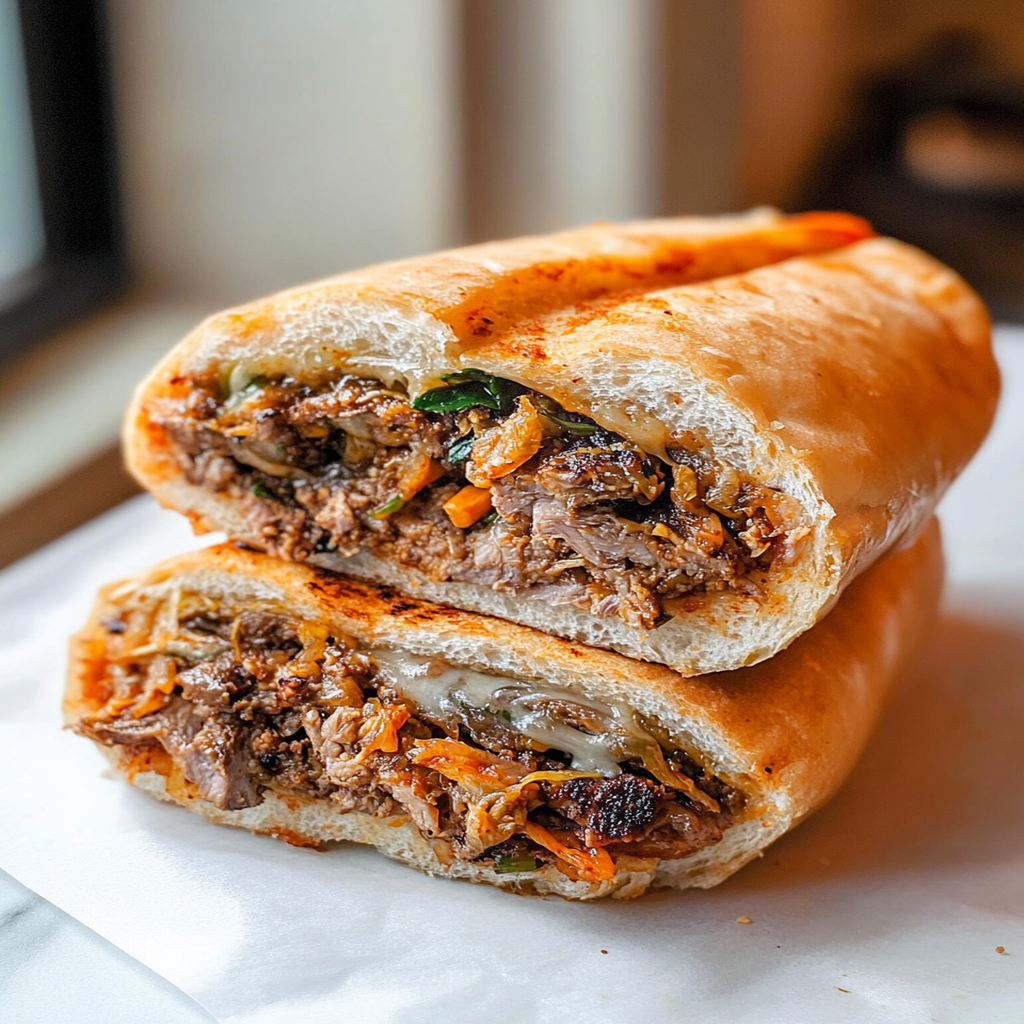
Korean-Inspired Kimchi Bulgogi Cheesesteak is a confident East-meets-West fusion that layers soy-and-sesame marinated beef, sautéed onions and bell peppers, and tangy fermented kimchi inside a toasted hoagie roll, finished under the broiler with melted provolone until gooey and golden. The technique borrows the quick, high-heat cooking philosophy of Korean bulgogi — thin-sliced beef caramelized rapidly in a hot pan — and applies it within the architecture of a classic American cheesesteak, producing a sandwich that is simultaneously familiar and distinctly new. The result is a bold, layered, deeply satisfying meal that comes together in 30 minutes and works equally well for a casual weeknight dinner or a game-day spread.
Why You’ll Love This Recipe
- Two Iconic Food Cultures in One Sandwich – The soy-sesame bulgogi marinade and fermented kimchi bring the signature flavors of Korean BBQ directly into the format of an American cheesesteak, producing a fusion that feels natural rather than forced because both traditions share a love of high-heat beef cookery.
- Ready in 30 Minutes from Start to Finish – A short marinade, quick vegetable sauté, and fast beef cook mean this sandwich moves from raw ingredients to table in half an hour — faster than most delivery options and far more satisfying.
- Kimchi Does the Heavy Lifting Flavor-Wise – A single cup of chopped kimchi introduces acidity, heat, fermented depth, and textural contrast simultaneously, eliminating the need for a long list of condiments or sauces to achieve a complex flavor profile.
- Broiled Cheese Finish Ties Everything Together – Two minutes under the broiler melts the provolone into a cohesive, slightly blistered layer that binds the filling to the roll and gives the sandwich the gooey, stretchy cheese pull that defines a great cheesesteak.
- Highly Customizable Without Structural Changes – The marinade, cheese, and kimchi quantities can all be adjusted to preference — more garlic, spicier kimchi, American cheese instead of provolone — without altering the cooking method or timing in any meaningful way.
- Built for Entertaining and Sharing – Four substantial sandwiches from one pound of beef makes this an efficient, crowd-friendly recipe that scales cleanly to eight or twelve servings for larger groups without any technique adjustment.
Ingredients You’ll Need
Protein
- 1 lb beef sirloin, thinly sliced – the lean, tender cut best suited to quick high-heat cooking; slicing as thin as possible — ideally against the grain — ensures fast caramelization and a tender, not chewy, bite inside the roll.
Vegetables
- 1 medium yellow onion, sliced – caramelizes alongside the peppers to provide natural sweetness that balances the acidity of the kimchi and the saltiness of the soy marinade.
- 1 cup bell peppers, any color, sliced – adds mild sweetness, color, and tender texture; red or yellow peppers contribute more sweetness while green adds a slightly more bitter, classic cheesesteak note.
- 1 cup kimchi, chopped – the defining fusion ingredient; provides fermented tang, spice, and umami that no other single ingredient can replicate; chopping ensures it distributes evenly throughout the filling rather than pulling out in large pieces with each bite.
Marinade
- 2 tbsp low-sodium soy sauce – the primary seasoning base; low-sodium preserves control over the final salt level, which is important given the inherent saltiness of both kimchi and cheese.
- 1 tbsp sesame oil – adds the characteristic toasted, nutty Korean BBQ aromatic that distinguishes bulgogi from a standard marinated beef preparation.
- Minced garlic (optional) – deepens the savory, pungent character of the marinade and reinforces the garlic notes already present in most kimchi.
- Sugar (optional) – a small amount promotes caramelization on the beef surface during the high-heat cook and rounds out the soy’s saltiness with a subtle sweetness traditional to authentic bulgogi.
Assembly
- 4 slices provolone or American cheese – provolone melts smoothly and adds a mild, slightly tangy dairy note that complements the Korean flavors without overwhelming them; American cheese produces a creamier, more classic cheesesteak melt.
- 4 hoagie rolls, toasted – the structural vessel; toasting is non-negotiable as it creates a moisture barrier that prevents the juices from the filling soaking through and softening the bread before the sandwich can be eaten.
- 2 tsp vegetable oil – the neutral high-smoke-point cooking fat for the skillet; vegetable oil withstands the medium-high heat needed to properly sauté the vegetables and sear the beef without burning.
Step-by-Step Instructions
Step 1: Slice the Beef and Vegetables — Slice the sirloin as thinly as possible against the grain — partially freezing the beef for 20 to 30 minutes before slicing makes this significantly easier and produces more uniform, thin pieces. Slice the onion into half-moons and the bell peppers into strips of similar width so they cook at the same rate.
Step 2: Marinate the Beef — Combine the soy sauce, sesame oil, and optional minced garlic and sugar in a bowl. Add the thinly sliced beef and toss to coat every piece thoroughly. Allow the beef to marinate for a minimum of 15 minutes at room temperature — long enough for the soy and sesame to penetrate the thin slices meaningfully without beginning to cure or toughen the meat.
Step 3: Sauté the Vegetables — Heat the vegetable oil in a large skillet over medium-high heat until shimmering. Add the sliced onion and bell peppers and sauté for approximately 5 minutes, stirring occasionally, until the onion is translucent and beginning to soften at the edges and the peppers are tender but still holding their shape. Season lightly with a pinch of salt.
Step 4: Cook the Marinated Beef — Push the sautéed vegetables to one side of the skillet to create a clear cooking surface. Add the marinated beef in a single layer and cook for approximately 5 minutes, stirring occasionally, until the beef is browned on the surface and any marinade liquid has reduced and begun to caramelize against the hot pan. Avoid overcrowding — if the beef releases too much steam, increase the heat briefly to maintain active browning.
Step 5: Add the Kimchi — Fold the chopped kimchi into the beef and vegetable mixture and stir to combine everything in the pan. Cook for an additional 2 minutes over medium-high heat, allowing the kimchi to warm through, lose a little of its raw edge, and begin to integrate its fermented liquid into the pan juices. Taste and adjust seasoning at this stage.
Step 6: Toast the Rolls — While the kimchi cooks, toast the hoagie rolls cut-side up under the broiler or in a dry skillet for 1 to 2 minutes until lightly golden and firm on the interior surface. Toasted rolls hold the filling far more effectively than untoasted bread and provide a textural contrast to the tender, juicy filling.
Step 7: Assemble and Broil — Spoon the bulgogi and kimchi mixture generously into each toasted hoagie roll, distributing the beef, vegetables, and kimchi evenly. Lay one slice of provolone or American cheese over the filling of each sandwich. Place the assembled sandwiches open-faced on a baking sheet and broil for approximately 2 minutes until the cheese is fully melted, bubbling, and lightly blistered at the edges. Watch closely — broiler temperatures vary and the cheese can go from melted to burnt within seconds.
Step 8: Serve Immediately — Remove from the broiler and serve hot while the cheese is at its most fluid and the roll is still crisp. These sandwiches are best eaten immediately after assembly.
Recipe Notes & Tips
- Partially Freeze the Beef for Easier Slicing – Twenty to thirty minutes in the freezer firms the sirloin enough to slice paper-thin with a standard kitchen knife, producing the delicate, quick-cooking slices that are fundamental to proper bulgogi texture.
- Don’t Skip the Marinade Time – Fifteen minutes is the practical minimum for thin-sliced beef to absorb the soy and sesame flavors meaningfully. If time allows, 30 to 60 minutes in the refrigerator produces a noticeably more flavorful result.
- Cook the Kimchi Briefly, Not Thoroughly – Two minutes is enough to warm the kimchi and integrate its juices into the filling without cooking away the fermented tang and probiotic character that make it a distinct ingredient rather than just another sautéed vegetable.
- Provolone vs. American Cheese – Provolone produces a slightly firmer melt with a mild tang that allows the Korean flavors to come through clearly; American cheese produces a creamier, more indulgent melt that leans into the cheesesteak tradition. Neither is wrong — the choice is a matter of preference.
- Taste the Kimchi Before Adding – Kimchi varies significantly in saltiness, spice level, and acidity depending on brand and fermentation age. Taste it before adding to the pan and adjust the amount of soy sauce in the marinade accordingly to keep the overall seasoning balanced.
- Broil Open-Faced for Best Results – Closing the sandwich before broiling traps steam and softens the roll. Leaving it open-faced allows the cheese to blister properly and the roll edges to maintain their crunch through the broil time.
Nutritional Information
- Prep Time: 15 minutes (plus 15 minutes marinating)
- Cook Time: 15 minutes
- Total Time: 30 minutes
- Servings: 4
- Calories: 450 per serving
- Fat: 20 g (Saturated 8 g | Unsaturated 10 g) | Carbohydrates: 45 g | Fiber: 3 g | Protein: 25 g
- Sodium: 870 mg | Cholesterol: 60 mg | Sugar: 5 g
Nutritional values are estimates based on standard ingredient brands. Sodium will vary significantly depending on the kimchi brand and soy sauce used.
Perfect Pairings
- Korean Cucumber Salad (Oi Muchim) – A quickly pickled cucumber salad dressed with rice vinegar, sesame oil, and chili flakes provides a cold, crunchy, acidic contrast that refreshes the palate between bites of the rich, savory sandwich.
- Crispy Oven Fries or Sweet Potato Fries – The classic cheesesteak side that needs no justification; sweet potato fries in particular complement the slightly sweet soy-sesame marinade with their natural caramel notes.
- Miso Soup – A light, umami-rich miso broth served alongside nods to the Korean side of this fusion and provides a warming, low-calorie counterbalance to the richness of the cheesesteak.
- Cold Korean Beer or Sparkling Lemonade – A cold, light Korean lager like Hite or OB cuts through the fat of the cheese and beef cleanly; sparkling lemonade provides a non-alcoholic acidic contrast that works equally well.
Ideal Occasions
- Game Day Spreads – Four substantial sandwiches that can be assembled simultaneously and broiled in one batch make this ideal for game-day entertaining where food needs to come out quickly and impress without requiring the host to cook in shifts.
- Casual Weeknight Dinners – The 30-minute total time and single-skillet execution make this a realistic weeknight option that delivers restaurant-quality results without the complexity or cleanup of a more involved recipe.
- Korean BBQ Themed Nights – Served alongside banchan sides like pickled vegetables, steamed rice, and scallion salad, this sandwich functions as the centerpiece of a casual Korean-American fusion dinner spread.
- Potlucks and Casual Entertaining – The filling can be fully cooked ahead of time, refrigerated, and reheated in the skillet at the event, with rolls toasted and cheese melted on demand — making it one of the more practical crowd-feeding options in this format.
Storage & Serving Tips
- Store Filling Separately from Rolls – The cooked bulgogi and kimchi mixture refrigerates well for up to 3 days in an airtight container, but assembled sandwiches should never be stored as the bread will absorb moisture and become soggy.
- Reheating the Filling – Reheat the filling in a skillet over medium heat for 3 to 4 minutes, stirring occasionally, until warmed through. Add a splash of soy sauce or water if the mixture seems dry, then assemble and broil fresh rolls to order.
- Freezing the Cooked Filling – The bulgogi and kimchi mixture freezes well for up to 2 months in a sealed freezer bag. Thaw overnight in the refrigerator and reheat in a skillet before assembling — the kimchi may soften slightly further after freezing but the flavor remains excellent.
- Serve Immediately After Broiling – The window between perfect melted cheese and a softening roll is short. Have all components ready before the filling goes into the rolls so the sandwiches can move from broiler to table within 2 minutes.
Creative Variations to Try
- Spicy Gochujang Version – Stir a tablespoon of gochujang paste into the marinade alongside the soy sauce and sesame oil for a deeper, fermented chili heat that amplifies the Korean character of the sandwich significantly.
- Pork Belly Bulgogi – Replace the beef sirloin with thinly sliced pork belly for a fattier, richer filling that caramelizes even more aggressively in the pan and pairs particularly well with the acidity of the kimchi.
- Mushroom and Tofu Vegetarian Version – Substitute the beef with a combination of thinly sliced king oyster mushrooms and firm tofu, marinated identically and cooked using the same method, for a plant-based version that preserves the umami depth of the original.
- Melted Pepper Jack Upgrade – Swap the provolone for pepper jack cheese to introduce an additional layer of spicy heat that reinforces the kimchi’s chili character and pushes the sandwich further toward a heat-forward flavor profile.
Troubleshooting Common Issues
- Beef is steaming rather than browning – The skillet was not hot enough before the beef was added, or too much beef was added at once, dropping the pan temperature and trapping steam. Cook in two batches over properly preheated medium-high heat and avoid stirring too frequently.
- Kimchi is overpowering the other flavors – The kimchi used was very mature and highly fermented, which increases its intensity considerably. Rinse the chopped kimchi briefly under cold water before adding to the pan to moderate its acidity and heat without eliminating it entirely.
- Roll is soggy before the sandwich is finished – The roll was not toasted before assembly, or the filling was too wet when spooned in. Always toast the roll and allow any excess liquid in the pan to reduce before filling — a briefly cooked kimchi filling retains more liquid than one allowed to reduce properly.
- Cheese is not melting evenly under the broiler – The cheese slice was too cold from the refrigerator or was placed unevenly over the filling. Use room-temperature cheese slices and ensure they lay flat over the filling surface before the sandwich goes under the broiler.
Why This Recipe Works
The success of this fusion lies in the fundamental compatibility of Korean and American cheesesteak cooking traditions, both of which prioritize thin-sliced beef cooked quickly over high heat with aromatic vegetables. Bulgogi marinade — soy sauce, sesame oil, garlic, and a touch of sugar — works within the cheesesteak format because its flavor compounds are absorbed deeply into thin beef slices in minutes and caramelize rapidly on contact with a hot pan, producing the same charred, sweet-savory edge that defines both Korean BBQ and a properly made Philly cheesesteak. The kimchi is the masterstroke ingredient: added at the end and cooked for only two minutes, it retains its fermented tang and textural identity while integrating its liquid into the pan juices, creating a natural sauce that coats every element of the filling without requiring a separate condiment. Provolone is an intelligent cheese choice here because its mild flavor and smooth melt do not compete with the Korean seasonings — it contributes creaminess and the essential cheese pull of a cheesesteak while functioning as a neutral backdrop for the bolder flavors beneath it. At 450 calories per serving with 25 grams of protein and a carbohydrate load driven primarily by the hoagie roll rather than the filling, this is a sandwich that satisfies fully without the nutritional heaviness of most restaurant cheesesteak equivalents.
Final Thoughts
Korean-Inspired Kimchi Bulgogi Cheesesteak succeeds because it is a genuine fusion built on culinary logic rather than novelty — two traditions that share enough DNA in their approach to beef and high-heat cooking that combining them produces a result greater than either element alone. The kimchi brings a dimension of fermented complexity that no American cheesesteak condiment can replicate, and the bulgogi marinade gives the beef a depth of flavor that elevates the sandwich well beyond its 30-minute preparation time. At 450 calories and 25 grams of protein per serving, it is a satisfying, nutritionally reasonable meal that works across a wide range of occasions. For a lighter version, serving the bulgogi and kimchi filling over steamed rice or in lettuce wraps instead of a hoagie roll reduces the carbohydrate load significantly while preserving every bit of the flavor that makes this recipe worth returning to.