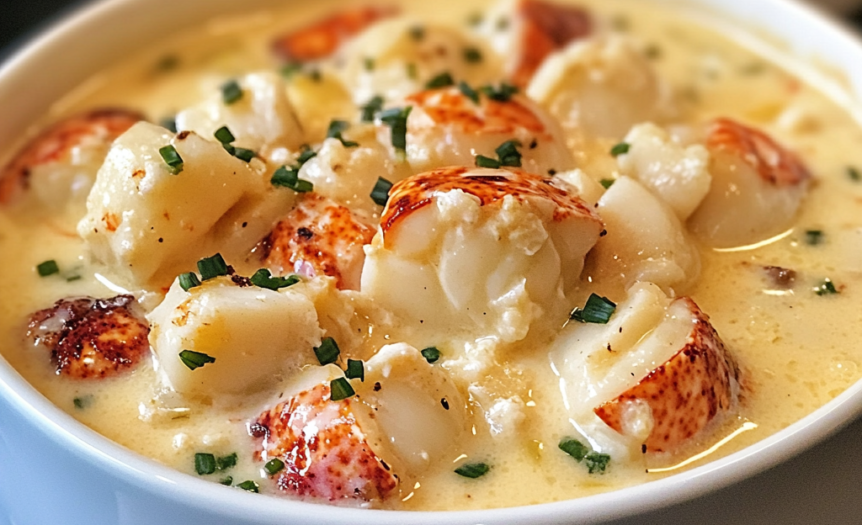
There’s something magical about a perfectly crafted chowder that balances homespun comfort with refined elegance. This Rustic Lobster Chowder Elegance achieves that delicate balance, transforming the humble chowder into a sophisticated dish worthy of special occasions while maintaining the soul-warming qualities that make chowder a beloved classic. Featuring sweet, tender chunks of lobster meat nestled in a velvety broth that’s rich yet not heavy, accented with garden vegetables and subtle herbs, this chowder delivers an elevated dining experience that honors coastal culinary traditions. Whether you’re hosting a dinner party, celebrating a milestone, or simply treating yourself to something extraordinary, this recipe brings restaurant-quality luxury to your table with surprisingly straightforward preparation.
The Perfect Harmony of Rustic and Refined
What sets this lobster chowder apart is its masterful balance between unpretentious comfort and sophisticated flavor. Unlike many cream-laden chowders that can overwhelm the delicate sweetness of lobster, this recipe employs a lighter touch with the cream, creating a silky base that complements rather than masks the star ingredient. Small details—like using homemade seafood stock, incorporating cognac for depth, and finishing with fresh herbs—elevate this dish from simply delicious to truly memorable.
The “rustic elegance” approach means you’ll find chunks of vegetables and lobster substantial enough to appreciate their individual textures and flavors, while the broth achieves a refined smoothness that speaks of careful technique. This duality makes the chowder appropriate for multiple settings, from a casual-but-special family dinner served in earthenware bowls to an elegant first course for a formal dinner party presented in fine china.
The recipe honors traditional New England chowder techniques while incorporating French-inspired refinements, creating a dish that feels both familiar and special—comfort food dressed in its Sunday best.
Premium Ingredients for an Exceptional Experience
The secret to transforming a good chowder into an exceptional one lies in the quality of ingredients and thoughtful preparation:
For the Seafood Base:
- 2 whole lobsters (1½ pounds each), cooked and meat removed (shells reserved)
- 4 slices thick-cut bacon, diced
- 2 tablespoons unsalted butter
- 1 tablespoon extra virgin olive oil
- 1 cup dry white wine (such as Sauvignon Blanc)
- 2 tablespoons cognac or brandy (optional, but adds remarkable depth)
- 4 cups seafood stock (homemade preferred, store-bought in a pinch)
For the Aromatic Vegetables:
- 1 large yellow onion, finely diced
- 2 leeks (white and light green parts only), cleaned and thinly sliced
- 2 stalks celery, finely diced
- 1 small fennel bulb, cored and finely diced (reserve fronds for garnish)
- 3 cloves garlic, minced
- 1 bay leaf
- 2 sprigs fresh thyme
- 1 tablespoon fresh tarragon, chopped
For the Body of the Chowder:
- 3/4 pound Yukon Gold potatoes, diced into 1/2-inch cubes
- 1 cup fresh or frozen corn kernels
- 2 cups heavy cream
- 1/2 cup half-and-half
- 1/4 teaspoon saffron threads (optional, but adds color and distinctive flavor)
- 1 tablespoon all-purpose flour (for slight thickening)
- 1/4 teaspoon cayenne pepper (adjust to taste)
- Salt and freshly ground white pepper
For Garnish:
- 2 tablespoons fresh chives, finely chopped
- 1 tablespoon fresh dill, chopped
- Fennel fronds
- Few drops of high-quality extra virgin olive oil
- Flaky sea salt
- Edible flowers (optional, for a truly elegant presentation)
Creating Your Masterpiece: Step-by-Step Instructions
This chowder requires some time and attention, but none of the steps are overly complex. The result is well worth the effort:
Step 1: Prepare the Lobster
If starting with live lobsters, bring a large pot of heavily salted water to a rolling boil. Cook lobsters for 7-8 minutes until bright red. Transfer to an ice bath to stop cooking. Once cool, crack shells and remove meat from claws, knuckles, and tails. Cut into generous bite-sized pieces and refrigerate.
Don’t discard the shells! They’re essential for developing the chowder’s depth of flavor. Break them into pieces for the next step.
Step 2: Create the Flavor Foundation
In a large Dutch oven or heavy-bottomed pot, cook the diced bacon over medium heat until crisp. Remove bacon with a slotted spoon and set aside, leaving the flavorful fat in the pot. Add butter and olive oil to the bacon fat.
Once butter melts, add the lobster shells to the pot and cook for 5 minutes, stirring occasionally, allowing them to release their flavor into the fat. Add white wine and cognac (if using) and simmer for 3-4 minutes, allowing the alcohol to cook off while leaving behind its complexity.
Pour in the seafood stock and bring to a simmer. Let this mixture cook gently for 20 minutes to create an intensely flavored base. Strain the liquid and discard the shells, returning the enriched stock to the pot.
Step 3: Build the Aromatic Base
In the same pot, add the onions, leeks, celery, and fennel. Cook over medium heat until vegetables are softened but not browned, about 7-8 minutes. Add garlic and cook for 30 seconds until fragrant. Sprinkle the tablespoon of flour over the vegetables and cook, stirring constantly, for 2 minutes to remove the raw flour taste.
Step 4: Develop the Body of the Chowder
Add the diced potatoes, bay leaf, and thyme sprigs to the pot. Pour in the strained stock and bring to a gentle simmer. Cook until potatoes are just tender, about 10-12 minutes.
Crush the saffron threads (if using) between your fingers and add to the pot along with the corn kernels. Simmer for another 3 minutes.
Stir in the heavy cream and half-and-half, bringing the mixture back to a bare simmer—never allow it to boil, which could cause the dairy to separate. Cook gently for 5 minutes to allow flavors to meld.
Step 5: Incorporate the Lobster
Gently fold in the reserved lobster meat and tarragon, allowing the residual heat to warm the lobster without overcooking it. Season with cayenne pepper, salt, and white pepper to taste. Remove and discard the bay leaf and thyme sprigs.
Allow the chowder to rest off the heat for 5 minutes—this crucial step allows the flavors to further develop and marry.
Step 6: Elegant Presentation
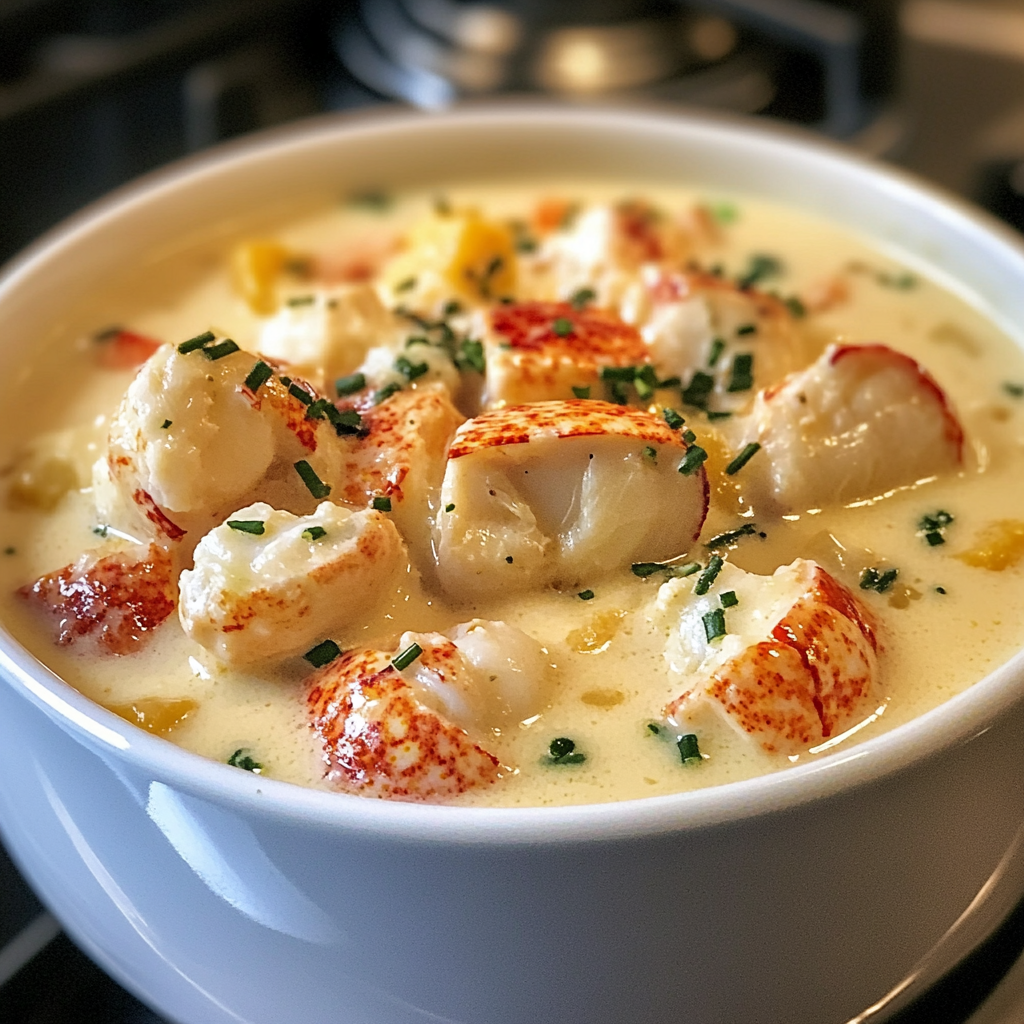
Ladle the chowder into warmed shallow bowls. Garnish each serving with a sprinkle of the reserved bacon, fresh chives, dill, and fennel fronds. Add a few drops of high-quality olive oil in a circular pattern, and finish with a light sprinkle of flaky sea salt. For special occasions, add a small edible flower for a truly elegant touch.
Serve immediately with warm, crusty artisanal bread and a glass of the same white wine you used in the chowder.
Variations for Different Occasions and Seasons
While the classic version is hard to improve upon, these thoughtful variations offer delightful alternatives:
Summer Garden Celebration:
Add 1/2 cup of fresh English peas and substitute half the potatoes with diced summer squash. Increase the fresh herbs and add a tablespoon of lemon zest for brightness.
Holiday Luxury:
Add 1/4 pound of lump crabmeat along with the lobster. Finish with a small spoonful of caviar on top of each serving and a drizzle of champagne instead of white wine in the base.
New England Fusion:
Include 1/4 pound of sea scallops (quartered) and 1/2 cup roasted corn kernels instead of plain corn. Add a pinch of smoked paprika for color and subtle smoky depth.
Dairy-Light Version:
For a lighter preparation that still maintains elegance, replace half the cream with additional seafood stock and finish with a touch of crème fraîche swirled on top just before serving.
Pacific Northwest Inspiration:
Substitute Dungeness crab for half the lobster and add a small amount of fresh tarragon. Use leeks as the primary aromatic and finish with a drizzle of chive oil instead of olive oil.
Make-Ahead and Service Suggestions
This chowder requires some planning but can be partially prepared in advance:
Make-Ahead Options:
- Stage preparation: Complete through Step 4 up to 24 hours ahead. Refrigerate, then gently reheat before proceeding with adding the lobster meat.
- Stock preparation: Make the enriched seafood stock up to 3 days ahead or freeze for longer storage.
- Vegetable prep: Dice all vegetables up to 24 hours in advance and store covered in the refrigerator.
Storage and Reheating:
- This chowder is best enjoyed fresh, but leftovers can be refrigerated for up to 2 days.
- Reheat gently over low heat, stirring occasionally and never allowing it to boil, which would damage the texture of both the cream and the lobster.
- If the chowder thickens too much upon standing, thin with a small amount of warmed seafood stock or half-and-half.
Service Recommendations:
- For a dinner party: Serve as a first course in pre-warmed shallow bowls, with small lobster claws as garnish for dramatic presentation.
- For a special lunch: Present in a shallow bowl alongside a small artisanal green salad with champagne vinaigrette.
- For a romantic dinner: Serve as the main course with a supplementary lobster tail on the side and crusty bread for dipping.
Perfect Pairings to Complete Your Dining Experience
Enhance your rustic-elegant lobster chowder with thoughtfully selected accompaniments:
Wine Pairings:
- White Burgundy: A slightly oaked Chardonnay complements the richness while the minerality cuts through the cream.
- Champagne: The effervescence and acidity provide a brilliant contrast to the chowder’s richness.
- Dry Riesling: Its brightness and subtle sweetness enhance the natural sweetness of the lobster.
Bread Selections:
- Sourdough boule with a robust crust
- Buttery brioche rolls
- Homemade chive and sea salt biscuits
- Warm popovers with salted butter
Complementary Starters:
- Simple bitter greens salad with citrus segments and champagne vinaigrette
- Shaved fennel and orange salad with olive oil and flaky salt
- Cucumber rounds topped with crème fraîche and caviar
Following Courses:
If serving the chowder as a starter, follow with:
- Herb-roasted rack of lamb with spring vegetables
- Seared scallops with brown butter sauce
- Lemon and herb roasted chicken
Expert Tips for Restaurant-Quality Results
Elevate your chowder from good to extraordinary with these professional techniques:
- Temperature control is crucial: Never allow the chowder to boil after adding the cream; gentle heat preserves the silky texture.
- Balanced seasoning: Use white pepper instead of black to maintain the chowder’s refined appearance.
- Pay attention to sizes: Cut vegetables uniformly for even cooking and an elegant appearance.
- Respect the lobster: Cook it just until done, then allow the residual heat of the chowder to warm it through to prevent the meat from becoming tough.
- Layering flavors: Each step builds flavor—from the bacon fat to the shell-infused stock to the aromatic vegetables; don’t rush these foundational elements.
- Quality matters: This is a dish where the quality of ingredients truly shines through, especially the lobster, seafood stock, and cream.
- The power of garnish: Fresh herbs and a few drops of excellent olive oil aren’t just decorative—they add crucial fresh notes that balance the richness.
The Cultural Significance of Elevated Chowder
Lobster chowder represents a fascinating culinary evolution from humble beginnings to elevated cuisine:
Traditional chowder emerged as a fisherman’s stew—a practical way to use available seafood and stretch ingredients among many hungry workers. Typically made with more abundant fish and shellfish, it was hearty, filling fare designed to sustain those engaged in physical labor.
Lobster, once so plentiful along the New England coast that it was considered food for the poor or used as fertilizer, has transformed into a luxury ingredient. This chowder honors both traditions—the practical, satisfying nature of traditional chowder and the special-occasion worthiness of lobster.
The “rustic elegance” approach respects this dual heritage, creating a dish that’s sophisticated without being pretentious, special without being inaccessible. It embodies the modern approach to fine dining that values ingredients and techniques over formality and ostentation.
Nutritional Considerations and Adaptations
While this chowder is undeniably an indulgence, it offers some nutritional benefits and can be adapted for various needs:
- Protein-rich: Lobster provides high-quality, lean protein with minimal saturated fat.
- Nutrient dense: The seafood and variety of vegetables offer vitamins, minerals, and antioxidants.
- Gluten-free option: Substitute the tablespoon of flour with 2 teaspoons of cornstarch dissolved in water or simply omit for a naturally thinner chowder.
- Dairy sensitivity: For those who can tolerate some dairy, use all half-and-half instead of heavy cream for a lighter version.
- Calorie-conscious: Serve a smaller portion as a starter rather than a main course, and increase the proportion of vegetables to cream.
The Art of Presentation: Elevating the Experience
The way this chowder is served significantly impacts the overall impression:
Vessel Selection:
- Wide, shallow bowls showcase the colorful ingredients and allow the garnishes to be visible.
- For a rustic presentation, consider handmade pottery bowls in earth tones.
- For maximum elegance, use white porcelain or bone china to highlight the colors of the chowder.
Visual Appeal:
- Arrange the pieces of lobster meat purposefully rather than simply ladling them in with the broth.
- Create height in the center of the bowl with a concentrated mound of lobster and vegetables.
- Apply garnishes with a light hand—they should enhance, not overwhelm.
Atmospheric Elements:
- Consider the table setting—natural linens, quality silverware, and simple glassware let the food be the star.
- Subtle lighting enhances the chowder’s golden hues.
- A small vase with seasonal flowers echoes the rustic-elegant theme.
What Culinary Enthusiasts Are Saying
“I’ve made countless chowders over the years, but this lobster version has become my signature dish for special occasions. The cognac and saffron are subtle but make all the difference. Every time I serve it, guests ask for the recipe.” – Martha K.
“As someone who grew up in Maine, I’m particular about lobster dishes. This chowder manages to be sophisticated without losing the essential comfort that chowder should provide. The technique of making the enriched stock with the shells is brilliant.” – James T.
“I was intimidated to cook with lobster, but this recipe walked me through each step clearly. I made it for our anniversary dinner and my husband said it was better than any restaurant chowder he’s had. Worth every minute of preparation!” – Samantha L.
Ready to Create Your Own Culinary Masterpiece?
This Rustic Lobster Chowder Elegance represents the perfect intersection of comfort food and refined cuisine—a dish that honors tradition while embracing sophistication. The recipe demonstrates that true culinary elegance doesn’t require complicated techniques or obscure ingredients, but rather thoughtful preparation, quality components, and attention to detail.
Whether you’re looking to impress guests at a dinner party, celebrate a special occasion, or simply treat yourself to an extraordinary meal, this chowder delivers a memorable dining experience. The combination of sweet lobster, velvety broth, and subtle aromatics creates a harmony of flavors that’s both satisfying and sophisticated.
As you ladle this golden elixir into warmed bowls, topped with fresh herbs and a final drizzle of olive oil, you’re not just serving soup—you’re offering a taste of coastal tradition elevated to its highest expression. This is food that nourishes the body and delights the senses, the very definition of rustic elegance.