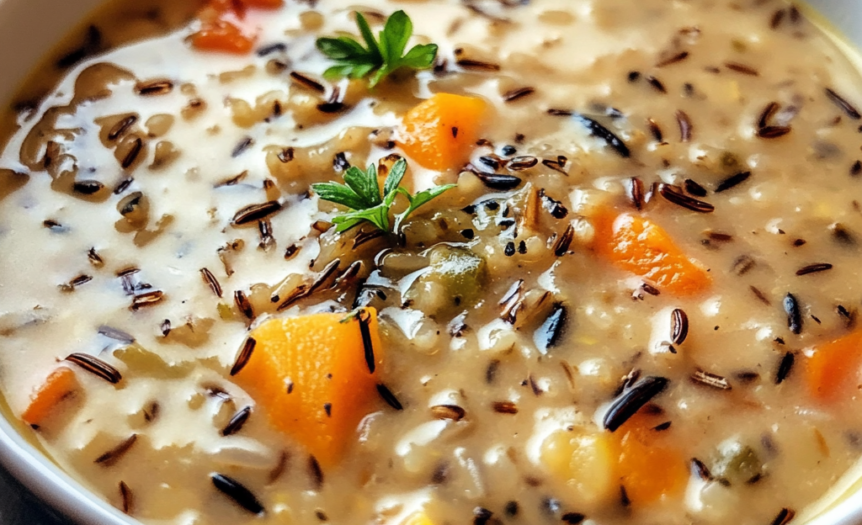
Nutty wild rice swimming alongside tender vegetables in velvety broth creates the ultimate comfort meal for chilly autumn evenings. This cozy autumn wild rice soup combines earthy grains, seasonal vegetables, and aromatic herbs in a warming bowl that nourishes both body and spirit as temperatures drop. The delightful contrast between hearty rice, sweet vegetables, and creamy broth creates something far more satisfying than standard soup recipes. I first developed this recipe during a particularly brisk fall weekend when seeking substantial comfort without excessive heaviness.
Why You’ll Love This Recipe
• Creates restaurant-quality soup with everyday ingredients • Offers perfect balance between hearty and healthy components • Makes excellent leftovers that improve with time • Provides vegetarian option easily adapted for various diets • Fills your home with mouthwatering aroma while simmering
My neighbor initially mentioned her general disinterest in soup as a main course, considering it merely a starter rather than substantial meal. After enjoying a full bowl of this wild rice version during an impromptu dinner invitation, she immediately asked for the recipe and has since made it weekly during autumn months. Sometimes thoughtful ingredient combinations create unexpectedly satisfying experiences that change established food preferences.
Quality Ingredients
• Wild rice blend provides perfect texture with visual interest • Fresh mushrooms contribute earthy depth throughout • Sweet carrots offer colorful counterpoint and natural sweetness • Celery creates aromatic foundation with subtle flavor • Yellow onion establishes essential savory base • Fresh garlic infuses aromatic punch impossible with powder • Dried thyme introduces herbal complexity with staying power • Bay leaves contribute subtle aromatic background notes • Vegetable broth creates flavorful foundation without heaviness
Wild rice selection dramatically impacts your final result. I prefer using a blend containing both true wild rice (which is actually an aquatic grass seed) and other rice varieties which creates interesting texture variation while maintaining distinctive nutty flavor. Taking time to properly rinse rice before cooking removes excess starch while revealing any debris that should be removed. My grandmother always emphasized that soup begins with respecting each ingredient’s contribution rather than considering any component merely “background,” wisdom that proves especially relevant when creating vegetable-forward dishes where every element should provide both nutrition and flavor.
Preparation Method
Prepare The Vegetables Dice onion, carrots, and celery into uniform small pieces approximately 1/4-inch size, ensuring consistent cooking throughout. Slice mushrooms to medium thickness, maintaining substantial enough structure to retain identity during cooking. Mince garlic finely for quick flavor release without burning. This careful preparation creates ideal texture in final soup while ensuring even cooking throughout simmering process.
Build Flavor Foundation Heat olive oil in large heavy-bottomed Dutch oven or soup pot over medium heat. Add diced onion, carrots, and celery, cooking until vegetables soften while developing slight caramelization without browning. This slow sweating process creates fundamental flavor impossible to add later. Introduce mushrooms after initial vegetables soften, allowing them to release moisture and begin browning for maximum flavor development.
Create Aromatic Base Add minced garlic and dried herbs to vegetable mixture during final minute of sautéing, stirring constantly to prevent burning while releasing essential oils. This brief cooking blooms flavor compounds without risking bitterness from overcooked garlic. The fragrant mixture should fill your kitchen with irresistible aroma indicating proper development before liquid addition.
Incorporate Grains and Liquid Add thoroughly rinsed wild rice blend to vegetable mixture, stirring to coat grains with flavorful oil before adding broth. This coating step helps rice maintain structural integrity during extended cooking while absorbing surrounding flavors. Pour vegetable broth over everything, scraping pot bottom to incorporate any browned bits containing concentrated flavor. Add bay leaves and additional herbs as desired for layered complexity.
Simmer With Patience Bring mixture to gentle boil, then reduce heat to maintain bare simmer with occasional small bubbles rather than vigorous boiling. Cover partially, allowing some evaporation to concentrate flavors while maintaining sufficient liquid. Cook until wild rice reaches tender stage with slight chew remaining, typically 45-55 minutes depending on specific blend used. Avoid overcooking which creates mushy texture rather than distinct grains.
Develop Creamy Texture Create velvety consistency by preparing simple roux in separate pan, combining butter and flour cooked together until golden and fragrant. Ladle small amount of hot soup broth into roux, whisking continuously to prevent lumps before incorporating this mixture back into main soup pot. Alternatively, use immersion blender to partially purée small portion of soup for natural thickening while maintaining textural elements throughout. For dairy-free version, puréed white beans or cashew cream provide similar body without traditional thickeners.
Balance Final Flavors Taste soup carefully after thickening, adjusting seasonings thoughtfully before serving. Add fresh herbs like thyme or parsley during final minutes for brightness against rich background. Consider small splash of acid like lemon juice or white wine vinegar if soup tastes flat, as acid brightens flavors without additional salt. Remove bay leaves before serving to prevent unpleasant texture surprise for diners.
My first attempt at this soup taught me important lessons about wild rice cooking times. Using package directions resulted in overcooked rice that lost its distinctive texture during extended simmering. Subsequent batches with adjusted timing and partial pre-cooking delivered the perfect chewy-tender grains that make this soup exceptional. Cooking often teaches valuable lessons through experiences that initially seem disappointing but lead to improved technique.
You Must Know
• Wild rice requires significantly longer cooking than standard rice • Different wild rice blends have varying cooking requirements • Soup thickens naturally upon standing through rice starch release • Vegetables should remain identifiable rather than dissolving • Leftovers taste even better as flavors meld overnight
My father, typically unimpressed by vegetable-centered meals, surprised everyone by requesting second serving of this soup during family gathering. He specifically commented on its substantial satisfaction without feeling heavy afterward. Converting committed carnivores provides particular satisfaction when introducing plant-forward dishes that deliver genuine contentment rather than feeling like dietary sacrifice.
Seasonal Variations
This adaptable base recipe welcomes thoughtful modifications that showcase various seasonal vegetables while maintaining fundamental comfort appeal. Spring adaptation incorporates tender asparagus pieces and fresh peas added during final minutes for vibrant greenness. Summer version features yellow squash and sweet corn cut directly from cob for fresh seasonal flavor. Winter variation includes parsnips and rutabaga for additional earthiness and comforting starchiness. For autumn authenticity, consider adding roasted butternut squash cubes or fresh apple pieces for subtle sweetness celebrating fall harvest.
Serving Suggestions
Thoughtful accompaniments elevate this already-satisfying soup into complete meal experience with minimal additional effort. Serve alongside rustic whole grain bread with cultured butter for traditional pairing that provides satisfying contrast against soupy texture. Consider simple side salad dressed with vinaigrette featuring complementary seasonings for freshness alongside rich soup. For heartier appetite, add buttery garlic bread perfect for dipping into flavorful broth. When entertaining, present in hollowed-out small pumpkins or squash for spectacular seasonal presentation that enhances both flavor and visual appeal.
Storage Solutions
Proper handling ensures this soup continues giving delicious meals beyond initial serving. Allow cooling completely before transferring to airtight containers, as wild rice continues absorbing liquid while hot. Refrigerate up to five days, recognizing soup naturally thickens during storage as rice absorbs additional broth. When reheating, add small amounts of additional broth or water to restore original consistency without diluting flavor. For extended enjoyment, freeze portions in flat ziplock bags for efficient storage up to three months. Thaw overnight in refrigerator before reheating gently to prevent rice texture degradation from aggressive heat.
Chef Insights
• Toast wild rice briefly in dry pan before adding to soup for enhanced nuttiness • Save Parmesan rinds in freezer to add during simmering for umami depth • Consider finishing individual servings with small drizzle quality olive oil
This cozy autumn wild rice soup exemplifies how thoughtful preparation of seasonal ingredients creates truly satisfying meals without complicated techniques or exotic components. While I appreciate innovative culinary creations, this warming bowl demonstrates that perfecting fundamental preparations often yields more contentment than pursuing novelty. The magic happens through patient development of layered flavors rather than shortcuts or convenience products. After countless variations refined through both successes and learning experiences, this recipe continues proving that some of the most satisfying meals come from honoring seasonal ingredients through simple, thoughtful preparation.