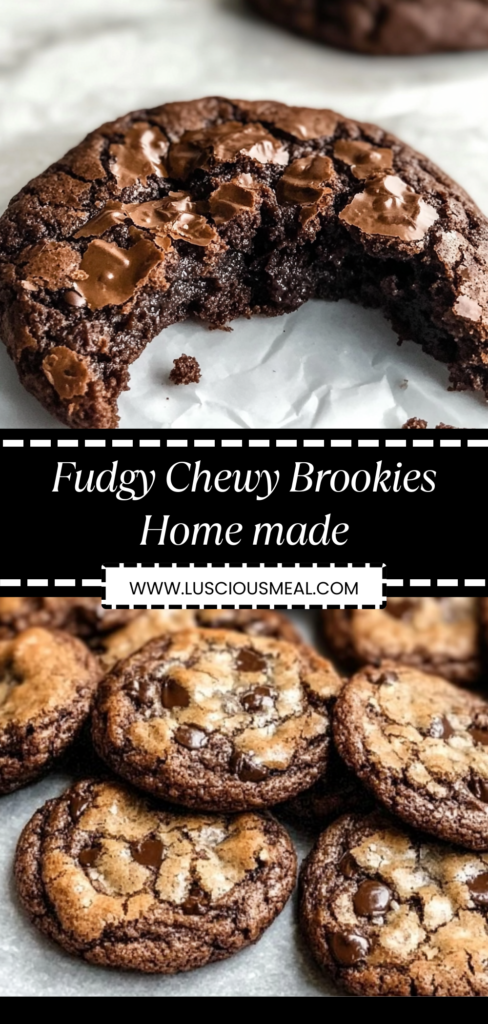
Fudgy brownie base married with buttery chocolate chip cookie top creates an irresistible dessert that delivers two beloved treats in each perfect bite. These homemade fudgy chewy brookies combine the best attributes of both classic desserts—the dense richness of brownies with the nostalgic comfort of chocolate chip cookies. The delightful contrast between slightly crisp cookie edges and moist brownie interior creates something far more exciting than either dessert could achieve alone. I first created these for a bake sale fundraiser and returned home with an empty platter and multiple recipe requests.
Why You’ll Love This Recipe
• Creates impressive dessert bars with dual textures and flavors • Satisfies both brownie lovers and cookie enthusiasts simultaneously • Makes perfect potluck contribution that stands out from standard options • Provides excellent make-ahead option for busy entertaining • Delivers professional bakery quality from ordinary pantry ingredients
My neighbor initially questioned whether homemade brookies could match the specialty bakery version she occasionally splurged on. After her first bite revealing perfect texture contrast and balanced sweetness, she immediately asked for the recipe and has since made them for her book club meetings. Sometimes recreating specialty treats at home delivers superior results through freshness and quality ingredient control impossible in commercial settings.
Quality Ingredients
• Unsalted butter creates tender structure and rich flavor foundation • Quality chocolate provides distinctive character throughout brownie layer • Fresh eggs bind components while adding richness and structure • Pure vanilla extract enhances both layers with aromatic warmth • Brown sugar adds moisture and caramel notes to cookie portion • Granulated sugar creates proper texture while supporting chocolate flavor • All-purpose flour establishes ideal structure without toughness • Cocoa powder deepens chocolate intensity in brownie base • Chocolate chips create melty pockets throughout both layers
Chocolate selection dramatically impacts your final result. I prefer using semi-sweet chocolate with approximately 60% cocoa content for the brownie base, which provides rich flavor without excessive bitterness. For chocolate chips, combining standard semi-sweet with chunks of higher-quality chocolate creates interesting texture and flavor variation throughout. My pastry chef friend emphasized that successful chocolate desserts begin with understanding different chocolate percentages and how they behave when baked, wisdom that prevents common pitfalls of overly sweet or bitter results that miss the mark on proper chocolate balance.
Baking Method
Create Brownie Foundation Melt butter and chocolate together using gentle heat, either in microwave with 30-second intervals or over double-boiler, stirring frequently until completely smooth without overheating. This careful melting prevents scorching which introduces bitterness. Allow cooling slightly before proceeding to prevent cooking eggs upon contact. Whisk sugar into warm chocolate mixture until completely incorporated with slight dissolution.
Develop Rich Texture Add eggs one at a time to chocolate mixture, incorporating completely before adding next. This gradual approach prevents temperature shock while maintaining proper emulsion. Introduce vanilla extract, whisking until mixture appears glossy with slight thickening. This development creates characteristic crackly brownie top while establishing fudgy interior texture foundation.
Incorporate Dry Ingredients Combine flour, cocoa powder, salt, and baking powder in separate bowl, whisking to distribute evenly without visible cocoa lumps. Add to wet chocolate mixture, folding gently just until combined with no visible flour streaks remaining. Avoid overmixing which develops gluten and toughens final texture. Fold in chocolate chips, distributing evenly throughout batter for consistent chocolate experience in every bite.
Prepare Cookie Component Cream room temperature butter with both sugars until notably lighter in color and fluffy in texture, typically 3-4 minutes with electric mixer. This extended creaming creates essential air pockets that contribute to final cookie texture. Add eggs and vanilla, beating until fully incorporated and slightly increased in volume. Combine dry ingredients separately, then add to butter mixture, mixing just until unified dough forms without overmixing. Fold in chocolate chips, ensuring even distribution throughout.
Create Perfect Layers Prepare baking pan with parchment paper extending beyond edges for easy removal after baking. Spread brownie batter evenly across bottom, creating level surface for proper cookie layer adhesion. Dollop cookie dough by spoonfuls across brownie surface, then gently spread using offset spatula or dampened fingers to create complete coverage without disturbing brownie base. Leave slight texture on cookie surface rather than perfectly smooth for interesting visual appearance after baking.
Bake With Precision Place in preheated oven, positioning rack in center for most even heat distribution. Bake until cookie top appears golden brown at edges while center remains slightly soft when pressed gently. Brownie layer requires less visible doneness cues, relying on overall baking time and slight pulling away from pan edges. Avoid overbaking which sacrifices desirable chewy fudginess in favor of drier, cakier texture.
Cool Strategically Allow cooling in pan for initial setting, typically 20-30 minutes, before lifting entire dessert out using parchment paper extensions. Complete cooling on wire rack before cutting to ensure clean slices without compression. For neatest presentation, refrigerate partially before cutting with sharp knife wiped clean between slices, then return to room temperature for serving to restore optimal texture and flavor perception.
My first attempt at brookies taught me important lessons about layer proportions. Creating equal thickness brownie and cookie components resulted in competing elements rather than harmonious combination. Subsequent batches with slightly thinner brownie base delivered the perfect balance where both elements contribute without overwhelming. Baking often involves finding precise proportions beyond basic measurements for truly spectacular results.
You Must Know
• Room temperature eggs incorporate more effectively than cold • Proper pan size ensures ideal thickness for both layers • Underbaking slightly creates perfect fudgy-chewy texture impossible when fully baked • Cooling completely before cutting provides cleanest presentation • Brookies continue setting after removal from oven
My father, who normally favors simple vanilla-based desserts, surprised everyone by requesting these brookies specifically for his birthday celebration. He commented that having “two desserts at once” felt particularly special while eliminating the need to choose between favorites. Creating treats that generate genuine enthusiasm from unexpected sources provides particular satisfaction when introducing hybrid desserts that reimagine classics.
Finishing Touches
These already-impressive bars welcome simple enhancements that elevate them further for special occasions. Salted caramel drizzle creates sophisticated sweet-salty contrast by zigzagging warm caramel sauce across cooled brookies before serving. Ice cream sandwich transformation places small scoop quality vanilla between two brookie squares for spectacular dinner party dessert. Festive sprinkle addition incorporates colorful jimmies or seasonal shapes into cookie dough before baking for celebration-worthy appearance. Coffee infusion adds espresso powder to brownie base for enhanced chocolate perception and sophisticated flavor depth. For extreme chocolate enthusiasm, consider additional chocolate ganache layer spread across cookie top after cooling.
Cutting Suggestions
Proper cutting techniques transform these delicious bars into presentation-worthy servings with minimal additional effort. For standard servings, create neat squares using bench scraper or sharp knife dipped in hot water between cuts. Elegant rectangular fingers provide sophisticated presentation for formal gatherings or dessert platters. Mini bite-sized squares work perfectly for sampling alongside other desserts in buffet settings. For gifting, larger squares individually wrapped in parchment paper tied with baker’s twine create charming presentation. Consider decorative cookie cutters for shaped brookies when serving as special occasion treats, though this creates some waste edges perfect for chef’s sampling.
Storage Solutions
Proper handling ensures these dual-textured treats maintain their appeal for extended enjoyment. Store completely cooled brookies in airtight container with parchment between layers to prevent sticking. At room temperature, expect peak quality for approximately three days, with slight texture changes but maintained deliciousness beyond that period. For longer preservation, refrigerate up to one week, allowing return to room temperature before serving for optimal texture and flavor. Freeze individually wrapped squares in freezer-safe container up to three months for emergency dessert needs. Thaw at room temperature or microwave briefly for warm, gooey texture resembling freshly baked experience.
Baking Wisdom
• Use light-colored metal pan rather than glass for most even heat distribution • Position rack in center position for most consistent baking results • Test multiple spots for doneness as ovens often have hot spots
The magical appeal of these fudgy chewy brookies lies in their perfect balance—between brownie and cookie, between structure and tenderness, between chocolate intensity and sweet comfort. While I appreciate elaborately decorated desserts requiring advanced skill, these brookies deliver equally impressive flavor impact through inherent characteristics rather than painstaking decoration. The magic happens through understanding each component’s ideal properties and how they harmonize when combined appropriately. After countless batches refined through both successes and learning experiences, this recipe continues proving that sometimes the most memorable desserts come from thoughtfully combining beloved classics rather than creating entirely novel concepts.