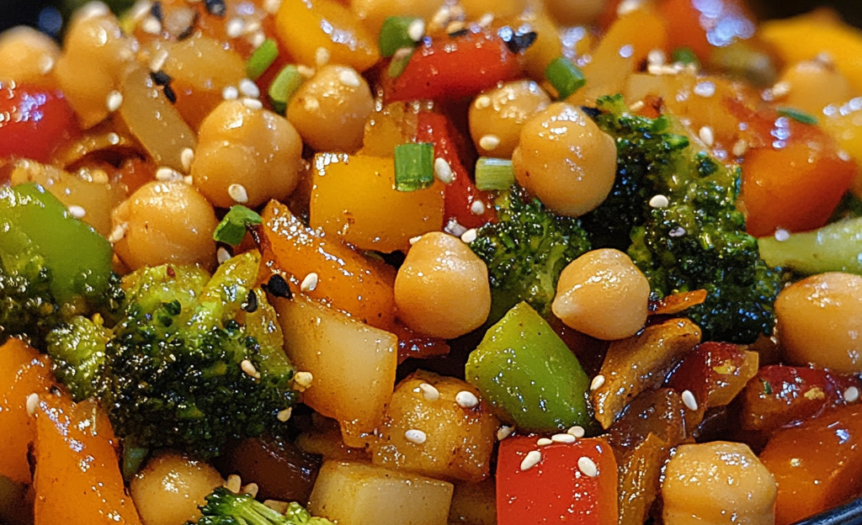
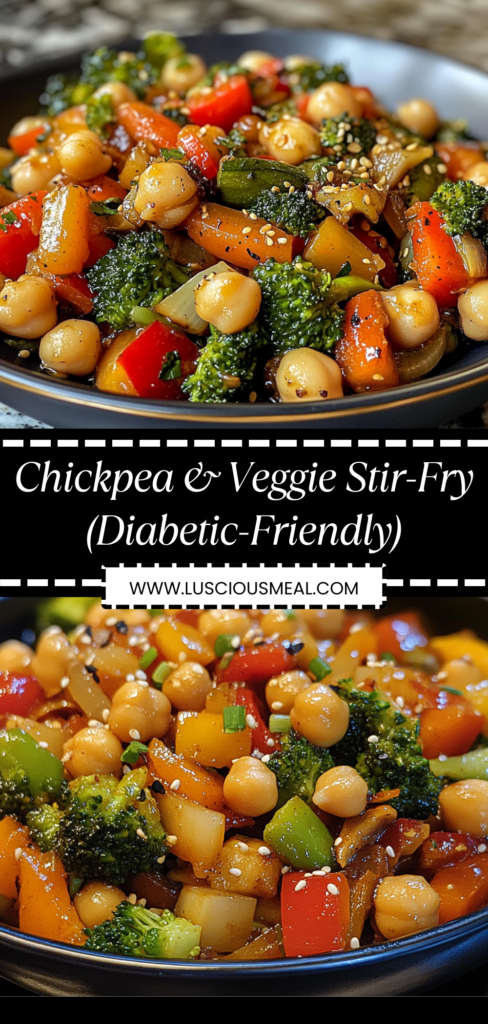
Colorful vegetables and hearty chickpeas sizzled in savory sauce create a nutritious meal supporting stable blood sugar while delivering maximum flavor. This chickpea and veggie stir-fry transforms pantry staples into an impressive dinner packed with plant-based protein, fiber, and essential nutrients perfect for diabetic-friendly eating. The satisfying combination of textures and bold flavors creates something far more exciting than standard health-conscious recipes. I first developed this recipe while cooking for my father following his diabetes diagnosis when seeking nutritious options that wouldn’t feel like dietary sacrifice.
Why You’ll Love This Recipe
• Creates balanced meal supporting stable blood glucose • Takes just 20 minutes from preparation to serving • Makes excellent meal prep option for busy weekdays • Provides substantial plant protein without meat • Delivers fiber-rich satisfaction without excessive carbohydrates
My neighbor initially questioned whether vegetable-centered meals could truly satisfy his hearty appetite while supporting his diabetes management goals. After trying this stir-fry during a casual dinner invitation, he immediately asked for the recipe and has since incorporated it into his weekly rotation. Sometimes thoughtful ingredient combinations create unexpectedly satisfying experiences that support health objectives while maintaining genuine eating pleasure.
Nutritious Ingredients
• Chickpeas provide substantial protein and fiber foundation • Bell peppers offer vibrant color and vitamin C • Broccoli contributes cruciferous nutrition with minimal carbs • Snow peas add crisp texture and natural sweetness • Red onion establishes aromatic base with chromium for blood sugar support • Fresh ginger contains natural anti-inflammatory compounds • Garlic offers flavor with potential glucose-moderating effects • Coconut aminos provide savory depth with less sodium than soy sauce • Sesame oil introduces distinctive flavor without excessive fat
Chickpea selection dramatically impacts your final result. I prefer home-cooked chickpeas when time allows, which maintain firmer texture during stir-frying than canned alternatives. When using canned versions for convenience, thorough rinsing removes excess sodium while patting dry before cooking prevents splattering and promotes better browning. My nutritionist emphasized that legume preparation significantly impacts both flavor and blood sugar response, wisdom that proves especially relevant when creating health-supportive recipes without sacrificing culinary quality.
Preparation Method
Prepare The Vegetables Slice bell peppers, onions, and snow peas into uniform sizes for consistent cooking. Cut broccoli into small florets maintaining some stem for textural contrast. This careful preparation ensures even cooking throughout while creating visually appealing final presentation. Having all components properly prepared before heating pan ensures smooth cooking process without ingredients overcooking while others are being cut.
Create Balanced Sauce Combine coconut aminos, small amount of rice vinegar, minced garlic, grated ginger, and pinch of monk fruit sweetener or stevia in small bowl, stirring until completely integrated. This sugar-free sauce provides complex flavor profile while supporting blood glucose stability through thoughtful sweetener selection. Having sauce completely combined before cooking begins ensures proper incorporation without last-minute adjustments.
Prepare The Chickpeas Drain and rinse canned chickpeas thoroughly, then pat completely dry with paper towels. This moisture removal promotes browning rather than steaming during initial cooking phase. For enhanced flavor and texture, consider removing loose skins that sometimes separate during rinsing, though this remains optional depending on available time.
Heat The Pan Properly Preheat wok or large skillet over medium-high heat until very hot. Add small amount of avocado oil, which provides high smoke point allowing proper stir-frying without breaking down at high temperatures. Allow oil to completely heat before adding ingredients, creating immediate searing rather than soaking for improved texture throughout.
Cook In Strategic Sequence Begin with chickpeas, cooking undisturbed initially to develop golden exterior before stirring. This patience creates fundamental flavor impossible through constant movement. Add firmer vegetables like broccoli and carrots next, allowing partial cooking before introducing quicker-cooking components like bell peppers, snow peas, and onions. This strategic sequencing ensures each element reaches proper doneness simultaneously.
Finish With Flavor Layers Pour prepared sauce over nearly-finished vegetables, tossing continuously while sauce reduces slightly and coats everything evenly. Add fresh herbs during final moments for brightness without flavor diminishment through extended cooking. Finish with light drizzle of sesame oil and sprinkle of sesame seeds, which provide finishing flavor notes and visual enhancement without requiring additional cooking.
Serve With Consideration Present stir-fry immediately for optimal texture, either independently as complete meal or alongside small portion of brown rice or cauliflower rice depending on individual carbohydrate tolerance. For enhanced nutritional profile and satiety, consider serving over small bed of mixed greens which wilt slightly from residual heat creating additional vegetable serving without separate preparation.
My first attempt at diabetic-friendly stir-fry taught me important lessons about sauce thickening. Using traditional cornstarch created unnecessary carbohydrates while arrowroot powder provided similar texture with improved glycemic profile. Through experimentation, I discovered that reducing sauce through evaporation often eliminated thickener requirements entirely while intensifying flavors naturally. Health-supportive cooking often involves rethinking traditional techniques rather than simple ingredient substitutions.
You Must Know
• Excessive sauce creates sogginess rather than flavorful coating • Cooking vegetables separately ensures proper texture for each variety • Protein sources benefit from cooking first for proper browning • High heat creates characteristic stir-fry flavor impossible at lower temperatures • Fresh ginger provides significantly better flavor than powdered versions
My father, initially reluctant toward plant-based meals after decades of meat-centered eating, surprised everyone by requesting this chickpea stir-fry regularly during his transition to diabetes-friendly eating. He particularly noted feeling satisfied without post-meal energy crashes previously experienced with carbohydrate-heavy options. Converting committed carnivores provides particular satisfaction when introducing plant-forward dishes that deliver genuine contentment while supporting health objectives.
Vegetable Variations
This adaptable base recipe welcomes seasonal modifications while maintaining its fundamental nutritional profile. Spring adaptation incorporates asparagus tips and snow peas for vibrant green presentation. Summer version features zucchini, yellow squash, and cherry tomatoes added during final minutes. Autumn interpretation includes thinly sliced Brussels sprouts and diced butternut squash pre-roasted briefly for caramelized notes. Winter variation incorporates hearty kale and red cabbage for nutritional density during sparse produce seasons. The fundamental cooking technique remains consistent while vegetable selections change with seasonal availability ensuring year-round sustainability and economic efficiency.
Protein Alternatives
While chickpeas provide excellent plant-based protein foundation, this versatile preparation welcomes thoughtful protein substitutions or additions based on individual nutritional needs. Tofu version replaces chickpeas with extra-firm tofu pressed and cubed for traditional stir-fry approach. Edamame adaptation incorporates whole soybeans for complete protein profile with distinctive texture. For non-vegetarian variations, consider thinly sliced chicken breast or turkey tenderloin cooked before vegetables for lean animal protein option. Shrimp alternative provides rapid-cooking seafood protein source rich in iodine and selenium. When combining protein sources, adjust cooking sequence accordingly with animal proteins typically requiring initial cooking while plant options may integrate during various stages.
Spice Adaptations
This flexible recipe welcomes varying spice profiles while maintaining diabetic-friendly integrity. Traditional Chinese five-spice version incorporates aromatic spice blend for authentic Asian flavor profile. Indian-inspired adaptation features curry powder, cumin, and turmeric creating completely transformed experience using identical vegetables. Mexican interpretation includes cumin, mild chili powder, and oregano with lime rather than rice vinegar for acidity. Thai-inspired version features red curry paste and lime with coconut milk replacing portion of liquid ingredients. These spice variations create entirely different meals using consistent vegetable and protein base, preventing menu fatigue while maintaining nutritional objectives.
Chef Techniques
• Use microplane for ginger and garlic to create fine paste that distributes evenly • Create “hot zones” in pan by pushing completed ingredients to cooler edges • Consider finishing with herb-infused oil drizzle for aromatic enhancement
This chickpea and veggie stir-fry exemplifies how thoughtful preparation of nutritious ingredients creates truly satisfying meals supporting specific health goals without sacrifice. While I appreciate elaborate culinary creations, this straightforward recipe demonstrates that everyday cooking can deliver exceptional results through ingredient quality and proper technique rather than complexity. The magic happens through understanding how different vegetables respond to heat while layering complementary flavors that enhance rather than mask natural ingredient qualities. After countless variations refined through both culinary exploration and blood glucose monitoring, this recipe continues proving that health-supportive cooking can produce genuinely crave-worthy results when approached with proper technique and quality ingredients.