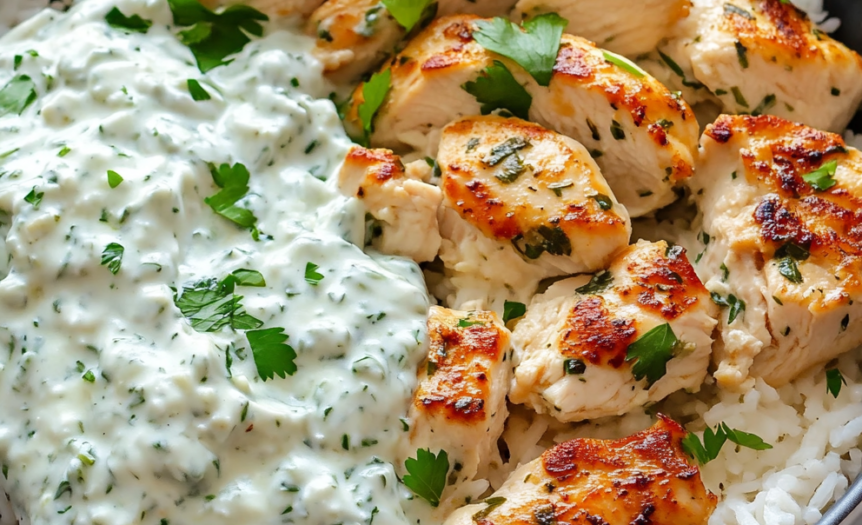
This tzatziki chicken bake bowl brings together tender, herb-seasoned chicken with the cooling brightness of homemade tzatziki and Mediterranean vegetables in a one-dish meal that’s both satisfying and surprisingly light. The chicken absorbs aromatic Greek flavors during baking while the vegetables develop their own caramelized sweetness, creating layers of complementary tastes that transport you straight to the sunny Mediterranean. If you enjoy this style of fresh, herb-forward cooking, you might also like Greek lemon chicken with potatoes, Mediterranean stuffed peppers, or roasted vegetable and feta grain bowls.
Why You’ll Love This Recipe
- Complete balanced meal – combines lean protein, complex carbohydrates, healthy fats, and plenty of vegetables in perfect harmony without requiring multiple pots or complicated timing
- Fresh, bright flavors – the homemade tzatziki and herb-marinated chicken create restaurant-quality Greek flavors that are both satisfying and refreshing rather than heavy
- Prep-ahead flexibility – chicken can marinate for up to 24 hours while tzatziki improves in flavor overnight, making this perfect for meal planning or entertaining
- Naturally healthy – packed with lean protein, fiber-rich vegetables, and beneficial herbs without relying on excessive oils or processed ingredients
Ingredients Breakdown
Chicken thighs: The ideal cut for this Mediterranean preparation, offering superior flavor and moisture retention compared to breast meat. Bone-in, skin-on thighs provide the richest taste and most appealing texture, though boneless thighs work well for easier eating. The higher fat content in thighs prevents them from drying out during the longer baking time needed for the vegetables to cook properly. When selecting thighs, look for pieces of similar size for even cooking, and choose organic or free-range when possible for the best flavor. The skin becomes beautifully crispy during baking while protecting the meat underneath, creating textural contrast that elevates the entire dish.
Greek yogurt: The foundation of authentic tzatziki, providing tangy richness and probiotics while keeping the sauce light and fresh. Full-fat Greek yogurt delivers the creamiest texture and most authentic flavor, though 2% versions work well for those watching calories. The thick consistency of Greek yogurt is crucial – regular yogurt will create a watery sauce that doesn’t cling properly to the chicken and vegetables. Strain the yogurt through cheesecloth for 30 minutes if you want ultra-thick tzatziki, or look for brands specifically labeled as “extra thick” for convenience.
Cucumbers for tzatziki: Essential for the characteristic fresh crunch and cooling effect that makes tzatziki so refreshing. English cucumbers work best due to their thin skin, fewer seeds, and mild flavor, though regular cucumbers work well if you peel and seed them thoroughly. The key to perfect tzatziki is removing excess moisture from the cucumbers, which prevents the sauce from becoming watery and diluted. Persian cucumbers make an excellent alternative with their crisp texture and minimal seeds. Always taste the cucumber before using – if it’s bitter, the tzatziki will be too.
Fresh herbs: Dill and oregano provide the authentic Greek flavor profile that distinguishes this dish from generic Mediterranean cooking. Fresh dill has a bright, slightly licorice-like quality that pairs beautifully with both the yogurt and chicken, while oregano adds earthy, peppery notes that complement the lemon. Using fresh herbs rather than dried makes an enormous difference in both flavor and aroma. If fresh dill isn’t available, fresh mint makes an interesting substitute, though the flavor profile will shift slightly toward Middle Eastern rather than strictly Greek.
Mediterranean vegetables: Cherry tomatoes, red onion, and bell peppers create a colorful, nutritious foundation that roasts alongside the chicken. Choose vegetables of similar density so they cook evenly – cherry tomatoes should be firm but ripe, peppers should be crisp and colorful, and red onions should be fresh without any soft spots. The natural sugars in these vegetables caramelize during roasting, creating depth and sweetness that balances the tangy tzatziki and herb-crusted chicken perfectly.
Step-by-Step Instructions
- Begin by preparing the tzatziki, which benefits from resting time to develop flavors. Grate 2 large English cucumbers using the large holes of a box grater, then place the grated cucumber in a fine mesh strainer set over a bowl. Sprinkle with 1 teaspoon of salt and toss thoroughly to coat all pieces. Let drain for 30 minutes, then squeeze the cucumber firmly in clean hands or press with the back of a spoon to remove as much liquid as possible. This step is crucial for preventing watery tzatziki.
- In a medium bowl, combine the drained cucumber with 1 cup thick Greek yogurt, 3 minced garlic cloves, 1/4 cup chopped fresh dill, 2 tablespoons fresh lemon juice, 2 tablespoons extra virgin olive oil, and 1/2 teaspoon salt. Mix thoroughly and taste for seasoning, adjusting lemon juice, salt, or herbs as needed. The tzatziki should be thick, creamy, and bright with a good balance of cucumber freshness and tangy yogurt. Cover and refrigerate while preparing the rest of the dish.
- Preheat your oven to 425°F (220°C) and position a rack in the center. The high temperature ensures proper browning of the chicken skin and caramelization of the vegetables without overcooking. While the oven heats, prepare the chicken marinade by combining 1/4 cup olive oil, 3 minced garlic cloves, 2 tablespoons fresh lemon juice, 1 tablespoon fresh oregano (or 1 teaspoon dried), 1 teaspoon salt, and 1/2 teaspoon black pepper in a large bowl.
- Add 6-8 bone-in, skin-on chicken thighs to the marinade, turning to coat all surfaces thoroughly. Pay special attention to getting marinade under the skin where possible, as this is where the most flavor penetration occurs. Let the chicken marinate at room temperature for 20-30 minutes, or refrigerate for up to 24 hours for deeper flavor development. Longer marinating times create more pronounced Greek flavors throughout the meat.
- While the chicken marinates, prepare the vegetables. Cut 2 red bell peppers into 1-inch strips, slice 1 large red onion into thick wedges, and halve 2 cups of cherry tomatoes. The vegetable pieces should be large enough to maintain their shape during the longer cooking time but small enough to cook through completely. Uniform sizing ensures even cooking and attractive presentation.
- In a large roasting pan or baking dish (approximately 9×13 inches), arrange the prepared vegetables in a single layer. Drizzle with 2 tablespoons olive oil and season with salt and pepper, tossing gently to coat. The oil helps the vegetables caramelize and prevents sticking while adding richness that complements the lean chicken.
- Remove the chicken from the marinade and place the thighs skin-side up on top of the vegetables, spacing them evenly throughout the pan. Pour any remaining marinade over the chicken and vegetables – this adds flavor and prevents sticking. The skin should be facing up to allow it to crisp properly during baking.
- Bake for 35-45 minutes until the chicken skin is golden brown and crispy, and the internal temperature reaches 165°F (74°C) when measured at the thickest part of the thigh. The vegetables should be tender and lightly caramelized around the edges. If the chicken skin isn’t browning sufficiently, increase the oven temperature to 450°F for the last 10 minutes.
- While the chicken and vegetables finish cooking, prepare any additional bowl components. Cook 1 1/2 cups of quinoa, rice, or orzo according to package directions if you want a grain base for heartier portions. Alternatively, prepare a simple Greek salad with cucumber, tomatoes, and feta to serve alongside for a lighter meal option.
- Remove the pan from the oven and let rest for 5-10 minutes before serving. This resting period allows the juices to redistribute in the chicken and gives the vegetables time to finish cooking in the residual heat. The brief cooling also makes the dish easier to handle and serve.
- To serve, arrange the warm chicken and roasted vegetables over individual bowls with or without a grain base. Drizzle generously with the chilled tzatziki sauce, creating an appealing temperature contrast between the warm, caramelized components and the cool, fresh sauce. Garnish with additional fresh herbs, lemon wedges, and crumbled feta cheese if desired.

Perfect Texture: What to Look For
A successful tzatziki chicken bake bowl achieves harmony between multiple textures and temperatures. The chicken should have golden, crispy skin that yields to reveal tender, juicy meat that’s been infused with herb and lemon flavors. The vegetables should be caramelized and tender but still maintain their individual characters – peppers with slight bite, onions that are sweet and soft, and tomatoes that have concentrated in flavor without falling apart completely. The tzatziki should be thick and creamy, neither watery nor pasty, with distinct cucumber pieces that provide fresh crunch. When all elements come together, each bite should offer multiple textures and the interplay between warm, savory components and cool, tangy sauce.
Customization Options
This versatile recipe adapts beautifully to seasonal ingredients and personal preferences. For a heartier winter version, substitute root vegetables like carrots, parsnips, and potatoes for the peppers and tomatoes, extending the cooking time as needed. Create a more substantial meal by adding chickpeas or white beans to the vegetable mixture for additional protein and fiber. For dairy-free versions, substitute thick coconut yogurt for the Greek yogurt in the tzatziki, adding extra lemon juice to maintain the tangy flavor profile. During summer, add zucchini and eggplant to the vegetable mix, or serve the components over a bed of fresh greens for a lighter preparation.
Practical Tips
Storage: The cooked chicken and vegetables keep well refrigerated for up to 3 days, though the chicken skin will lose its crispness during storage. The tzatziki stays fresh for 2-3 days and actually improves in flavor as the garlic mellows and the herbs infuse the yogurt. Store components separately when possible to maintain optimal textures. For meal prep, portion the chicken and vegetables into containers and add fresh tzatziki just before eating to maintain the sauce’s creamy consistency.
Reheating: For the best results when reheating, warm the chicken and vegetables in a 350°F oven for 10-12 minutes until heated through. This method helps restore some crispness to the chicken skin better than microwaving. The tzatziki should be served cold – remove it from the refrigerator 10-15 minutes before serving to take off the chill and allow the flavors to brighten. Never heat the tzatziki, as the yogurt can curdle and separate.
Make-ahead strategy: This dish works excellently for advance preparation in several ways. The tzatziki can be made up to 2 days ahead and actually improves with time. The chicken can marinate overnight for deeper flavor penetration. For complete advance preparation, assemble the entire dish up to the point of baking, cover tightly, and refrigerate for up to 24 hours, then bake as directed, adding 5-10 minutes to account for the cold start.
Tzatziki perfection: The key to restaurant-quality tzatziki lies in removing moisture from the cucumbers and using the right yogurt consistency. If your tzatziki seems thin, strain it through cheesecloth for 30 minutes before serving. For extra richness, fold in 1-2 tablespoons of mayonnaise. The sauce should be thick enough to coat the back of a spoon but still spreadable.
Common Questions
Can I use chicken breasts instead of thighs? Yes, though the cooking time and technique need adjustment. Chicken breasts cook faster and can dry out more easily, so reduce the oven temperature to 400°F and check for doneness after 25-30 minutes. Consider pounding the breasts to even thickness for uniform cooking, and be extra careful not to overcook them. The thighs’ higher fat content makes them more forgiving and flavorful for this preparation.
How do I prevent the tzatziki from becoming watery? The crucial step is properly draining the grated cucumber. Salt the grated cucumber and let it drain for at least 30 minutes, then squeeze it firmly to remove as much liquid as possible. Use thick Greek yogurt rather than regular yogurt, and avoid adding the lemon juice until just before serving if you’re making it far in advance. Some separation is normal – simply stir before serving.
Can I make this without a grain base for a lower-carb version? Absolutely – the chicken and vegetables with tzatziki create a complete, satisfying meal without additional starches. Consider serving over cauliflower rice, zucchini noodles, or simply a bed of mixed greens for added vegetables without the carbohydrates. This version emphasizes the Mediterranean flavors while keeping the meal light and fresh.
Why isn’t my chicken skin getting crispy? Several factors affect skin crispiness: ensure the chicken is patted completely dry before marinating, don’t overcrowd the pan (which creates steam), and make sure the oven temperature is hot enough (425°F minimum). If needed, run the dish under the broiler for 2-3 minutes at the end of cooking to achieve the desired crispness, watching carefully to prevent burning.
Serving Suggestions
This versatile dish works beautifully for both casual family dinners and more formal entertaining. For everyday meals, serve the chicken and vegetables over quinoa or rice with generous dollops of tzatziki and perhaps some warm pita bread on the side. For company dinners, present the components on a large platter family-style, allowing guests to compose their own bowls with various accompaniments like olives, feta cheese, and additional fresh herbs.
Consider offering multiple serving styles – over grains for heartier appetites, over greens for lighter preferences, or simply with warm flatbread for a more traditional Greek approach. A simple Greek salad on the side provides additional fresh vegetables and creates a complete Mediterranean meal. For brunch applications, serve the chicken and vegetables over a bed of fresh arugula with poached eggs on top, creating a sophisticated twist that works beautifully for entertaining.
Nutritional Benefits
This dish excels nutritionally by combining lean protein, beneficial fats, and plenty of vegetables in an approach that supports various health goals. Chicken thighs provide complete protein along with important minerals like selenium and phosphorus, while the skin-on preparation ensures better flavor and satiety. The Greek yogurt in tzatziki contributes probiotics for digestive health along with calcium and additional protein.
The abundance of colorful vegetables provides antioxidants, fiber, and essential vitamins, particularly vitamin C from the peppers and tomatoes. The olive oil offers heart-healthy monounsaturated fats, while the fresh herbs contribute various phytonutrients and anti-inflammatory compounds. This preparation method – roasting rather than frying – preserves the nutritional integrity of all ingredients while developing complex flavors that make healthy eating genuinely enjoyable rather than feeling like a sacrifice. The meal provides sustained energy and satisfaction while supporting overall wellness through its emphasis on whole, minimally processed ingredients.