

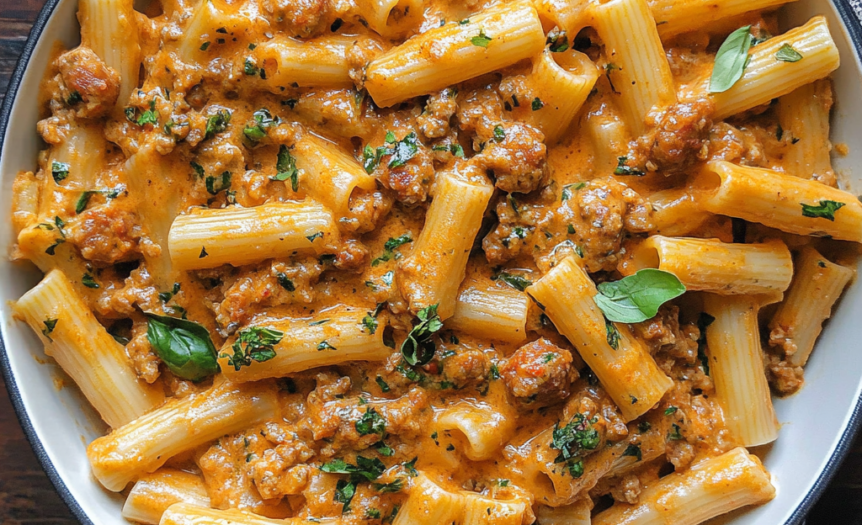
This creamy sausage rigatoni transforms simple ingredients into a rich, restaurant-quality pasta dish that comes together in just one pot in under 30 minutes. The beef sausage provides hearty, savory flavor while the cream sauce coats every tube of rigatoni perfectly, creating a satisfying comfort meal that’s both elegant and family-friendly. If you enjoy this style of quick, one-pot pasta, you might also like creamy bacon penne, sausage tortellini soup, or Italian sausage and pepper pasta.
Why You’ll Love This Recipe
- True one-pot convenience – everything cooks in a single pot from start to finish, eliminating multiple dishes and streamlining both cooking and cleanup
- Quick weeknight solution – delivers complex, satisfying flavors in 30 minutes or less, perfect for busy schedules without sacrificing taste or quality
- Rich, restaurant-style sauce – creates a velvety cream sauce that rivals upscale Italian restaurants while using accessible ingredients and simple techniques
- Perfectly cooked pasta – the pasta cooks directly in the flavorful liquid, absorbing taste while achieving ideal texture without separate boiling
Ingredients Breakdown
Italian beef sausage: The protein centerpiece that provides rich, savory flavor and substantial texture to make this a complete meal. Choose high-quality Italian sausage with good seasoning blend – sweet Italian sausage offers mild, fennel-forward flavor, while spicy versions add heat and complexity. Remove the casings and break the sausage into bite-sized pieces during cooking for the best distribution throughout the pasta. The fat from the sausage renders during cooking, creating a flavorful base for the sauce and preventing the need for additional oil. Look for sausage with visible herbs and spices rather than overly processed versions.
Rigatoni pasta: The ideal pasta shape for this dish, with tubes that capture and hold the creamy sauce beautifully. The ridged exterior and hollow center of rigatoni make it perfect for clinging to both the sauce and small pieces of sausage. Use dried pasta rather than fresh for this one-pot method, as it holds its shape better during the cooking process. If rigatoni isn’t available, penne, ziti, or other tube-shaped pastas work well as substitutes. Avoid long pasta like spaghetti or linguine, which don’t cook evenly in this method.
Heavy cream: Creates the luxurious, velvety sauce that coats the pasta and binds all ingredients together. Heavy cream with 35-36% fat content provides the best texture and won’t curdle when heated with the acidic tomatoes. Don’t substitute with milk or half-and-half, which lack the fat content necessary for proper sauce consistency and may break when heated. The cream should be added at the right temperature to create a smooth, cohesive sauce that doesn’t separate.
Beef broth: Provides the liquid base for cooking the pasta while adding savory depth that complements the sausage perfectly. Low-sodium broth gives you better control over the final salt level, especially important since the sausage and cheese will contribute additional sodium. The broth should be high-quality with rich flavor, as it significantly impacts the final taste. If you only have regular broth, taste carefully before adding additional salt at the end.
Diced tomatoes: Add acidity and brightness that cuts through the richness of the cream and sausage while providing color and fresh flavor. Fire-roasted diced tomatoes offer extra depth with their smoky notes, though regular diced tomatoes work perfectly well. Drain the tomatoes partially to prevent the dish from becoming too watery, but reserve some liquid for moisture. San Marzano or other high-quality canned tomatoes make a noticeable difference in flavor.
Step-by-Step Instructions
- Heat a large, heavy-bottomed pot or Dutch oven over medium-high heat until hot. The pot should be large enough to hold all ingredients comfortably with room for stirring – at least 4-5 quarts capacity. A heavy bottom prevents hot spots that could cause sticking or uneven cooking. Avoid non-stick pans for this recipe, as you want to develop fond (browned bits) that add flavor to the final dish.
- Remove 1 pound of Italian beef sausage from its casings and add to the hot pot. Break the sausage into bite-sized pieces using a wooden spoon or spatula, aiming for chunks roughly the size of a walnut. Cook for 5-7 minutes, stirring occasionally, until the sausage is browned on all sides and cooked through. Don’t rush this step – proper browning develops deep flavors that enhance the entire dish.
- Add 1 diced medium onion and 3 minced garlic cloves to the pot with the cooked sausage. Cook for 2-3 minutes, stirring frequently, until the onion becomes translucent and the garlic is fragrant but not browned. The residual fat from the sausage should provide enough cooking medium, but add a tablespoon of olive oil if the pot seems dry. This aromatic base adds complexity to the final sauce.
- Pour in one 14.5-ounce can of diced tomatoes (drained partially, reserving about 1/4 cup of the juice) and cook for 2 minutes, stirring to combine with the sausage mixture. The tomatoes will begin to break down and create a sauce base. This brief cooking step concentrates the tomato flavors and helps meld them with the other ingredients.
- Add 3 cups of beef broth, 1 pound of rigatoni pasta, 1 teaspoon dried Italian seasoning, 1/2 teaspoon salt, and 1/4 teaspoon black pepper to the pot. Stir well to ensure the pasta is submerged in the liquid and the seasonings are distributed evenly. The liquid should just cover the pasta – add more broth if needed, but avoid adding too much as it will dilute the flavors.
- Bring the mixture to a rolling boil, then reduce heat to medium and simmer uncovered for 12-15 minutes, stirring frequently to prevent sticking. The pasta should cook according to package directions, absorbing the flavorful liquid as it cooks. Stir every 2-3 minutes to ensure even cooking and prevent pasta from sticking to the bottom of the pot.
- When the pasta is tender and most of the liquid has been absorbed (there should still be some liquid remaining), reduce heat to low and slowly stir in 1/2 cup heavy cream. Add the cream gradually while stirring constantly to prevent curdling. The cream should integrate smoothly with the remaining liquid to create a cohesive sauce.
- Add 1/2 cup freshly grated Parmesan cheese and stir until melted and incorporated into the sauce. The cheese will help thicken the sauce while adding rich, nutty flavor. If the sauce seems too thin, simmer for 2-3 more minutes to allow it to reduce slightly. If it’s too thick, add a splash of broth or cream to reach the desired consistency.
- Taste the dish and adjust seasoning with additional salt, pepper, or Italian seasoning as needed. The flavors should be well-balanced with the sausage providing savory richness, the tomatoes adding brightness, and the cream creating luxurious texture. Remove from heat once the seasoning is perfect to prevent overcooking.
- Let the pasta rest for 2-3 minutes off the heat to allow the sauce to thicken slightly and the flavors to meld together. During this time, the pasta will continue to absorb sauce, creating the perfect consistency for serving. Garnish with additional Parmesan cheese and fresh herbs if desired.
Perfect Texture: What to Look For
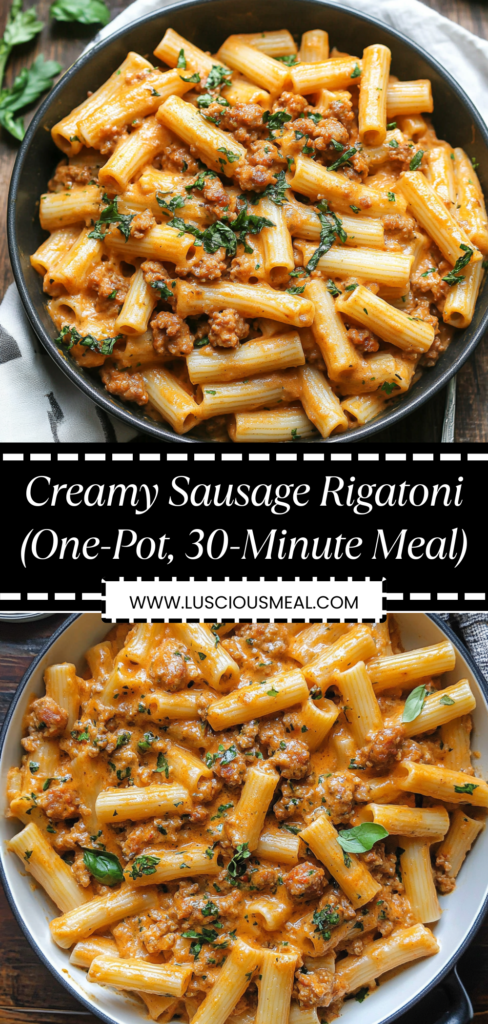
The ideal creamy sausage rigatoni should have pasta that’s perfectly al dente – tender but still with a slight bite – while being thoroughly coated with a smooth, creamy sauce that clings to every tube and ridge. The sausage should be well-browned and broken into appealing bite-sized pieces that distribute evenly throughout the dish. The sauce should be creamy and cohesive without being too thick or too thin, coating the pasta generously without pooling in the bottom of the pot. When served, each forkful should contain pasta, sausage, and sauce in perfect harmony, with the rigatoni tubes filled with the flavorful cream sauce.
Customization Options
This versatile base recipe adapts beautifully to different preferences and ingredients you have on hand. For extra vegetables, add diced bell peppers with the onions, or stir in fresh spinach during the last few minutes of cooking. Mushrooms pair excellently with sausage – add sliced mushrooms after browning the sausage and cook until golden. For heat lovers, use spicy Italian sausage or add red pepper flakes with the garlic. Different cheeses like Romano or Asiago can replace or complement the Parmesan for varied flavor profiles. Fresh herbs like basil or parsley added at the end brighten the rich dish beautifully.
Practical Tips
Pasta cooking success: The key to perfect one-pot pasta is maintaining the right liquid levels and stirring frequently. If the pasta seems to be cooking too quickly and sticking, reduce the heat and add a splash more broth. If there’s too much liquid remaining when the pasta is done, increase the heat and simmer uncovered to reduce it quickly.
Preventing cream from curdling: Always add cream to the pot off high heat and stir constantly. If the mixture is too hot when you add the cream, it may curdle. If this happens, remove from heat immediately and whisk vigorously, or blend briefly with an immersion blender to smooth the sauce.
Sausage preparation: Remove all casings completely before cooking, as any remaining casing pieces can be unpleasant to eat. Break the sausage into irregular, bite-sized pieces rather than uniform crumbles – this creates better texture and more appealing appearance in the finished dish.
Storage and reheating: This dish keeps well refrigerated for 3-4 days, though the sauce may thicken considerably. When reheating, add a splash of broth or cream and heat gently, stirring frequently. The pasta will continue to absorb sauce during storage, so expect to thin it slightly when reheating.
Common Questions
Can I use a different type of sausage? Yes, though the flavor will change significantly. Chicken or turkey Italian sausage work well for a lighter version, while chorizo creates a Spanish-inspired variation. Avoid breakfast sausage, which has different seasonings that don’t complement the Italian flavors. If using leaner sausage, you may need to add a tablespoon of olive oil to prevent sticking.
What if I don’t have heavy cream? Heavy cream is really essential for the proper texture and richness of this dish. Half-and-half can substitute but may result in a thinner sauce that’s more prone to curdling. Avoid milk, which lacks the fat content needed for proper sauce consistency. If you must use a lighter option, consider adding a tablespoon of flour to help thicken the sauce.
Can I make this ahead of time? This dish is best served immediately after cooking, as pasta continues to absorb liquid during storage. If you need to make it ahead, slightly undercook the pasta and add extra liquid before storing. Reheat gently with additional broth or cream to restore the proper consistency.
Why is my pasta sticking to the bottom? This usually happens from insufficient stirring or heat that’s too high. Stir every 2-3 minutes during cooking and ensure you’re using a heavy-bottomed pot. If sticking occurs, reduce heat immediately and stir more frequently. A small amount of sticking is normal and actually adds flavor to the dish.
Serving Suggestions
This rich, satisfying pasta works beautifully as a complete meal when served with a simple green salad dressed with vinaigrette to cut through the richness. Crusty Italian bread or garlic bread makes an excellent accompaniment for soaking up any extra sauce. For a more substantial meal, serve with steamed or roasted vegetables like broccoli, asparagus, or zucchini that provide color and nutritional balance.
The dish is perfect for casual family dinners but elegant enough for company when garnished with fresh herbs and additional Parmesan. Consider serving in warmed bowls to maintain the optimal temperature, and have extra cheese available for those who want additional richness. A medium-bodied red wine like Chianti or Sangiovese complements the sausage beautifully, while a crisp white like Pinot Grigio provides refreshing contrast to the cream sauce.
Nutritional Benefits
This hearty pasta provides substantial protein from the Italian sausage, supporting muscle maintenance and providing sustained energy for active lifestyles. The beef broth contributes additional protein along with minerals like iron and B vitamins. While definitely a rich, indulgent meal, the one-pot cooking method helps control portion sizes and allows you to see exactly what goes into the dish.
To enhance the nutritional profile, consider adding vegetables like spinach, bell peppers, or mushrooms, which increase vitamin and fiber content without significantly altering the core flavors. Using whole grain pasta when available adds fiber and nutrients, though it may require slight adjustments to cooking time and liquid amounts. The key is enjoying this satisfying comfort food in appropriate portions as part of a balanced eating approach, recognizing it as an occasional indulgence that provides genuine pleasure and satisfaction for special weeknight meals or casual entertaining.

