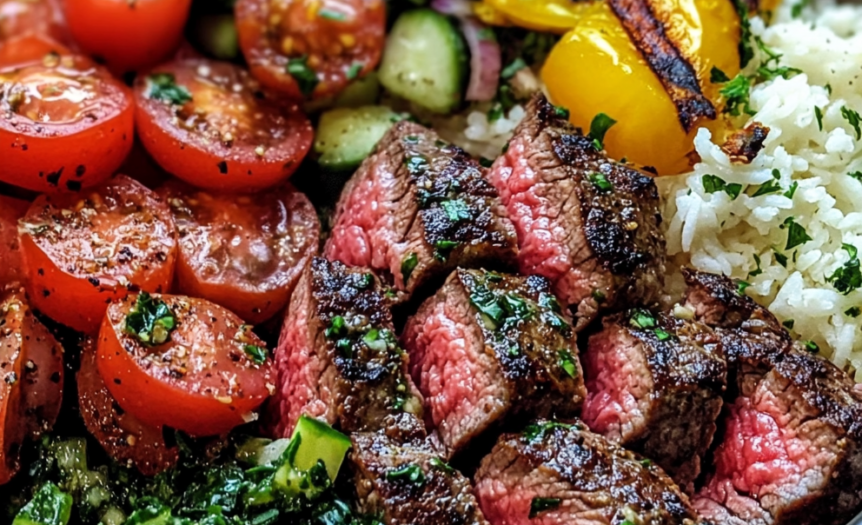
These Mediterranean steak bowls are everything you want in a satisfying, healthy dinner – perfectly seasoned, tender steak served over fluffy rice with the most vibrant array of fresh vegetables, creamy tzatziki, and all the classic Mediterranean flavors that make every bite feel like a mini vacation to the Greek islands. What makes these bowls absolutely irresistible is how all the components work together harmoniously – the herb-crusted steak provides rich, savory protein, while cucumber, tomatoes, red onion, and olives add freshness and crunch, all brought together by cool, garlicky tzatziki that ties everything together beautifully. I started making these when I was craving something that felt both indulgent and healthy, and they’ve become our go-to dinner when we want something that looks and tastes restaurant-quality but comes together easily at home using simple, wholesome ingredients that actually make you feel good after eating them.
Why This Mediterranean Steak Bowls Recipe Actually Works
The magic of these bowls lies in the balance of flavors, textures, and temperatures that create a complete, satisfying meal in every bite. The steak gets seasoned with a blend of Mediterranean herbs and spices that complement rather than overpower the meat’s natural flavor, while a quick sear creates a beautiful crust that locks in all the juices. The key is cooking the steak to the perfect doneness and letting it rest properly so it stays tender and juicy when sliced.
What elevates these from simple steak and vegetables to something special is the thoughtful combination of fresh components that each bring something unique to the bowl. The crisp cucumbers and juicy tomatoes provide freshness and acidity, the red onions add sharp bite that mellows slightly when dressed, and the Kalamata olives contribute briny, salty depth that’s quintessentially Mediterranean. The homemade tzatziki is the secret weapon that brings everything together – it’s cooling, creamy, and garlicky, providing richness that balances the lean protein while adding authentic Greek flavors that make this feel like a complete culinary experience.
Key Benefits That Make This Worth Making
Complete Balanced Meal – These bowls provide the perfect ratio of protein, healthy carbs, and fresh vegetables in one satisfying dish. The lean steak delivers high-quality protein, while the vegetables provide fiber, vitamins, and minerals, making this a nutritionally complete meal that keeps you satisfied for hours.
Perfect for Meal Prep – All the components can be prepped ahead and stored separately, then quickly assembled for grab-and-go lunches or quick dinners throughout the week. The steak actually improves in flavor as it marinates, and the vegetables stay crisp when stored properly.
Naturally Gluten-Free and Keto-Friendly – These bowls are naturally gluten-free when served over rice or quinoa, and can easily be made keto-friendly by serving over cauliflower rice or just increasing the vegetables. They accommodate many different dietary preferences without sacrificing flavor or satisfaction.
Impressive Yet Approachable – These look like something you’d order at an upscale Mediterranean restaurant, but they’re surprisingly easy to make at home with no special techniques required. Perfect for entertaining or when you want to treat yourself to something special without the restaurant price tag.
Complete Ingredients Breakdown
For the Mediterranean Steak:
1½ Pounds Sirloin Steak or Strip Steaks Choose steaks that are about 1-inch thick with good marbling throughout. Sirloin is perfect because it’s flavorful and tender without being too expensive, but strip steaks, ribeye, or even flank steak work beautifully too. The meat should be bright red with no gray or brown spots, and it should feel firm to the touch. Let it come to room temperature for 30 minutes before cooking for even cooking.
3 Tablespoons Extra Virgin Olive Oil (divided) Use good quality extra virgin olive oil since it’s one of the main flavors in the dish. You’ll use part of this for the steak marinade and part for cooking. Greek or Italian olive oils work particularly well with Mediterranean flavors. The oil should taste fruity and peppery, not bitter or rancid.
3 Garlic Cloves (minced) Fresh garlic is essential for authentic Mediterranean flavor. The cloves should be firm and pungent, not soft or sprouting. Mince them finely so they distribute evenly and don’t burn during cooking. If you’re a garlic lover, feel free to use 4 cloves for extra flavor.
2 Teaspoons Dried Oregano Mediterranean oregano is more potent and flavorful than regular oregano if you can find it. The dried herb should still smell intensely aromatic – if it’s old and dusty, it won’t add much flavor. This is one of the signature flavors that makes the dish taste authentically Greek.
1 Teaspoon Dried Thyme Thyme adds earthy, slightly floral notes that complement the oregano beautifully. Like oregano, it should smell fresh and aromatic. If you have fresh thyme, you can substitute with 1 tablespoon of fresh leaves, but dried works perfectly for this recipe.
1 Teaspoon Smoked Paprika Smoked paprika adds depth and a subtle smoky flavor that makes the steak taste more complex. Regular paprika can substitute, but the smokiness really elevates the dish. Hungarian smoked paprika is particularly good if you can find it.
1 Teaspoon Salt Use flaky sea salt or kosher salt for the best flavor and texture. The salt helps draw out moisture from the meat and concentrates flavors while creating a better crust when searing. Don’t use table salt, which can taste harsh.
½ Teaspoon Black Pepper Freshly ground black pepper is worth the effort here – it tastes much more vibrant than pre-ground. The pepper should be coarsely ground for texture and visual appeal. This adds warmth and spice that complements the herbs perfectly.
2 Tablespoons Fresh Lemon Juice Fresh lemon juice is crucial – bottled lemon juice tastes flat and artificial in comparison. The acid helps tenderize the meat slightly while adding brightness that balances the rich olive oil. Use a fresh, juicy lemon and strain out any seeds.
For the Tzatziki:
1 Cup Greek Yogurt (full-fat) Use thick, creamy Greek yogurt for the best texture and flavor. Full-fat yogurt creates the richest, most luxurious tzatziki, but 2% works if you prefer. Avoid non-fat yogurt, which can be watery and lack the creamy richness that makes tzatziki so special. Fage and Chobani are reliable brands.
1 Large Cucumber (peeled, seeded, and finely diced) English cucumbers work best because they have thin skins and fewer seeds. Peel completely, cut in half lengthwise, and scoop out the seeds with a spoon before dicing. The cucumber should be crisp and fresh, not soft or bitter. Pat the diced cucumber dry with paper towels to prevent watery tzatziki.
2 Garlic Cloves (minced) Fresh garlic gives tzatziki its characteristic bite and aromatic flavor. Start with 2 cloves and add more to taste – some people love very garlicky tzatziki. The garlic flavor will mellow slightly as the tzatziki sits, so don’t be afraid of using enough.
2 Tablespoons Fresh Lemon Juice Fresh lemon juice brightens the rich yogurt and adds the tangy flavor that makes tzatziki so refreshing. Use the same lemon you used for the steak marinade. The acidity is important for balancing the richness of the yogurt.
1 Tablespoon Extra Virgin Olive Oil Good olive oil adds richness and authentic Mediterranean flavor to the tzatziki. Use the same high-quality oil you’re using for the rest of the dish for consistency of flavor.
1 Tablespoon Fresh Dill (chopped) Fresh dill is traditional in tzatziki and adds a bright, herbaceous flavor that’s distinctly Greek. If you can’t find fresh dill, you can substitute with 1 teaspoon dried dill, but fresh is so much better. The dill should be bright green and fragrant.
½ Teaspoon Salt (or to taste) Start with ½ teaspoon and adjust to taste. The salt enhances all the other flavors and helps balance the richness of the yogurt. Use fine sea salt or kosher salt for even distribution.
For the Bowl Assembly:
3 Cups Cooked Rice (basmati or jasmine) Basmati rice has the perfect texture and subtle aroma that complements Mediterranean flavors beautifully. Cook it according to package directions and let it rest for 5 minutes before fluffing with a fork. You can also use quinoa, couscous, or even cauliflower rice for different nutritional profiles.
2 Large Tomatoes (diced) or 2 cups Cherry Tomatoes (halved) Use the ripest, most flavorful tomatoes you can find. In summer, heirloom or farmers market tomatoes are ideal. In winter, cherry tomatoes often have better flavor than large hothouse tomatoes. The tomatoes should smell sweet and feel slightly soft when gently pressed.
1 Large Cucumber (diced) This is in addition to the cucumber in the tzatziki. English cucumbers are best for their mild flavor and minimal seeds. Cut into uniform dice for the best appearance and texture. The cucumber adds crucial freshness and crunch to balance the rich steak.
½ Large Red Onion (thinly sliced) Red onions add sharp bite and beautiful color to the bowls. Slice them as thinly as possible – a mandoline works great if you have one. If the onion seems very sharp, you can soak the slices in cold water for 10 minutes to mellow them slightly.
½ Cup Kalamata Olives (pitted) Kalamata olives are essential for authentic Mediterranean flavor – their rich, briny taste is distinctly Greek. Buy them already pitted for convenience, or pit them yourself if you can only find them with pits. Avoid canned black olives, which have a completely different flavor.
4 oz Feta Cheese (crumbled) Use good quality feta cheese – Greek or Bulgarian feta has the best flavor and texture. It should be creamy and tangy, not overly salty or dry. You can buy it pre-crumbled for convenience, but blocks of feta that you crumble yourself often have better texture.
¼ Cup Fresh Parsley (chopped) Flat-leaf parsley has better flavor than curly parsley for this dish. It adds bright green color and fresh flavor that lightens all the rich components. The parsley should be vibrant green and fresh, not wilted or yellowing.
1 Lemon (cut into wedges) Fresh lemon wedges allow everyone to add extra brightness to their bowl according to their preference. The acid from fresh lemon juice really makes all the Mediterranean flavors pop and adds a refreshing element to the rich steak and creamy tzatziki.
Step-by-Step Instructions
1. Remove the steak from the refrigerator 30 minutes before cooking to bring it to room temperature for even cooking. Meanwhile, prepare the marinade by whisking together 2 tablespoons olive oil, minced garlic, oregano, thyme, smoked paprika, salt, pepper, and lemon juice in a large bowl or shallow dish.
2. Add the steak to the marinade, turning to coat all sides completely. Let it marinate for at least 15 minutes while you prepare the other components, or up to 2 hours in the refrigerator for more intense flavor. Turn the steak once during marinating for even coverage.
3. Make the tzatziki by combining Greek yogurt, diced cucumber, minced garlic, lemon juice, olive oil, fresh dill, and salt in a medium bowl. Stir well to combine and taste for seasoning, adjusting salt, lemon juice, or garlic as needed. Cover and refrigerate until ready to serve – it actually improves in flavor as it sits.
4. Prepare all your vegetables by dicing the tomatoes and cucumber, thinly slicing the red onion, and chopping the parsley. Crumble the feta cheese and arrange everything in separate bowls for easy assembly. This is also a great time to warm your cooked rice if needed.
5. Heat a large skillet or grill pan over medium-high heat. Add the remaining 1 tablespoon of olive oil and let it get hot but not smoking. The pan should be hot enough that the steak sizzles immediately when it hits the surface.
6. Remove the steak from the marinade and cook for 3-4 minutes per side for medium-rare (internal temperature of 130-135°F), or longer if you prefer it more done. Don’t move the steak too much during cooking – let it develop a beautiful crust on each side.
7. Transfer the cooked steak to a cutting board and tent it loosely with foil. Let it rest for 5-10 minutes to allow the juices to redistribute throughout the meat. This resting step is crucial for juicy, tender steak.
8. While the steak rests, warm your rice if needed and arrange your serving bowls. Have all your fresh components ready for quick assembly once the steak is sliced.
9. Slice the rested steak against the grain into thin strips, about ¼-inch thick. Cutting against the grain ensures the meat will be tender and easy to chew. If you’re not sure which way the grain runs, look for the parallel lines in the meat and cut perpendicular to them.
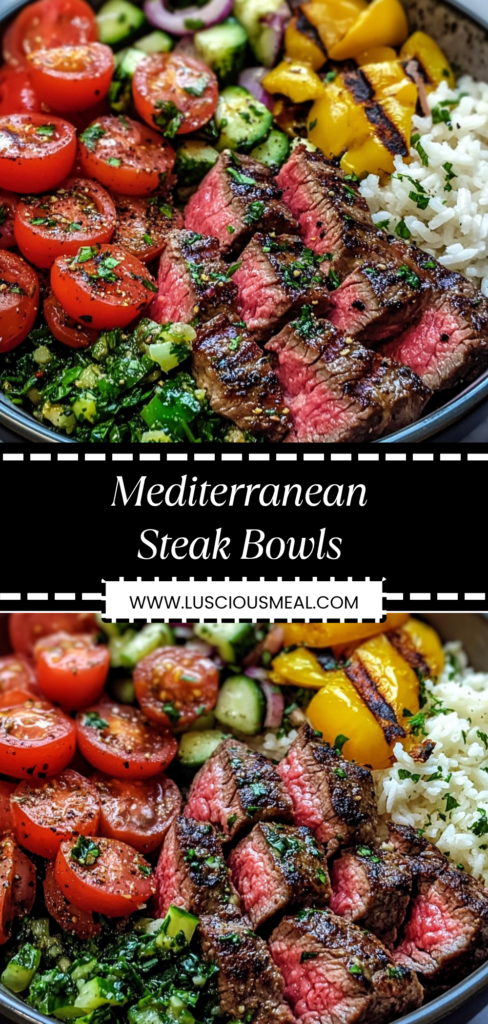
10. Assemble the bowls by starting with a base of warm rice in each bowl. Top with sliced steak, then arrange the diced tomatoes, cucumber, red onion slices, and Kalamata olives around the bowl. Add dollops of tzatziki, crumbled feta, and fresh parsley. Serve with lemon wedges on the side.
Pro Tips & Variations
Steak Cooking Tips: The key to perfect steak is not moving it around too much during cooking – let it develop a proper crust before flipping. Use a meat thermometer for accuracy: 125°F for rare, 135°F for medium-rare, 145°F for medium. Remember that the temperature will rise 5-10 degrees during resting.
Make-Ahead Strategy: You can marinate the steak up to 24 hours ahead for deeper flavor. The tzatziki actually improves after sitting for a few hours or overnight. Prep all your vegetables the day before and store them separately in the refrigerator for quick assembly.
Grain Alternatives: While rice is classic, this works beautifully over quinoa for extra protein, couscous for authentic Mediterranean vibes, or cauliflower rice for low-carb option. Each base brings its own texture and nutritional profile to the dish.
Vegetable Variations: Feel free to add roasted red peppers, artichoke hearts, or pickled vegetables for extra Mediterranean flavor. Roasted eggplant or zucchini also work beautifully and add more substance to the bowls.
Troubleshooting Common Issues
“My steak is tough” – This usually happens from overcooking or not cutting against the grain. Make sure to use a meat thermometer and don’t cook past medium. When slicing, look for the direction of the muscle fibers and cut perpendicular to them for maximum tenderness.
“The tzatziki is watery” – Make sure to pat the diced cucumber completely dry before adding it to the yogurt. You can also salt the cucumber lightly and let it drain for 15 minutes, then pat dry before adding to remove excess moisture.
“The flavors seem bland” – This is usually a salt and acid issue. Make sure to season each component properly – the steak marinade should taste well-seasoned, the tzatziki should be tangy and garlicky, and don’t forget to finish with fresh lemon juice which brightens everything.
“My steak doesn’t have a good crust” – Make sure your pan is hot enough before adding the steak, and don’t move it around during cooking. Pat the steak dry before adding it to the marinade, as excess moisture prevents good browning. Also, don’t overcrowd the pan if cooking multiple steaks.
“Everything tastes the same” – Each component should have its own distinct flavor that contributes to the whole. Make sure your tzatziki is garlicky and tangy, your steak is well-seasoned with herbs, and you’re using enough acid (lemon juice) to brighten all the rich flavors. Fresh herbs and good quality olive oil also make a huge difference in creating distinct, layered flavors.