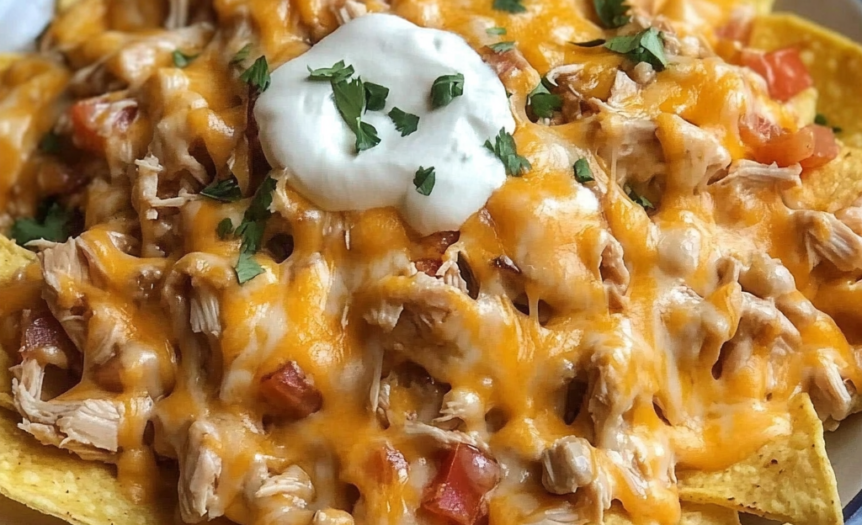
This is the nacho recipe that turns game day into an event—tender shredded chicken swimming in the most addictive cream cheese-based sauce, ready to cascade over mountains of crispy tortilla chips. It’s what happens when queso meets buffalo chicken dip and decides to become the ultimate nacho topping. Your slow cooker does all the heavy lifting while you prep the nacho bar, creating a creamy, spicy, cheesy sensation that’ll have everyone hovering around the crockpot with chips in hand.
Ingredients
For the Creamy Chicken:
- 2½ pounds boneless, skinless chicken breasts
- 1 package (8 oz) cream cheese, cubed
- 1 can (10 oz) diced tomatoes with green chiles (Rotel), undrained
- 1 can (10.5 oz) cream of chicken soup
- 1 packet taco seasoning
- 1 can (15 oz) black beans, drained and rinsed
- 1 can (15 oz) corn, drained
- 1 jalapeño, minced (optional)
- 2 cups shredded Mexican cheese blend
- ½ cup heavy cream or milk
- 2 tablespoons fresh lime juice
For the Nacho Assembly:
- 2 large bags restaurant-style tortilla chips
- 2 cups shredded Monterey Jack cheese
- 1 cup shredded sharp cheddar cheese
- 1 can (2.25 oz) sliced black olives
- 4 green onions, sliced
- ½ cup pickled jalapeño slices
Fresh Toppings:
- 2 cups shredded lettuce
- 2 large tomatoes, diced
- 1 cup sour cream
- 1 cup guacamole
- ½ cup fresh cilantro, chopped
- 1 lime, cut into wedges
- Hot sauce (optional)
Instructions
- Prep the Chicken: Place chicken breasts in the bottom of your slow cooker. If they’re thick, pound them to even thickness or slice horizontally for more even cooking. Season both sides with salt and pepper.
- Build the Base: Scatter cream cheese cubes over chicken. Pour entire can of diced tomatoes with chiles over top—the liquid is crucial for proper sauce development. Add cream of chicken soup and sprinkle taco seasoning evenly over everything.
- Start Slow Cooking: Cover and cook on LOW for 4-5 hours or HIGH for 2-3 hours. Don’t lift the lid during cooking—it releases heat and moisture needed for tender chicken.
- Shred and Mix: Using two forks, shred chicken directly in the slow cooker. It should fall apart easily. If not, cook 30 minutes longer. Stir shredded chicken with all the accumulated sauces until well combined.
- Add the Mix-Ins: Stir in black beans, corn, and minced jalapeño if using. Add shredded Mexican cheese blend and heavy cream. Mix thoroughly until cheese melts and creates uniform creamy sauce.
- Final Seasoning: Add lime juice and taste. Adjust with salt, pepper, or additional taco seasoning. The mixture should be creamy but not soupy—if too thick, add more cream; if too thin, cook uncovered 15 minutes.
- Keep Warm for Serving: Switch slow cooker to WARM setting. The chicken mixture can hold up to 4 hours on warm, stirring occasionally. It actually improves as flavors meld.
- Prepare Nacho Stations: Set up assembly line with chips, extra cheeses, and cold toppings in separate bowls. For best results, let people build their own—this prevents soggy chips.
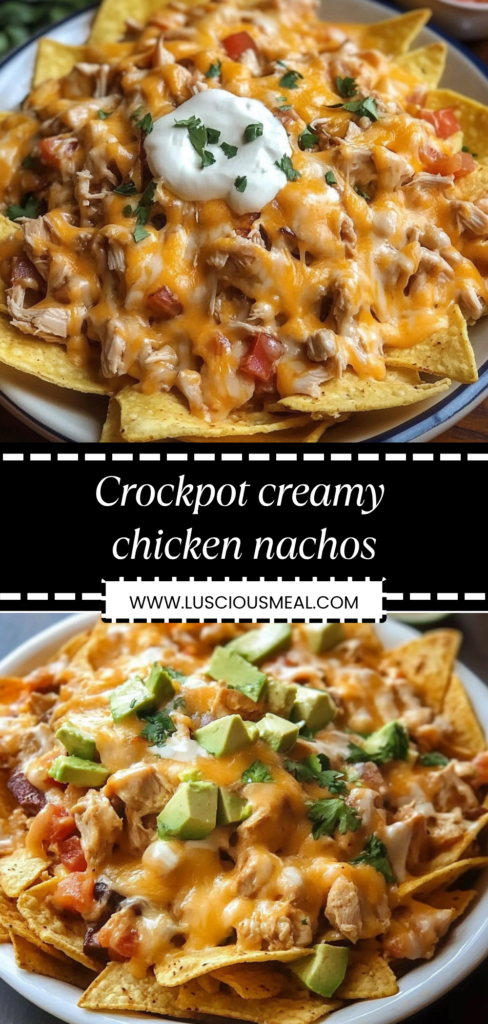
- Building Perfect Nachos: Layer chips on oven-safe plate, add generous ladle of hot chicken mixture, sprinkle with extra cheese. Broil 2-3 minutes until cheese melts. Top with cold toppings.
- Serve Immediately: Nachos wait for no one. Serve the moment they’re assembled for optimal chip crispness. Keep slow cooker on warm with ladle for continuous nacho creation.
Recipe Notes
- Prep Time: 15 minutes
- Cook Time: 4-5 hours on LOW
- Total Time: 5 hours 15 minutes
- Servings: 10-12 as appetizer, 6-8 as main dish
- Calories: 485 per serving (including chips and toppings)
The Science of Slow Cooker Cream Sauce
Creating restaurant-quality cream sauce in a slow cooker requires understanding how ingredients behave over long, low heat. Cream cheese forms the base, but adding it at the beginning seems counterintuitive—won’t it separate? The magic lies in the protective environment created by the diced tomatoes’ acidity and the soup’s stabilizers.
The cream cheese slowly melts, its proteins denaturing gradually and bonding with the chicken’s released proteins. This creates an emulsified sauce that won’t break or curdle. The canned soup, while not gourmet, contains modified food starch that acts as insurance against separation during the long cooking process.
That can of diced tomatoes with chiles does triple duty: the liquid provides necessary moisture, the acidity brightens flavors and prevents the dairy from becoming cloying, and the chiles add consistent heat distribution. Using the liquid is crucial—draining would result in dry, thick mixture that never achieves proper sauce consistency.
Chicken Selection and Preparation
Chicken breast versus thighs sparks debate in slow cooker recipes. Here, breasts work perfectly because the cream sauce prevents drying. The lean meat absorbs flavors better than fattier thighs and shreds into perfect nacho-sized pieces. Thighs would add richness but can make the mixture greasy when combined with cream cheese.
Even thickness ensures uniform cooking. Thick breasts can leave you with overcooked edges and undercooked centers. Pounding to 1-inch thickness or butterflying creates consistent results. Some cooks cut into chunks before cooking, but whole breasts shred into better texture—long strands versus mushy bits.
The 4-5 hour LOW cooking time allows collagen to break down completely, creating silky shreds that meld with the sauce. HIGH heat works for time crunches but can create tougher texture. That fork test is foolproof—if you need effort to shred, it needs more time.
Building Flavor Layers
Taco seasoning provides the flavor foundation, but quality varies dramatically. Premium brands use real spices without fillers or excess salt. Making your own (2 tablespoons chili powder, 1 tablespoon cumin, 1 teaspoon each paprika, oregano, garlic powder, onion powder, ½ teaspoon cayenne) allows customization.
The beans and corn addition transforms this from simple chicken dip to complete nacho filling. Black beans add protein and earthiness, while corn provides sweetness that balances the heat. Adding them after shredding prevents mushiness—they just need warming, not cooking.
Fresh jalapeño versus pickled creates different heat profiles. Fresh provides cleaner, brighter heat that builds. Pickled jalapeños add tangy heat that’s more consistent. Using both—fresh in the chicken, pickled as topping—creates heat complexity that keeps taste buds interested.
Temperature and Texture Management
The “warm” setting is your friend for nacho service. It maintains safe serving temperature (above 140°F) while preventing overcooking. The mixture actually improves during holding as flavors meld and sauce thickens slightly from evaporation.
Consistency adjustment is forgiving. Too thick? Splash of chicken broth, cream, or even beer thins it perfectly. Too thin? Remove lid and let excess moisture evaporate, or stir in extra shredded cheese. The goal is pourable but not runny—coating consistency that clings to chips without making them immediately soggy.
That lime juice addition at the end isn’t just for flavor—the acid brightens the entire dish and cuts through richness. Add just before serving as acid can cause dairy to curdle if left too long. Fresh lime juice makes noticeable difference over bottled.
The Nacho Architecture
Proper nacho building is an art form. The fatal flaw of most nachos? Uneven topping distribution leaving sad, naked chips below the surface. The solution: multiple thin layers rather than one thick pile. This ensures every chip gets proper coverage.
Chip selection matters enormously. Restaurant-style tortilla chips have the structural integrity to support heavy toppings. Thin chips crumble under the weight. Avoid flavored chips—they compete with the complex chicken mixture. Sturdy, salted corn tortilla chips provide the perfect vehicle.
The broiler finish transforms good nachos into great ones. Those 2-3 minutes under high heat re-melts the cheese, creating gorgeous browning while crisping any edges that got soft from toppings. Watch carefully—the line between perfectly melted and burnt is seconds.
Topping Strategy
Cold toppings added to hot nachos create temperature and texture contrasts that elevate the entire experience. Crisp lettuce against creamy chicken, cool sour cream mellowing spicy sauce, fresh tomatoes adding juicy brightness—each element serves a purpose.
Guacamole versus avocado slices depends on preference and timing. Guacamole incorporates better but can make nachos soggy if added too early. Avocado slices added just before serving maintain their texture and provide cleaner flavor. Both work—let your crowd decide.
The pickled jalapeño placement matters. Under the broiler, they caramelize slightly, intensifying flavor. Added after, they maintain vinegary punch. Consider both—some under for depth, some over for brightness. This layering of same ingredient prepared differently adds complexity.
Crowd-Pleasing Variations
Buffalo Chicken Nachos: Add ½ cup buffalo sauce to chicken mixture, use blue cheese crumbles as topping. Serve with ranch and celery sticks for full buffalo experience.
BBQ Pulled Chicken: Replace taco seasoning with BBQ seasoning, add ½ cup BBQ sauce. Top with coleslaw and crispy onions for Southern fusion.
Breakfast Nachos: Add scrambled eggs to assembly, use hash browns as base layer with chips. Top with breakfast sausage from the chicken mixture.
Greek Nachos: Season chicken with Greek spices, add feta and olives to mixture. Top with cucumber, tomatoes, and tzatziki sauce.
Thai-Inspired: Use peanut sauce instead of cream sauce, top with shredded carrots, cabbage, peanuts, and sweet chili sauce.
Troubleshooting Common Issues
“Sauce is grainy”: Cream cheese wasn’t room temperature or heat too high. Cube smaller next time and ensure LOW heat. Can sometimes save by whisking vigorously or using immersion blender briefly.
“Too spicy/Not spicy enough”: Adjust with sour cream to cool down or hot sauce/fresh jalapeños to heat up. Building heat gradually is easier than reducing it.
“Chips get soggy immediately”: Chicken mixture too thin or too much added at once. Thicker consistency and modest portions preserve crispness longer.
“Chicken is dry/stringy”: Overcooked or breasts were too lean. Add more cream and cheese to compensate. Next time reduce cooking time or use fattier cuts.
“Flavors are flat”: Under-seasoned or needs acid. Add more taco seasoning, salt, and definitely more lime juice. Taste and adjust throughout cooking.
Make-Ahead and Party Planning
The entire chicken mixture can be made 2 days ahead and refrigerated. Reheat in slow cooker on LOW, adding splash of cream to restore consistency. Flavors actually improve overnight as spices meld.
For parties, use multiple slow cookers—one on warm for serving, one backup in kitchen. This ensures consistent hot chicken availability. Figure ½ cup chicken mixture per person for appetizer portions, 1 cup for main dish.
Prep all toppings morning of event. Store in individual containers for easy setup. Pre-shred cheeses and mix for even distribution. Set up nacho station away from main traffic to prevent bottlenecks.
Serving Equipment and Setup
Invest in proper serving equipment for best results. A 6-quart slow cooker holds full recipe with room for stirring. Ladles with pour spouts prevent drips. Small oven-safe plates or cast-iron skillets create individual nacho portions for broiling.
Create an efficient assembly line: chips first, then hot chicken from slow cooker, shredded cheese, then broiler. Have cold toppings at the end with serving utensils. Consider labels for each topping—not everyone recognizes pickled jalapeños versus fresh.
For kid-friendly service, prepare some portions without jalapeños and mild seasoning. Mark these clearly. Provide small cups for “nacho sampling” without commitment to full plate.
Scaling and Storage
Recipe doubles easily for crowds. Use large 8-quart slow cooker or two standard ones. Cooking time remains the same. Triple batches get unwieldy—better to make multiple double batches.
Leftover chicken mixture keeps 4 days refrigerated or 3 months frozen. It’s incredibly versatile—use for quesadillas, burritos, loaded baked potatoes, or pasta sauce. Thin with broth for soup or thicken with cheese for dip.
Never store assembled nachos—they’re a moment-in-time food. But having portioned chicken mixture in freezer means nachos are always 10 minutes away. True convenience food that doesn’t sacrifice quality.
The Cultural Phenomenon
Nachos represent American innovation at its finest—invented in 1940s Mexico for American tourists, then reimagined countless ways. This crockpot version epitomizes modern American cooking: convenient, customizable, and designed for sharing.
The slow cooker method solves nacho’s biggest challenge: keeping toppings hot for extended serving. Traditional nachos suffer from temperature loss, but this setup maintains perfect serving temperature for hours, ideal for watch parties or casual gatherings.
Final Thoughts
These Crockpot Creamy Chicken Nachos prove that slow cooker cuisine extends far beyond soups and stews. By understanding how ingredients behave during extended cooking and building flavors strategically, we’ve created something that rivals any restaurant’s offerings while providing unmatched convenience. It’s the ultimate crowd-pleasing dish that brings people together, encourages customization, and guarantees empty plates. Master this recipe and you’ll become the designated nacho-maker for every gathering—a title that comes with great responsibility but even greater rewards.