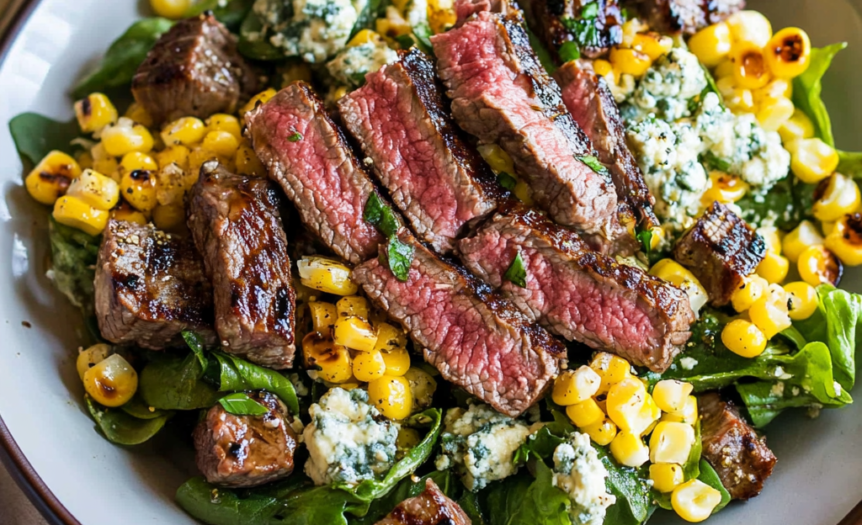
This is the salad that converts carnivores into salad enthusiasts—perfectly seared steak sliced over crisp greens, punctuated with creamy gorgonzola, charred sweet corn, and a balsamic glaze that ties it all together in sophisticated harmony. It’s steakhouse quality in salad form, where every ingredient earns its place and every bite delivers the perfect balance of rich, tangy, sweet, and savory that makes you forget you’re eating something healthy.
Ingredients
For the Steak:
- 1½ pounds flank steak or sirloin (¾-inch thick)
- 3 tablespoons balsamic vinegar
- 2 tablespoons olive oil
- 2 cloves garlic, minced
- 1 tablespoon fresh rosemary, chopped
- 1 teaspoon Dijon mustard
- 1 teaspoon kosher salt
- ½ teaspoon black pepper
- ½ teaspoon crushed red pepper flakes
For the Grilled Corn:
- 4 ears fresh corn, husked
- 2 tablespoons olive oil
- Salt and pepper to taste
- ½ teaspoon smoked paprika
- 2 tablespoons butter (optional)
- Fresh lime juice
For the Salad Base:
- 8 cups mixed greens (arugula, spinach, and romaine)
- 2 cups cherry tomatoes, halved
- 1 red onion, thinly sliced
- 1 English cucumber, sliced
- 1 avocado, sliced
- ½ cup toasted walnuts or pecans
- 4 ounces gorgonzola cheese, crumbled
For the Balsamic Dressing:
- ½ cup extra virgin olive oil
- ¼ cup balsamic vinegar
- 2 tablespoons honey
- 1 tablespoon Dijon mustard
- 2 cloves garlic, minced
- Salt and pepper to taste
For the Balsamic Glaze:
- 1 cup balsamic vinegar
- 2 tablespoons honey
- Pinch of salt
Instructions
- Marinate the Steak: In a bowl, whisk together balsamic vinegar, olive oil, garlic, rosemary, Dijon, salt, pepper, and red pepper flakes. Place steak in zip-lock bag, add marinade, and refrigerate 2-8 hours, turning occasionally.
- Make Balsamic Glaze: In small saucepan, combine balsamic vinegar, honey, and salt. Bring to boil, then reduce heat to low. Simmer 15-20 minutes until reduced by two-thirds and coats back of spoon. Set aside to cool—it thickens as it cools.
- Prepare the Grill: Heat grill to medium-high (400-450°F). Clean grates thoroughly and oil lightly. For corn, prepare medium heat zone as well. If using grill pan indoors, heat over medium-high.
- Grill the Corn: Brush corn with olive oil, season with salt, pepper, and smoked paprika. Grill over medium heat, turning every 3-4 minutes until charred on all sides, about 12-15 minutes total. Kernels should be tender with caramelized spots.
- Cut Corn and Season: Let corn cool slightly, then stand each ear on end and cut kernels off with sharp knife. Toss with butter if using, lime juice, and additional salt. Set aside—can be served warm or room temperature.
- Grill the Steak: Remove steak from marinade, pat dry. Let come to room temperature 30 minutes. Grill over high heat 4-5 minutes per side for medium-rare (130°F internal). Adjust time for preferred doneness.
- Rest and Slice: Transfer steak to cutting board, tent with foil, rest 10 minutes. This redistributes juices for maximum tenderness. Slice against the grain at 45-degree angle into ¼-inch strips.
- Make the Dressing: While steak rests, whisk together all dressing ingredients. Taste and adjust—should be tangy but balanced. The honey mellows the vinegar’s sharpness.
- Assemble the Salad: In large bowl, toss greens with half the dressing. Arrange on platter or individual plates. Top with tomatoes, cucumber, onion, avocado, and grilled corn. Arrange steak slices on top.
- Final Touches: Sprinkle with gorgonzola and nuts. Drizzle with balsamic glaze in decorative pattern. Serve with remaining dressing on side.
Recipe Notes
- Prep Time: 30 minutes (plus marinating)
- Marinating Time: 2-8 hours
- Cook Time: 25 minutes
- Total Active Time: 55 minutes
- Servings: 4-6 as main course
- Calories: 485 per serving
The Art of Steak Selection and Preparation
Flank steak shines in this application for multiple reasons. Its pronounced grain makes slicing against it obvious, creating tender bites. The large, flat surface area maximizes marinade contact and provides excellent char-to-meat ratio. Its relative leanness prevents the salad from becoming greasy while its beefy flavor stands up to bold accompaniments.
Sirloin offers a excellent alternative with more marbling for richness. Skirt steak works beautifully but cooks faster—reduce time by 1-2 minutes per side. Avoid tenderloin here—its mild flavor gets lost among the assertive salad components. Strip steak works but increase thickness to 1 inch for proper searing without overcooking.
That against-the-grain slicing isn’t just chef pretension—it’s physics. Muscle fibers run lengthwise through flank steak. Cutting perpendicular to these fibers shortens them, making each bite more tender. The 45-degree angle creates elegant, wider slices that showcase the perfect pink interior against the charred crust.
Marinade Science and Timing
The marinade serves triple duty: flavoring, tenderizing, and creating superior browning. Balsamic vinegar’s acidity begins breaking down surface proteins, allowing deeper flavor penetration. But timing matters—too long and acid can make meat mushy. That 2-8 hour window provides optimal results.
Olive oil carries fat-soluble flavor compounds from garlic and rosemary into the meat while preventing sticking. Dijon mustard acts as emulsifier, keeping oil and vinegar combined while adding subtle tang. The small amount of sugar in balsamic promotes caramelization during grilling.
Patting steak dry before grilling seems counterintuitive after marinating, but it’s crucial. Surface moisture steams rather than sears, preventing proper crust formation. The flavors have already penetrated—we just need the surface dry for Maillard reaction magic.
Mastering Grilled Corn
Fresh corn selection dramatically impacts results. Look for bright green, moist husks and golden-brown silk. Kernels should be plump and tightly arranged—gaps indicate age. The silk should be slightly sticky, not dry. When pressed, kernels should release milky liquid, not clear.
Direct grilling creates incomparable flavor through caramelization and slight charring. That medium heat zone is crucial—too hot and exteriors burn before interiors cook. The rotation every 3-4 minutes ensures even cooking while creating those beautiful char marks that signal properly grilled corn.
Cutting technique matters for both safety and kernel integrity. Standing corn vertical provides stability. Cut close to cob in long strokes rather than sawing. Work over a bowl to catch flying kernels. That lime juice addition brightens the sweet corn while the optional butter adds richness that bridges to the creamy gorgonzola.
Temperature Control and Grilling Mastery
Achieving perfect steak doneness requires understanding temperature zones. That medium-high heat (400-450°F) creates proper searing without burning the sugars in the marinade. Too hot and exterior burns before interior cooks; too cool and you get gray meat without crust.
The two-zone grilling setup—one high heat area for searing, one medium for corn—maximizes efficiency. If flare-ups occur from dripping marinade, move steak to cooler zone temporarily. Those flames add flavor but can quickly turn to burnt bitterness.
Internal temperature is the only reliable doneness indicator. Color can deceive based on marinade and lighting. For medium-rare, remove at 125-130°F as temperature rises 5 degrees during resting. Use instant-read thermometer inserted horizontally into thickest part for accurate reading.
The Crucial Rest Period
That 10-minute rest isn’t optional—it’s transformative. During cooking, heat drives moisture toward the center. Resting allows juice redistribution throughout the meat. Cut too early and those precious juices flood the cutting board instead of staying in each slice.
Tenting with foil maintains warmth without steaming the crust. Too tight and condensation softens that beautiful char. The foil should hover above, not touch, the meat. This temperature maintenance means steak serves at perfect warmth atop cool salad.
Salad Composition and Balance
The greens selection provides textural and flavor variety. Peppery arugula contributes bite that stands up to rich steak. Spinach adds mineral earthiness and tender texture. Romaine provides crucial crunch and mild flavor that doesn’t compete. This combination ensures every forkful offers interest.
Cherry tomatoes burst with acidity that cuts through rich elements. Halving exposes their juicy interiors and allows dressing absorption. Red onion’s sharpness mellows when sliced thin and briefly soaked in cold water if desired. Cucumber adds refreshing crunch and palate-cleansing properties.
Avocado placement timing prevents browning. Add just before serving, fanned for visual appeal. Its creaminess echoes the gorgonzola while providing healthy fats. The nuts contribute essential crunch—toasting intensifies flavor and improves texture. Walnuts pair classically with blue cheese; pecans add Southern touch.
Gorgonzola: The Crucial Element
Gorgonzola quality varies dramatically. Look for creamy texture with blue-green veining throughout. Avoid dry, crumbly pieces or those with overwhelming ammonia smell. Mountain gorgonzola is milder and creamier; aged versions provide more punch. Crumble size matters—too fine and it disappears; too large and it overwhelms.
The amount seems generous but balances perfectly when distributed. Its salty, funky richness plays against sweet corn and tangy balsamic. For blue cheese skeptics, start with less and serve extra alongside. Danish blue or Roquefort substitute well; mild options include cambozola or cashel blue.
Dressing and Glaze Dynamics
The vinaigrette and glaze serve different purposes. Vinaigrette coats greens and provides consistent flavor throughout. Its honey content balances acidity while helping it cling to leaves. Dijon creates emulsion preventing separation—shake or whisk before each use.
Balsamic glaze concentrates flavors into syrupy intensity. The reduction process caramelizes natural grape sugars, creating complexity beyond simple vinegar. That coating consistency is crucial—too thin and it disappears; too thick and it overwhelms. The cooling period matters as it thickens considerably.
Using both allows flavor control. Dressed greens provide base flavor while glaze creates punctuation marks of intensity. Drizzle glaze with squeeze bottle for professional presentation—Jackson Pollock-style splatters or precise geometric patterns both work.
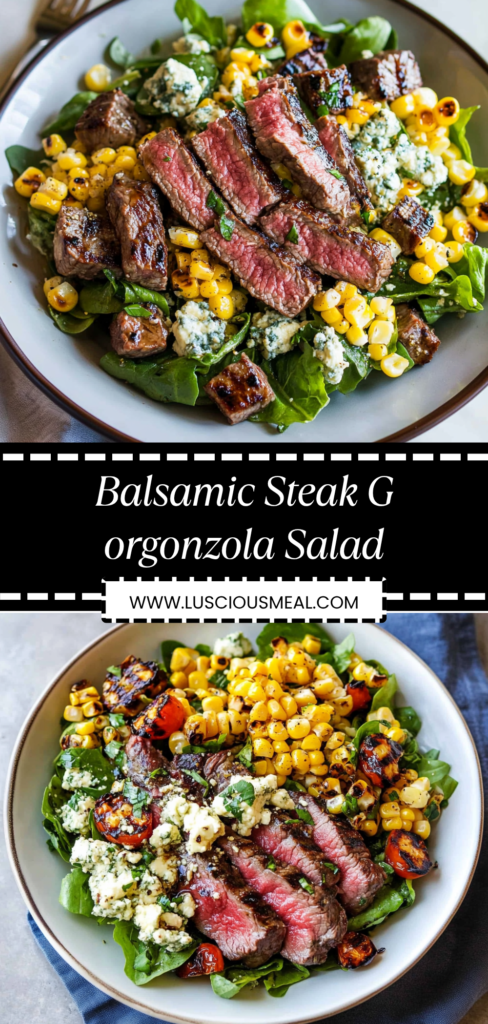
Assembly Architecture
Strategic assembly prevents soggy salads and ensures balanced bites. Dressing greens separately prevents wilting while waiting for other components. Under-dress rather than over—additional dressing on side accommodates preferences.
Layer components thoughtfully. Greens form foundation, sturdy vegetables next, then corn and avocado. Steak fans across top for visual impact and easy portioning. Cheese and nuts go last to prevent sinking. This architecture ensures every forkful captures multiple elements.
Individual plating versus family-style depends on occasion. Individual allows precise composition and elegant presentation. Family-style encourages sharing and customization. Either way, serve immediately after assembly—this salad waits for no one.
Wine Pairing and Serving Suggestions
This salad’s complex flavors demand thoughtful beverage pairing. Bold red wines like Malbec or Cabernet Sauvignon match steak’s richness while standing up to gorgonzola. For white wine lovers, full-bodied Chardonnay or Viognier provides sufficient weight.
Beer enthusiasts should consider Belgian ales whose fruity esters complement both meat and cheese. IPAs’ bitterness cuts through richness while highlighting grilled flavors. For non-alcoholic options, pomegranate juice with sparkling water echoes the sweet-tart balance.
Serve as elegant main course for summer dinners or impressive lunch for special occasions. The composed presentation makes it dinner party worthy while hearty components satisfy serious appetites. Consider smaller portions as sophisticated first course for multi-course meals.
Seasonal Variations
Fall: Replace corn with roasted butternut squash, add dried cranberries and pumpkin seeds. Use maple syrup in dressing instead of honey.
Winter: Substitute roasted Brussels sprouts for corn, pomegranate arils for tomatoes. Add candied walnuts for festive touch.
Spring: Include grilled asparagus, fresh peas, and radishes. Replace heavy greens with butter lettuce and microgreens.
Summer: Peak season for original recipe, but consider adding grilled peaches or fresh berries for extra sweetness.
Make-Ahead Strategies
Component preparation streamlines assembly. Marinate steak overnight for deeper flavor. Prepare glaze up to week ahead—it keeps indefinitely refrigerated. Grill corn and cut kernels day before; refresh with quick sauté.
Dressing improves with time as flavors meld. Make 3 days ahead and refrigerate. Prep vegetables morning of serving, storing separately. Toast nuts in advance but store airtight to maintain crispness.
For parties, grill multiple steaks and slice just before serving. Set up salad bar with components in separate bowls, letting guests build their own. This prevents wilting and accommodates dietary preferences.
Health Benefits and Modifications
Despite its indulgent flavors, this salad provides excellent nutrition. Lean steak delivers protein and iron. Abundant vegetables supply fiber, vitamins, and antioxidants. Healthy fats from avocado and olive oil promote satiety and nutrient absorption.
For lighter version, reduce steak portion and increase vegetables. Use reduced-fat gorgonzola or fresh mozzarella. Replace some dressing oil with Greek yogurt for creaminess with less fat. Add white beans or chickpeas for plant-based protein.
Gluten-free naturally, this salad accommodates many diets. For dairy-free, omit cheese and add extra nuts for richness. Vegetarians can substitute grilled portobello mushrooms or tempeh for steak with excellent results.
Final Thoughts
This Balsamic Steak Gorgonzola Salad with Grilled Corn elevates salad from side dish afterthought to memorable main course. It proves that healthy eating doesn’t mean sacrificing flavor or satisfaction. The combination of quality ingredients, proper technique, and thoughtful composition creates restaurant-quality results achievable at home. Master this recipe and you’ll have a showstopper that works equally well for intimate dinners or impressive entertaining, proving that the best salads are complete meals that happen to include lettuce.