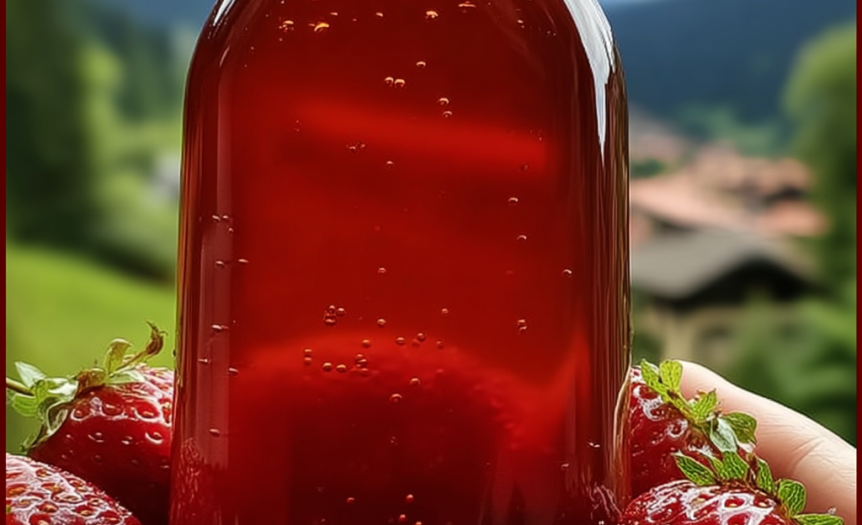
There’s something absolutely magical about capturing the essence of perfectly ripe strawberries at their peak and transforming them into a gorgeous, ruby-red syrup that tastes like liquid summer. This homemade strawberry syrup delivers pure, concentrated strawberry flavor that’s infinitely better than anything you can buy at the store. With just a handful of simple ingredients and about 30 minutes of your time, you can create a versatile, delicious syrup that will elevate everything from pancakes and waffles to cocktails and desserts.
What makes this strawberry syrup truly special is how it captures the authentic taste of fresh strawberries without any artificial flavors or excessive sweetness that masks the fruit’s natural character. The gentle simmering process concentrates the strawberry flavor while the addition of lemon juice brightens the overall taste and helps preserve that beautiful, vibrant color. The result is a syrup that tastes like the best strawberries you’ve ever eaten, in liquid form.
I developed this recipe during peak strawberry season when I found myself with more gorgeous berries than I could eat fresh. Instead of letting them go to waste, I wanted to preserve their incredible flavor in a form that could extend their enjoyment well beyond their natural season. This syrup has become my favorite way to bring the taste of summer strawberries to winter pancakes, spring cocktails, and year-round desserts – proving that the best preservation methods often yield results that are even more delicious than the original ingredient.
Ingredients
For the Strawberry Base:
- 4 cups fresh strawberries, hulled and halved (about 2 pounds)
- 1 cup granulated sugar
- 1 cup filtered water
- 2 tablespoons fresh lemon juice
- 1/2 teaspoon pure vanilla extract
- Pinch of salt (enhances flavor)
Optional Flavor Enhancements:
- 1 tablespoon balsamic vinegar (for depth)
- 1/4 teaspoon fresh thyme leaves (for herbal notes)
- 1 strip of lemon zest (for citrus aromatics)
- 1/4 teaspoon black pepper (for subtle spice)
Instructions
Begin by selecting the best strawberries you can find – this syrup is only as good as the fruit you start with. Choose berries that are deeply red, fragrant, and slightly soft to the touch. If your strawberries are very sweet, you can reduce the sugar slightly; if they’re tart, you might want to add a bit more.
Hull the strawberries by removing the green tops and any white cores, then halve them lengthwise. Cutting them allows more surface area to release juices and flavors during cooking. If you have particularly large berries, quarter them to ensure even cooking.
In a large, heavy-bottomed saucepan, combine the halved strawberries, granulated sugar, and water. The heavy bottom prevents scorching and ensures even heat distribution during the simmering process.
Place the saucepan over medium-high heat and stir gently to help dissolve the sugar. Bring the mixture to a rolling boil, stirring occasionally. You’ll notice the strawberries beginning to release their juices almost immediately as the heat breaks down their cell walls.
Once boiling, reduce the heat to medium-low to maintain a gentle simmer. Cook for 15-20 minutes, stirring occasionally and watching for the liquid to deepen in color and reduce slightly. The strawberries should become very soft and the syrup should start to thicken.
About halfway through the simmering process, use a wooden spoon or potato masher to gently mash some of the strawberry pieces. You don’t want to completely puree them, but breaking them up helps release more juice and intensifies the flavor. Leave some pieces intact for texture if you prefer a chunkier syrup.
The syrup is ready when it coats the back of a spoon and has reduced by about one-third. It should have a beautiful, deep red color and smell intensely of strawberries. The consistency should be thicker than water but still pourable.
Remove the saucepan from heat and immediately stir in the fresh lemon juice, vanilla extract, and a pinch of salt. The lemon juice brightens the flavor and helps preserve the color, while the vanilla adds aromatic depth and the salt enhances all the other flavors.
At this point, you have two options for finishing your syrup. For a completely smooth syrup, strain the mixture through a fine-mesh sieve into a clean bowl, pressing the solids with the back of a spoon to extract as much liquid as possible. Discard the remaining pulp.
For a syrup with texture and small fruit pieces, you can skip the straining step and simply let the syrup cool with the fruit pieces intact. This creates a more rustic, jam-like consistency that’s perfect for pancakes and desserts where you want visible fruit.
Let the syrup cool to room temperature before transferring to clean glass bottles or jars. Mason jars work perfectly for this purpose. The syrup will continue to thicken slightly as it cools.
Store in the refrigerator for up to 2 weeks, though it rarely lasts that long once people discover how delicious it is. Always use clean utensils when serving to prevent contamination and extend shelf life.
Flavor & Texture Notes
This homemade strawberry syrup delivers an incredibly pure, concentrated strawberry flavor that captures the essence of peak-season berries. Unlike commercial syrups that often taste artificial or overly sweet, this version lets the natural strawberry flavor shine through while providing just enough sweetness to enhance rather than mask the fruit.
The texture can be customized based on your preference – strain it for a completely smooth, elegant syrup that’s perfect for cocktails and delicate desserts, or leave it unstrained for a more rustic texture with small fruit pieces that add visual interest and textural variety.
The lemon juice adds a bright, acidic note that prevents the syrup from being cloying while enhancing the natural tartness of the strawberries. The vanilla provides subtle aromatic depth without competing with the strawberry flavor, and the optional salt enhances all the other flavors while adding complexity.
The finished syrup has a beautiful, jewel-like color that ranges from bright red to deep ruby depending on the strawberries used. It pours smoothly and coats whatever it touches with intense strawberry flavor.
Tips & Variations
Use the ripest strawberries you can find for the most intense flavor. Slightly overripe berries that might be too soft for eating fresh are actually perfect for syrup-making, as they’ll break down more easily and release more juice.
Don’t rush the cooking process – gentle simmering concentrates the flavors better than rapid boiling, which can make the syrup taste cooked rather than fresh. The low, slow approach preserves more of the bright strawberry character.
Adjust the sweetness based on your strawberries and intended use. For very sweet berries or if you plan to use the syrup in cocktails where other sweet ingredients will be added, you can reduce the sugar by up to 1/4 cup.
Create flavor variations by adding different aromatics during the simmering process. Fresh herbs like basil, mint, or thyme create interesting complexity, while spices like cardamom, ginger, or black pepper add warmth and sophistication.
For a more adult version, add a splash of rum, Grand Marnier, or strawberry liqueur after removing from heat. This creates a syrup that’s perfect for cocktails and sophisticated desserts.
Try using different types of sugar for varied flavors – brown sugar adds molasses notes, coconut sugar provides subtle tropical hints, and honey creates a more floral sweetness.
Storage & Make-Ahead
This syrup is perfect for making ahead and actually improves in flavor after sitting for a day as all the elements meld together. Store in clean, airtight glass containers in the refrigerator for up to 2 weeks.
For longer storage, you can freeze the syrup in ice cube trays, then transfer the frozen cubes to freezer bags. This allows you to thaw just the amount you need and extends storage life to 6 months.
The syrup can also be processed using proper canning techniques for shelf-stable storage, though the refrigerated version maintains better fresh flavor and color.
Always use clean utensils when serving to prevent contamination. If you notice any off odors, mold, or fermentation, discard the syrup immediately.
Serving Suggestions
This versatile syrup transforms ordinary breakfast items into something special. Drizzle over pancakes, waffles, French toast, or oatmeal for an instant upgrade that tastes like restaurant-quality fare.
Use as a cocktail ingredient in strawberry daiquiris, mojitos, or bellinis. The concentrated flavor means you need less volume than with fresh fruit while achieving more intense taste.
Transform desserts by drizzling over cheesecake, ice cream, panna cotta, or fresh fruit salads. It’s also excellent for making strawberry milk, lemonades, or sodas.
Create elegant plated desserts by using the syrup as a sauce component, drizzling it artistically around plates or using it to create beautiful color contrasts with other elements.
FAQ
Can I use frozen strawberries? Yes! Frozen strawberries work well and often break down more quickly than fresh, which can actually be an advantage for syrup-making. Thaw them first and include any released juices in your recipe.
Why is my syrup too thin? Continue simmering to reduce more liquid, or mix 1 tablespoon cornstarch with 2 tablespoons cold water and stir into the hot syrup to thicken it quickly.
Can I reduce the sugar? You can reduce sugar by up to 25%, but remember that sugar isn’t just for sweetness – it also helps preserve the syrup and affects the final consistency.
How do I know when it’s done cooking? The syrup should coat the back of a spoon and have reduced by about one-third. It will continue to thicken slightly as it cools.
Can I make this with other berries? Absolutely! This recipe works beautifully with raspberries, blackberries, blueberries, or mixed berries. Adjust sugar based on the natural sweetness of your chosen fruit.
This homemade strawberry syrup proves that some of the most satisfying cooking projects come from taking simple, beautiful ingredients and treating them with care and attention. It’s a perfect example of how preserving seasonal abundance can extend the joy of peak-season produce throughout the year, creating something that’s both practical and luxurious. Whether you’re elevating a simple breakfast or crafting sophisticated cocktails, this ruby-red elixir brings the pure essence of strawberry season to every application.