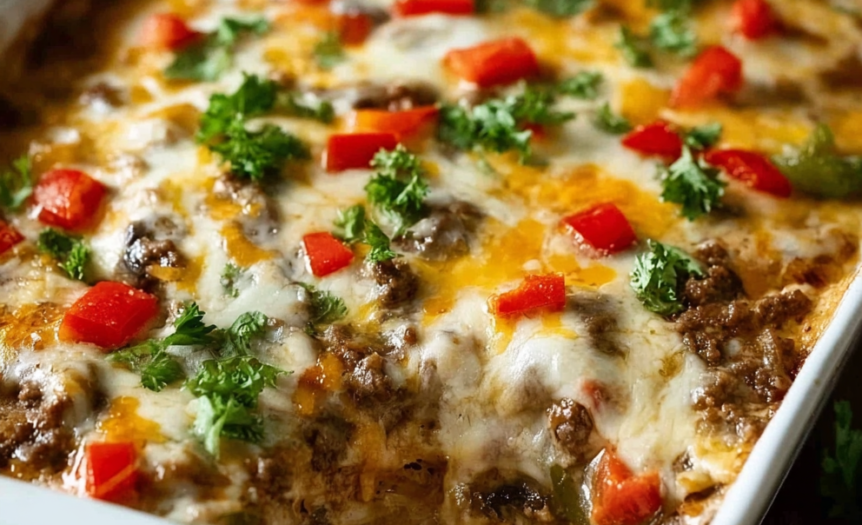
There’s something deeply satisfying about transforming a beloved sandwich into a hearty, family-friendly casserole, especially when you can do it without sacrificing any of the iconic flavors that make Philly cheesesteaks so irresistible. This low carb version captures every element of the classic—tender beef, melted cheese, sautéed peppers and onions—while ditching the bread in favor of a more nutritious, keto-friendly approach that actually enhances the starring ingredients.
I created this recipe during a particularly busy period when my family was following a lower-carb lifestyle but still craving the comfort foods we’d grown to love. The challenge was maintaining all those distinctive Philly flavors while creating something that could feed a crowd and work for meal prep. The breakthrough came when I realized that by concentrating on the filling ingredients and using eggs as a binding agent, I could create something that was actually more satisfying than the original sandwich.
What makes this low carb Philly cheesesteak casserole truly special is how it amplifies the best parts of the classic sandwich while eliminating what you don’t really miss. Without bread taking up space and carbs, you get more of that savory beef, more melted cheese, and more of those perfectly caramelized vegetables that make Philly cheesesteaks so craveable. The casserole format makes it perfect for feeding families or meal prepping for the week.
This recipe serves 8-10 people generously and takes about an hour from start to finish, with most of that time being hands-off baking. It’s perfect for busy weeknight dinners, meal prep, or any time you want comfort food that aligns with low-carb eating goals without feeling like a compromise.
Ingredients
For the Beef and Vegetables:
- 2 pounds ribeye steak or sirloin, thinly sliced against the grain
- 2 large bell peppers (green and red), sliced
- 2 large yellow onions, thinly sliced
- 8 oz mushrooms, sliced (optional but traditional)
- 4 garlic cloves, minced
- 3 tablespoons olive oil, divided
- 2 teaspoons salt, divided
- 1 teaspoon black pepper
- 1 teaspoon paprika
- ½ teaspoon garlic powder
- ½ teaspoon onion powder
For the Egg Base:
- 8 large eggs
- ½ cup heavy cream
- 1 teaspoon Worcestershire sauce
- ½ teaspoon salt
- ¼ teaspoon black pepper
For the Cheese Layer:
- 8 oz provolone cheese, sliced
- 8 oz American cheese, sliced or shredded
- 4 oz cream cheese, softened and cubed
- ½ cup sharp cheddar cheese, shredded
Optional Garnish:
- 2 tablespoons fresh parsley, chopped
- 2 green onions, sliced
- Hot sauce for serving
Instructions
Preheat your oven to 375°F and generously grease a 9×13 inch baking dish with butter or cooking spray. This size dish is perfect for achieving the right depth and ensuring even cooking throughout.
Begin by preparing your steak, which is the foundation of this casserole. For the most authentic Philly cheesesteak experience, freeze the steak for 30 minutes before slicing—this makes it much easier to achieve those paper-thin slices that cook quickly and stay tender. Using a sharp knife, slice the meat as thinly as possible against the grain. If you have a good relationship with your butcher, you can ask them to slice it for you on their meat slicer.
Heat 1 tablespoon of olive oil in a large skillet over high heat until it’s almost smoking. Season the sliced beef with 1 teaspoon salt, ½ teaspoon black pepper, paprika, garlic powder, and onion powder. Working in batches to avoid overcrowding, quickly sear the beef for 1-2 minutes per batch until just browned but still slightly pink inside. The meat will finish cooking in the casserole, so don’t worry about cooking it completely at this stage. Transfer the seared beef to a large bowl and set aside.
In the same skillet, add another tablespoon of olive oil and reduce heat to medium-high. Add the sliced onions and cook for 8-10 minutes, stirring occasionally, until they’re golden brown and caramelized. The key to great Philly flavor is properly caramelized onions, so don’t rush this step.
Add the sliced bell peppers and mushrooms (if using) to the skillet with the onions. Season with the remaining 1 teaspoon of salt and continue cooking for 5-7 minutes until the peppers are tender and slightly caramelized. Add the minced garlic and cook for another minute until fragrant.
Return the seared beef to the skillet with the vegetables and toss everything together, cooking for just 1-2 minutes to blend the flavors. Remove from heat and let the mixture cool slightly while you prepare the egg base.
In a large bowl, whisk together the eggs, heavy cream, Worcestershire sauce, salt, and pepper until well combined. This mixture will bind everything together and create a custard-like base that holds the casserole together while adding richness and protein.
Layer half of the beef and vegetable mixture in the bottom of your prepared baking dish, spreading it evenly. Top with half of the provolone and American cheese slices, then add the cubed cream cheese distributed evenly over the surface.
Add the remaining beef and vegetable mixture as the next layer, then pour the egg mixture evenly over everything, making sure it seeps down into all the crevices. Top with the remaining provolone and American cheese, finishing with the shredded cheddar for extra flavor and beautiful browning.
Cover the dish tightly with aluminum foil and bake for 25 minutes. Remove the foil and continue baking for an additional 15-20 minutes, or until the top is golden brown and bubbly, and a knife inserted in the center comes out clean. The internal temperature should reach 160°F to ensure the eggs are properly set.
Let the casserole rest for 10-15 minutes before cutting and serving. This resting period allows the custard to set fully and makes cutting much cleaner and easier.
Flavor and Texture Notes
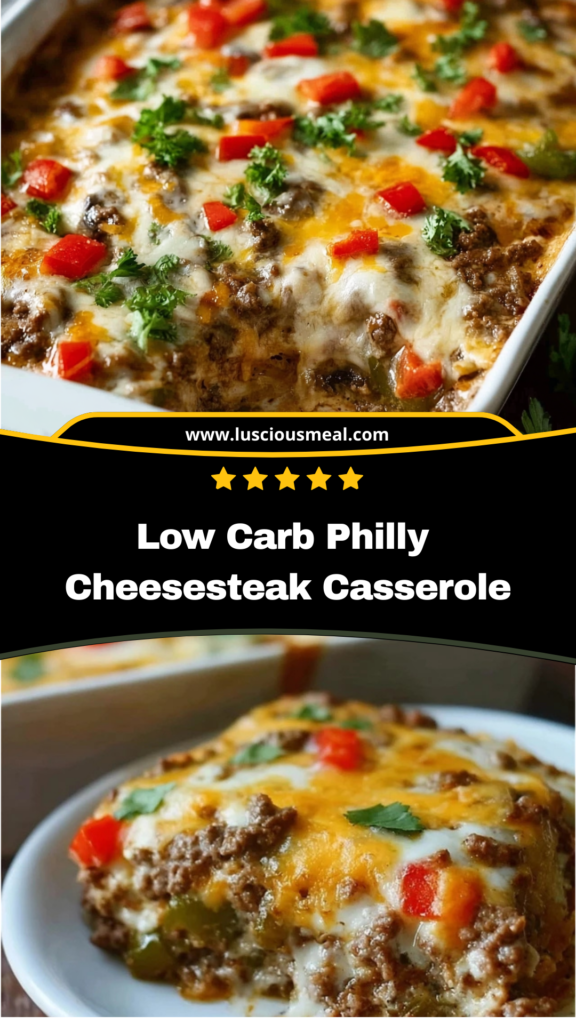
This low carb Philly cheesesteak casserole delivers all the iconic flavors of the classic sandwich in concentrated, satisfying form. The beef remains incredibly tender thanks to the thin slicing and brief searing, while the caramelized onions provide that essential sweet-savory depth that makes Philly cheesesteaks so craveable. The bell peppers add color, crunch, and subtle sweetness that balances the rich meat and cheese.
The egg custard base creates a creamy, protein-rich foundation that binds everything together without feeling heavy or overwhelming. It’s similar to a quiche texture but lighter and more cohesive, allowing all the individual flavors to shine while creating a unified dish.
The cheese combination is where this casserole truly excels—the provolone provides authentic Philly flavor with its mild, creamy taste, while the American cheese ensures perfect melting and that classic cheesesteak creaminess. The cream cheese adds richness and helps create smooth melting, while the cheddar on top provides sharp flavor and beautiful browning.
Each bite delivers layers of flavor and texture—tender beef, sweet caramelized vegetables, and multiple types of melted cheese, all held together by the creamy egg base. It’s deeply satisfying and feels indulgent while actually being quite nutritious.
Tips and Variations
For the most authentic flavor, use ribeye steak if your budget allows, as its marbling creates the most tender and flavorful results. However, sirloin or even thinly sliced chuck roast work well and are more economical options. The key is slicing against the grain as thinly as possible.
Don’t skip the caramelization step for the onions—this is where much of the authentic Philly flavor comes from. Properly caramelized onions should be golden brown and sweet, which takes time but is essential for the best results.
You can customize the vegetables based on your preferences. Some people prefer only onions, while others love the addition of mushrooms or hot peppers. Banana peppers or jalapeños can add heat for those who like it spicy.
For meal prep, this casserole can be assembled up to 24 hours ahead and refrigerated before baking. Just add 10-15 minutes to the baking time if it’s going into the oven cold.
Make it even lower in carbs by using only the higher-fat cheeses and eliminating any vegetables that are higher in carbs, though the peppers and onions used here are quite reasonable for most low-carb eating plans.
Storage and Make-Ahead Tips
This casserole is excellent for meal prep and actually improves in flavor after sitting overnight. Store leftovers covered in the refrigerator for up to 4 days, reheating individual portions in the microwave for 1-2 minutes or in a 350°F oven for 10-15 minutes until heated through.
The entire casserole can be assembled and frozen before baking for up to 3 months. Thaw overnight in the refrigerator before baking, adding extra time as needed. You can also freeze individual portions after baking for quick single-serving meals.
For best results when reheating, cover with foil to prevent the top from over-browning while the center warms through. The egg base reheats beautifully and maintains its creamy texture.
If you’re meal prepping, consider portioning the casserole into individual containers after baking and cooling. This makes grabbing a quick, satisfying meal much more convenient throughout the week.
Serving Suggestions
This hearty casserole is substantial enough to serve as a complete meal, though it pairs beautifully with simple sides that don’t compete with the rich flavors. A crisp green salad with vinaigrette provides a nice contrast to the richness, while roasted or steamed broccoli adds color and nutrition.
For those not following low-carb eating, crusty bread or dinner rolls can be served alongside for anyone who wants that traditional bread element. However, most people find this casserole so satisfying that bread isn’t missed.
Consider serving with classic Philly accompaniments like pickled peppers, hot sauce, or even a small side of coleslaw for textural contrast and palate cleansing between bites.
For entertaining, this casserole works wonderfully for potluck dinners, game day gatherings, or casual dinner parties where you want something that feels special but doesn’t require last-minute preparation.
FAQ
Can I use pre-sliced steak from the grocery store? Yes, many grocery stores sell pre-sliced “sandwich steak” that works perfectly for this recipe. It saves time and ensures consistent thickness, though it may be slightly more expensive than slicing your own.
What if I can’t find American cheese slices? You can substitute with additional provolone, mild cheddar, or even processed cheese like Velveeta for similar melting properties. American cheese provides that classic creamy texture, but other mild, melting cheeses work well too.
How do I know when the casserole is properly set? The center should be firm to the touch and not jiggly when gently shaken. A knife inserted in the center should come out clean or with just a few moist crumbs. The internal temperature should reach 160°F for food safety.
Can I make this dairy-free? This would be challenging since cheese is such a central component. You could experiment with dairy-free cheese alternatives, though the texture and flavor will be significantly different from the traditional version.
Why is my casserole watery? Excess moisture usually comes from not properly draining vegetables or not cooking them long enough to evaporate their moisture. Make sure vegetables are well-cooked and any excess liquid is drained before assembly.
This low carb Philly cheesesteak casserole proves that you don’t need bread to enjoy one of America’s most beloved sandwiches. By focusing on the elements that really matter—quality beef, perfectly caramelized vegetables, and plenty of melted cheese—this casserole actually improves on the original while fitting into a healthier eating plan. Whether you’re feeding a crowd, meal prepping for the week, or simply craving comfort food that won’t derail your goals, this casserole delivers satisfaction and flavor in every single bite. It’s the kind of dish that makes healthy eating feel like an indulgence rather than a sacrifice.