

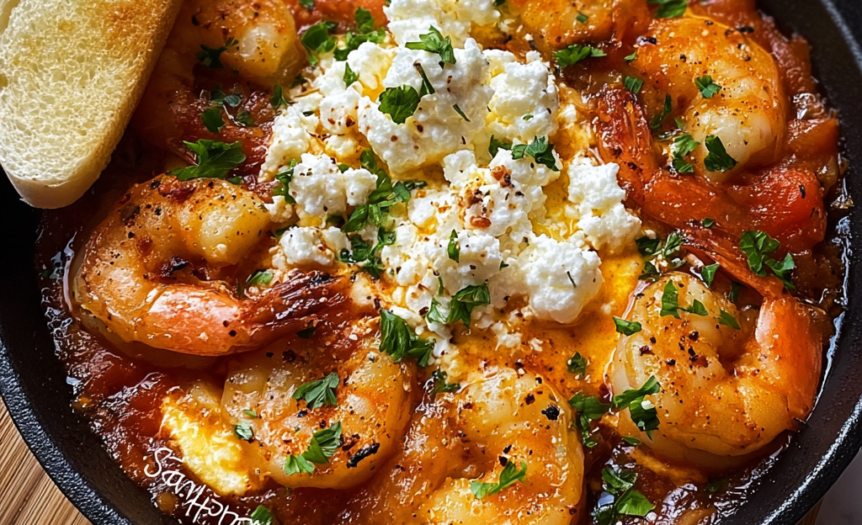
There’s something absolutely magical about Greek cooking that transforms simple ingredients into extraordinary experiences, and shrimp saganaki perfectly exemplifies this culinary philosophy. This traditional dish brings together plump, succulent shrimp swimming in a vibrant tomato sauce enriched with aromatic herbs, white wine, and creamy feta cheese that melts into silky perfection. It’s the kind of dish that transports you straight to a sun-drenched taverna overlooking the Aegean Sea.
I first encountered authentic shrimp saganaki during a memorable evening at a family-run Greek restaurant, where the chef insisted on preparing it tableside in a traditional saganaki pan. Watching the tomatoes bubble and reduce while the shrimp turned pink and the feta slowly melted into the sauce was mesmerizing. The aroma alone was enough to convince me that I needed to master this dish at home, and after countless attempts, I’ve perfected a version that captures all the rustic elegance of the original.
What makes shrimp saganaki truly special is how it balances bold Mediterranean flavors with incredible simplicity. The sweetness of fresh tomatoes mingles with aromatic garlic and herbs, while the white wine adds depth and acidity that brightens every bite. The feta cheese doesn’t just add saltiness—it creates a creamy richness that transforms the sauce into something luxurious while the shrimp remain tender and perfectly cooked.
This recipe serves 4-6 people as an appetizer or 3-4 as a main course, and takes about 30 minutes from start to finish. It’s perfect for entertaining because it looks and tastes impressive while being surprisingly straightforward to prepare, and the communal nature of sharing from one pan creates exactly the kind of convivial atmosphere that Greek dining is famous for.
Ingredients
For the Shrimp:
- 2 pounds large shrimp (21-25 count), peeled and deveined
- 2 tablespoons olive oil
- 1 teaspoon salt
- ½ teaspoon black pepper
- ½ teaspoon dried oregano
For the Saganaki Sauce:
- ¼ cup extra virgin olive oil
- 1 large yellow onion, finely diced
- 4 garlic cloves, minced
- ½ cup dry white wine
- 1 (28 oz) can crushed tomatoes
- 2 tablespoons tomato paste
- 1 teaspoon dried oregano
- ½ teaspoon dried thyme
- ¼ teaspoon red pepper flakes
- 1 bay leaf
- 1 teaspoon salt
- ½ teaspoon black pepper
- 2 tablespoons fresh parsley, chopped
For the Feta Topping:
- 8 oz Greek feta cheese, crumbled into large chunks
- 2 tablespoons fresh dill, chopped
- 1 tablespoon fresh parsley, chopped
- Freshly cracked black pepper
For Serving:
- Crusty Greek bread or pita
- Lemon wedges
- Extra virgin olive oil for drizzling
- Fresh oregano sprigs for garnish
Instructions
Begin by preparing your shrimp, which should be the star of this dish. Pat the peeled and deveined shrimp completely dry with paper towels—any excess moisture will prevent proper browning and can make the sauce watery. In a large bowl, toss the shrimp with olive oil, salt, pepper, and dried oregano until evenly coated. Set aside to marinate while you prepare the sauce base.
Heat the extra virgin olive oil in a large, heavy-bottomed skillet or traditional saganaki pan over medium heat. The pan should be large enough to hold all the shrimp in a single layer later, so don’t skimp on size. Add the diced onion and cook for 5-6 minutes, stirring occasionally, until softened and translucent but not browned. The onion forms the aromatic foundation of the sauce.
Add the minced garlic to the onions and cook for another minute until fragrant. Be careful not to let the garlic brown, as it can become bitter and overpower the delicate flavors in the dish.
Pour in the white wine and let it simmer for 2-3 minutes, allowing the alcohol to cook off while the wine reduces slightly. You should be able to smell the wine’s aroma mellowing and becoming more concentrated. This step adds essential acidity and depth to the final sauce.
Stir in the crushed tomatoes, tomato paste, oregano, thyme, red pepper flakes, bay leaf, salt, and pepper. The tomato paste helps intensify the tomato flavor and adds body to the sauce. Bring the mixture to a gentle simmer, then reduce heat to medium-low and let it cook for 15-20 minutes, stirring occasionally.
The sauce should reduce and thicken during this time, concentrating the flavors beautifully. You’ll know it’s ready when you can draw a spoon across the bottom of the pan and it takes a moment for the sauce to flow back together. Taste and adjust seasoning as needed—the sauce should be robust and flavorful since it needs to complement both the shrimp and feta.
Remove the bay leaf and stir in the fresh parsley. Increase the heat to medium-high and add the marinated shrimp to the sauce in a single layer. Don’t stir immediately—let the shrimp sear on one side for 2-3 minutes until they start to turn pink and develop some color.
Gently stir the shrimp and continue cooking for another 2-3 minutes until they’re just cooked through and have turned completely pink. Be careful not to overcook them, as shrimp can become tough and rubbery very quickly. They should be tender and juicy with a slight snap when you bite into them.
Remove the pan from heat and immediately distribute the crumbled feta cheese evenly over the top of the shrimp and sauce. The residual heat will begin to soften the feta, creating creamy pockets throughout the dish. Sprinkle with fresh dill, parsley, and freshly cracked black pepper.
If you want the feta to be more melted and golden, you can place the entire pan under the broiler for 2-3 minutes, watching carefully to prevent burning. This creates a beautiful bubbly, slightly browned top that’s absolutely gorgeous for presentation.
Let the saganaki rest for 2-3 minutes before serving to allow the flavors to meld and the feta to finish melting into the sauce. This brief resting period also brings the temperature down to a more comfortable eating level.
Flavor and Texture Notes
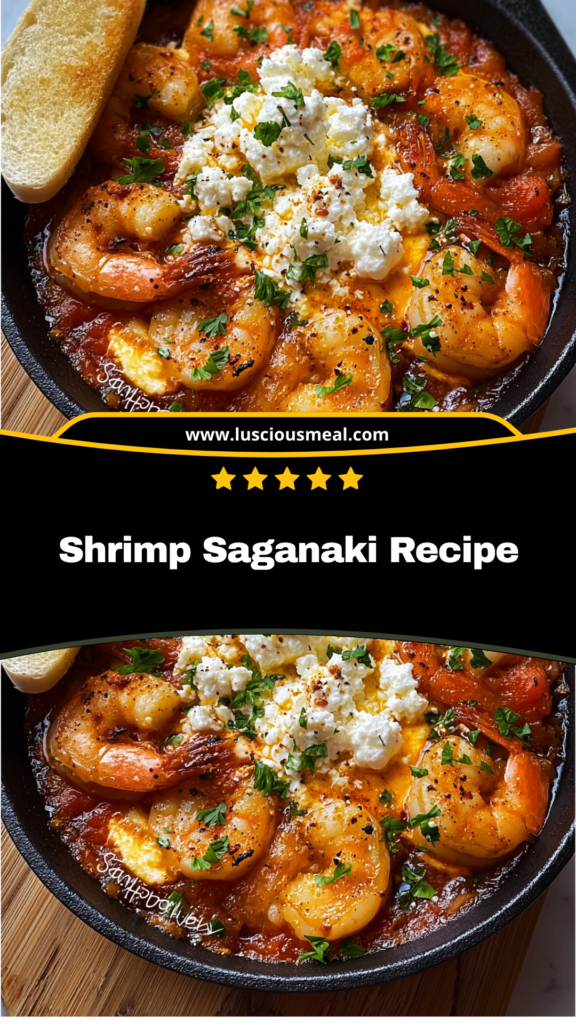
Shrimp saganaki delivers an incredible depth of Mediterranean flavors that showcase why Greek cuisine is so beloved worldwide. The tomato sauce base is rich and robust, with layers of flavor from the slowly cooked onions, garlic, and herbs. The white wine adds essential brightness and acidity that prevents the sauce from feeling heavy, while the oregano and thyme provide that distinctive Greek herbal character.
The shrimp remain incredibly tender and juicy when cooked properly, with a sweet, briny flavor that pairs beautifully with the tangy tomato sauce. They absorb some of the sauce flavors while maintaining their own distinct character, creating perfect harmony in each bite.
The feta cheese is perhaps the most magical element—as it melts into the warm sauce, it creates creamy, salty pockets that transform the entire dish. Good Greek feta has a tangy, slightly sharp flavor with a creamy texture that’s completely different from other cheeses. It doesn’t just add saltiness—it provides richness and complexity that elevates the entire dish.
The fresh herbs brighten everything up and add color and aroma that make the dish feel vibrant and alive. Each bite offers different combinations of sweet shrimp, tangy tomatoes, creamy feta, and aromatic herbs.
Tips and Variations
Use the largest, highest-quality shrimp you can find for the best results. Frozen shrimp work fine if thawed properly and patted completely dry, but fresh shrimp will have better texture and flavor. Remove the tails for easier eating, though some prefer to leave them on for presentation.
Greek feta cheese makes a significant difference in authentic flavor—it’s creamier and tangier than other varieties. Look for feta packed in brine rather than pre-crumbled versions, as it has better texture and flavor. Danish or Bulgarian feta can substitute if Greek isn’t available.
The wine quality matters here since it’s not cooked for a long time. Use something you’d actually drink—a crisp white wine like Assyrtiko, Sauvignon Blanc, or Pinot Grigio works beautifully. Avoid cooking wines, which often contain salt and preservatives.
For a more traditional presentation, serve this in individual saganaki pans or small cast iron skillets. The communal aspect of sharing from one large pan is also very Greek and creates a wonderful dining experience.
Add kalamata olives during the last few minutes of cooking for extra Greek flavor, or include some capers for additional briny complexity that complements the shrimp beautifully.
Storage and Make-Ahead Tips
Shrimp saganaki is best enjoyed immediately while the shrimp are tender and the feta is creamy. However, the tomato sauce base can be prepared up to 2 days ahead and stored in the refrigerator, making final assembly much quicker.
If you have leftovers, store them in the refrigerator for up to 2 days, but be aware that reheated shrimp will be less tender than when fresh. Reheat gently over low heat to prevent the shrimp from becoming rubbery.
The sauce can be frozen for up to 3 months without the shrimp and feta. Thaw overnight in the refrigerator and reheat before adding fresh shrimp and cheese for the best results.
For entertaining, you can have all ingredients prepped and measured ahead of time, then cook the entire dish in about 15 minutes once guests arrive. The aroma and sizzling presentation make it perfect for cooking in front of company.
Serving Suggestions
Shrimp saganaki is traditionally served as a meze (appetizer) with plenty of crusty bread for soaking up the incredible sauce. Greek village bread, Italian ciabatta, or even warm pita all work beautifully for this purpose. The bread is essential—you don’t want to waste a drop of that delicious sauce.
As a main course, serve it over rice, orzo, or even pasta to create a more substantial meal. A simple Greek salad with tomatoes, cucumbers, olives, and more feta makes an excellent side dish that complements the flavors perfectly.
For wine pairings, choose crisp white wines that won’t compete with the bold flavors—Assyrtiko, Sauvignon Blanc, or even a light Greek rosé work beautifully. The acidity in these wines complements the tomatoes and cuts through the richness of the cheese.
The communal nature of this dish makes it perfect for casual entertaining. Serve it straight from the pan with small plates and forks, encouraging guests to share and enjoy the interactive dining experience that’s so central to Greek culture.
FAQ
Can I use frozen shrimp for this recipe? Yes, just make sure to thaw them completely and pat them very dry before cooking. Frozen shrimp often contain more moisture, so extra drying is crucial to prevent the sauce from becoming watery and to ensure proper browning.
What if I can’t find Greek feta cheese? While Greek feta is ideal, good-quality Bulgarian or French feta can substitute. Avoid pre-crumbled feta as it often contains anti-caking agents that affect melting. The cheese should be creamy and tangy, not dry or overly salty.
Can I make this dish less salty? The saltiness mainly comes from the feta cheese, so you can reduce the amount or choose a milder variety. Also, taste your tomatoes and feta before adding salt to the sauce, as both can vary significantly in sodium content.
Why are my shrimp tough and rubbery? This usually happens from overcooking. Shrimp cook very quickly—they’re done as soon as they turn pink and opaque. Remove the pan from heat immediately when they’re cooked, as they’ll continue cooking from residual heat.
Can I use a different type of cheese? While feta is traditional and provides the authentic flavor, you could experiment with goat cheese or ricotta for a milder taste. However, the dish won’t have the same Greek character that makes saganaki so special.
This shrimp saganaki recipe brings the warmth and conviviality of Greek dining straight to your table, proving that the best dishes often come from simple ingredients prepared with care and tradition. The combination of sweet shrimp, robust tomato sauce, and creamy feta creates something that’s both rustic and refined—exactly what Greek cuisine does best. Whether you’re entertaining guests or treating your family to something special, this dish delivers authentic Mediterranean flavors that create lasting memories and satisfied smiles around the table. It’s the kind of food that reminds us why sharing meals with people we care about is one of life’s greatest pleasures.

