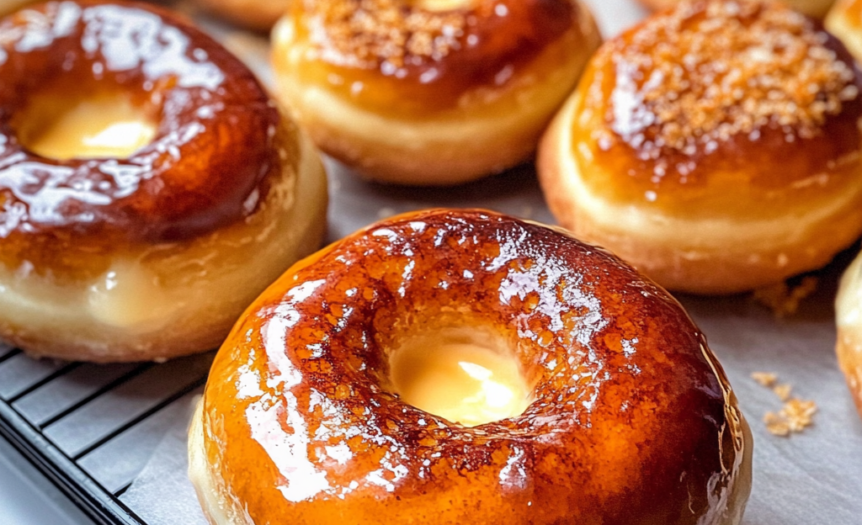
These baked crème brûlée donuts combine the beloved flavors of the classic French dessert with the beloved American pastry, featuring tender, cake-like donuts filled with vanilla pastry cream and topped with a caramelized sugar crust that cracks perfectly under a torch. The result is an elegant treat that delivers all the sophistication of crème brûlée in a handheld format that’s both impressive and approachable. If you enjoy this style of elevated donut creation, you might also like Boston cream donuts, filled churros, or other pastry hybrids that combine classic dessert elements.
Why You’ll Love This Recipe
- Restaurant-quality sophistication – delivers the elegant flavors and presentation of fine dining crème brûlée in an accessible, portable format
- Perfect textural contrast – combines soft, tender donut with silky pastry cream and crispy caramelized sugar for an exciting eating experience
- Impressive presentation – the torched sugar top and filled centers create bakery-quality results that consistently wow guests and family
- Make-ahead components – the pastry cream and donuts can be prepared separately in advance, then assembled and torched just before serving
Ingredients Breakdown
Cake flour: Creates the tender, fine crumb essential for donuts that complement rather than overpower the delicate pastry cream filling. Cake flour has lower protein content than all-purpose flour, resulting in more tender texture that’s perfect for these refined donuts. If cake flour isn’t available, substitute by removing 2 tablespoons per cup of all-purpose flour and replacing with cornstarch, then sifting together. The fine texture is crucial for achieving the elegant mouthfeel that makes these donuts special.
Buttermilk: Provides tangy flavor and tender texture while reacting with baking soda to create proper lift and light crumb. The acidity in buttermilk also helps balance the sweetness of the pastry cream and caramelized sugar. Room temperature buttermilk incorporates more smoothly than cold, creating better batter consistency. If buttermilk isn’t available, substitute by adding 1 tablespoon lemon juice or vinegar to 1 cup regular milk and letting it sit for 5 minutes.
Heavy cream for pastry cream: The foundation of the luscious filling that gives these donuts their crème brûlée character. Heavy cream with 35-36% fat content provides the richness and smooth texture essential for proper pastry cream. The cream must be heated carefully to avoid scorching while allowing the eggs to cook properly. Quality cream makes a significant difference in both flavor and texture of the finished pastry cream.
Vanilla beans: Provide the authentic, intense vanilla flavor that defines classic crème brûlée. Scraping fresh vanilla bean seeds into the pastry cream creates the characteristic black specks and complex flavor that extract alone can’t match. If vanilla beans aren’t available, substitute with 2 teaspoons high-quality pure vanilla extract, though the flavor won’t be quite as authentic or visually appealing.
Granulated sugar for torching: Creates the signature caramelized crust that cracks dramatically when tapped with a spoon. Use superfine sugar if available, as it caramelizes more evenly than regular granulated sugar. The sugar should be applied in a thin, even layer just before torching for the best results. This final step transforms the donuts from ordinary to extraordinary with both visual and textural impact.
Step-by-Step Instructions
- Preheat your oven to 350°F (175°C) and generously grease a donut pan with butter or cooking spray. The proper temperature ensures even baking without over-browning the delicate donuts. If you don’t have a donut pan, you can use a muffin tin, though the shape will be different. Having the pan prepared before mixing ensures the batter goes in immediately for optimal texture.
- Make the pastry cream first since it needs time to chill. In a medium saucepan, heat 1 1/2 cups heavy cream with 1/2 vanilla bean (split and scraped) over medium heat until just beginning to simmer. In a separate bowl, whisk together 4 egg yolks, 1/3 cup granulated sugar, and 3 tablespoons cornstarch until smooth and pale.
- Slowly pour the hot cream into the egg mixture while whisking constantly to prevent curdling. Return the mixture to the saucepan and cook over medium heat, whisking continuously, until thick enough to coat the back of a spoon, about 2-3 minutes. The pastry cream should be smooth and glossy when properly cooked.
- Strain the pastry cream through a fine mesh sieve to remove any lumps, then press plastic wrap directly onto the surface to prevent a skin from forming. Refrigerate for at least 2 hours until completely chilled and set. This cooling period is essential for the proper consistency needed for filling the donuts.
- For the donut batter, whisk together 2 cups cake flour, 3/4 cup granulated sugar, 2 teaspoons baking powder, 1 teaspoon salt, and 1/4 teaspoon nutmeg in a large bowl. The dry ingredients should be evenly distributed to ensure consistent texture throughout the donuts.
- In a separate bowl, whisk together 1/2 cup buttermilk, 2 large eggs, 4 tablespoons melted butter (cooled slightly), and 1 teaspoon vanilla extract until smooth. The liquid ingredients should be at room temperature for the smoothest incorporation with the dry ingredients.
- Pour the wet ingredients into the dry ingredients and gently stir just until combined. Don’t overmix, which can create tough donuts. The batter should be thick but spreadable, similar to muffin batter consistency. A few lumps are fine and will disappear during baking.
- Spoon or pipe the batter into the prepared donut pan, filling each cavity about 2/3 full. Use a piping bag or large spoon for the neatest results. Don’t overfill, as the donuts will rise during baking and could overflow if too full.
- Bake for 12-15 minutes until the donuts spring back lightly when touched and a toothpick inserted into the thickest part comes out clean. The tops should be golden but not dark brown. Don’t overbake, which can make them dry and dense rather than tender.
- Cool in the pan for 5 minutes, then turn out onto a wire rack to cool completely before filling. The donuts must be completely cool before filling to prevent the pastry cream from melting. Use this cooling time to prepare your filling equipment.
- Once cooled, use a paring knife to cut a small hole in the side of each donut. Transfer the chilled pastry cream to a piping bag fitted with a small round tip, then carefully fill each donut with cream until it just begins to leak out slightly. Wipe away any excess cream from the exterior.
- Just before serving, sprinkle about 1 teaspoon of granulated sugar evenly over the top of each filled donut. Use a kitchen torch to caramelize the sugar until golden brown and bubbly, creating the signature crème brûlée crust. Allow the sugar to cool for 1-2 minutes until it hardens before serving.
Perfect Texture: What to Look For
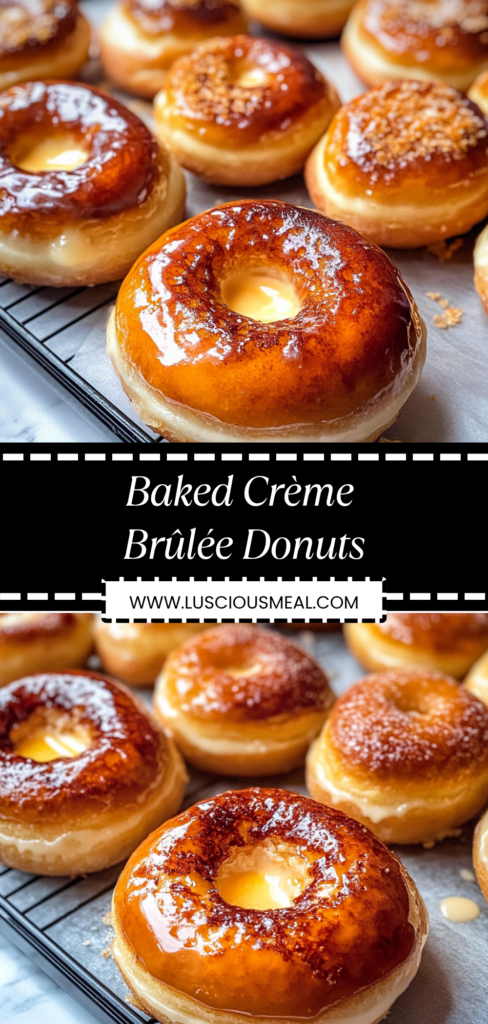
Successfully executed crème brûlée donuts should have tender, cake-like texture that’s moist but not dense, with a fine crumb that complements the rich filling. The pastry cream should be silky smooth and thick enough to stay inside the donut without leaking out excessively. The caramelized sugar top should form a thin, crispy shell that cracks dramatically when tapped, revealing the soft donut underneath. When bitten, the contrast between the crunchy sugar crust, tender donut, and creamy filling should create an exciting textural experience that delivers on the crème brûlée promise.
Customization Options
This elegant base recipe adapts beautifully to different flavor profiles while maintaining its sophisticated character. For chocolate versions, substitute 1/4 cup cocoa powder for an equal amount of flour in the donut batter, or create chocolate pastry cream by melting 2 ounces dark chocolate into the hot cream. Coffee lovers can add espresso powder to either the donuts or pastry cream. Different extracts like almond or orange can replace vanilla for unique flavor profiles. For seasonal variations, incorporate citrus zest or spices like cardamom into the pastry cream.
Practical Tips
Pastry cream success: Cook the pastry cream over moderate heat while whisking constantly to prevent curdling or scorching. Strain it while hot to remove any lumps, and always press plastic wrap directly onto the surface to prevent skin formation. The cream should be thick enough to pipe but not so thick it’s difficult to squeeze from the bag.
Filling technique: Create a small hole in the side of each donut rather than the top for neater presentation. Fill slowly and steadily until cream just begins to appear at the opening. Overfilling can cause messy leakage and make the sugar torching more difficult.
Torching safety: Use a kitchen torch in a well-ventilated area and keep it moving to prevent burning. The sugar should caramelize evenly to golden brown – too light won’t create the proper crust, while too dark becomes bitter. Have a damp towel nearby in case of any drips.
Storage: These are best served within a few hours of assembly. The donuts can be made a day ahead and stored covered, while the pastry cream keeps for 2-3 days refrigerated. Don’t torch the sugar until just before serving to maintain the crispy texture.
Common Questions
Can I make these without a kitchen torch? While the torch creates the most authentic crème brûlée experience, you can create a similar effect by sprinkling sugar on top and placing under a hot broiler for 1-2 minutes, watching carefully to prevent burning. The result won’t be quite the same but still delicious.
Why is my pastry cream lumpy? This usually happens from cooking too quickly or not whisking constantly. Strain hot pastry cream through a fine mesh sieve to remove lumps. For prevention, keep heat moderate and whisk continuously throughout the cooking process.
Can I bake these in a regular muffin tin? Yes, though they won’t have the traditional donut shape. Fill muffin cups about 2/3 full and bake for 15-18 minutes. The filling and torching process remains the same, creating delicious crème brûlée cupcakes.
How do I prevent the donuts from being too dense? Don’t overmix the batter, ensure your baking powder is fresh, and don’t overbake. The batter should be mixed just until ingredients are combined, and donuts should be removed from the oven as soon as they test done.
Serving Suggestions
These elegant donuts work beautifully for special occasion breakfasts, afternoon tea service, or sophisticated dessert presentations. For brunch gatherings, arrange them on tiered serving stands alongside fresh berries and coffee for an impressive spread. The individual format makes them perfect for dinner parties where guests can enjoy their own perfect portion.
For more casual serving, present them on attractive plates with small spoons for cracking the caramelized sugar – part of the fun is the dramatic crack when tapped. Pair with coffee, espresso, or dessert wines that complement the vanilla and caramel flavors. The visual drama of torching can be done tableside for added entertainment value during special celebrations.
Nutritional Benefits
While definitely an indulgent treat, these donuts do provide some nutritional value from their quality ingredients. The eggs contribute complete protein and various vitamins, while the dairy products provide calcium and additional protein. Using real vanilla beans adds beneficial compounds that artificial flavoring lacks.
The baked rather than fried preparation reduces overall fat content compared to traditional donuts, while the pastry cream provides protein and calcium. The moderate portion size naturally encourages reasonable consumption of this rich treat. By making them at home, you control ingredient quality and avoid many of the preservatives found in commercial baked goods, creating a more wholesome indulgence for special occasions that celebrates both technical skill and the pleasure of exceptional flavors combined in creative ways.