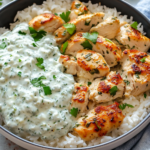
These baked salmon meatballs transform fresh salmon into tender, flavorful spheres that deliver all the omega-3 benefits of fish in a format that appeals to even hesitant seafood eaters. The creamy avocado sauce provides a cooling contrast with its bright, herbaceous flavors that complement the salmon’s richness without overwhelming its delicate taste. If you enjoy this approach to cooking fish, you might also like cod fish cakes, tuna patties, or Mediterranean-style baked fish with herb sauces.
Why You’ll Love This Recipe
- Healthier comfort food – combines the satisfaction of meatballs with the nutritional powerhouse of salmon and avocado, creating a meal that’s both indulgent and nourishing
- Kid-friendly fish preparation – transforms salmon into an approachable format that introduces children to seafood without the intimidation of whole fish fillets
- Elegant yet simple – impressive enough for dinner guests but straightforward enough for weeknight family meals, requiring no special techniques or equipment
- Make-ahead friendly – meatballs can be formed and refrigerated up to 24 hours before baking, while the sauce improves in flavor as it sits
Ingredients Breakdown
Fresh salmon: The foundation of these meatballs, providing rich flavor and exceptional nutritional value through omega-3 fatty acids, high-quality protein, and essential vitamins. Choose fresh, sushi-grade salmon when possible, or high-quality frozen salmon that’s been properly thawed. Skin-on fillets work perfectly since you’ll be removing the skin anyway, and they’re often more affordable than skinless options. Look for salmon with bright color, firm texture, and a fresh ocean smell rather than any fishy odors. Wild-caught salmon typically has firmer texture and more complex flavor than farmed, though both work well in this recipe. The salmon needs to be chopped by hand rather than processed in a food processor, which would create too smooth a texture that lacks the appealing bite of properly made meatballs.
Panko breadcrumbs: These Japanese-style breadcrumbs provide the perfect texture for binding the salmon while maintaining lightness that won’t overpower the fish’s delicate flavor. Panko’s larger, flakier texture creates better binding than regular breadcrumbs without making the meatballs dense or heavy. The breadcrumbs absorb moisture from the fish and egg, then expand during baking to create tender interiors with slightly crisp exteriors. For gluten-free versions, substitute almond flour or gluten-free panko in equal amounts. Avoid using fresh breadcrumbs from sandwich bread, which can make the meatballs gummy and overly dense.
Fresh herbs: Dill and parsley provide bright, fresh flavors that enhance rather than mask the salmon’s natural taste. Fresh dill brings a distinctive anise-like quality that pairs beautifully with fish, while parsley adds color and a clean, slightly peppery note. The combination creates complexity without overwhelming the delicate salmon. Use only fresh herbs for this recipe, as dried versions lack the brightness essential to these meatballs. If dill isn’t available, fresh chives or tarragon make excellent substitutes with their own complementary flavors. Chop the herbs finely to ensure even distribution throughout the meatballs.
Avocados for sauce: The creamy base that transforms simple ingredients into an elegant accompaniment. Choose avocados that yield slightly to gentle pressure but aren’t overly soft or showing dark spots. The natural oils in avocado create a naturally creamy sauce without dairy, while providing healthy monounsaturated fats and fiber. Hass avocados typically offer the best flavor and texture for sauces, with their rich, buttery consistency and nutty undertones. The avocados should be ripe enough to mash easily but not so ripe that they’re browning or have an off flavor.
Lemon juice: Essential for both the meatballs and the sauce, providing bright acidity that enhances all other flavors while preventing the avocado from browning. Fresh lemon juice is crucial – bottled versions lack the bright, clean acidity needed for optimal flavor. The acid helps balance the richness of both the salmon and avocado while adding a brightness that makes the entire dish more appealing. In the meatballs, lemon juice helps denature proteins slightly, contributing to better binding and texture.
Step-by-Step Instructions
- Preheat your oven to 400°F (200°C) and line a large baking sheet with parchment paper for easy cleanup and to prevent sticking. The high temperature ensures the meatballs develop a golden exterior while cooking through completely in a reasonable time. Position a rack in the upper third of the oven for optimal browning. The parchment paper is essential for delicate fish meatballs, which can stick more easily than meat-based versions due to their lower fat content.
- Remove the skin from 1 1/2 pounds of fresh salmon fillets by sliding a sharp knife between the flesh and skin, holding the skin taut as you work. Check carefully for any remaining pin bones by running your fingers along the flesh, removing any you find with tweezers or needle-nose pliers. The thorough bone removal is crucial for the final texture and eating experience. Cut the salmon into 1-inch chunks, then chop with a sharp knife until you have pieces roughly the size of coarse breadcrumbs. Avoid using a food processor, which would create a paste-like texture rather than the slightly chunky consistency that makes these meatballs appealing.
- In a large mixing bowl, combine the chopped salmon with 3/4 cup panko breadcrumbs, 1/4 cup finely chopped fresh dill, 1/4 cup finely chopped fresh parsley, 2 minced garlic cloves, 1 beaten large egg, 2 tablespoons fresh lemon juice, 1 teaspoon salt, and 1/2 teaspoon black pepper. Using clean hands, gently mix the ingredients until just combined – overmixing will result in tough, dense meatballs. The mixture should hold together when squeezed but still show distinct pieces of salmon throughout.
- Test the seasoning and texture by forming a small portion into a ball and either cooking it quickly in a skillet or tasting the raw mixture (if you’re comfortable doing so with fresh, high-quality fish). Adjust salt, herbs, or lemon juice as needed. The mixture should taste bright and well-seasoned, with the salmon flavor coming through clearly. If the mixture seems too wet and won’t hold together, add more panko one tablespoon at a time until the proper consistency is achieved.
- Using slightly damp hands to prevent sticking, form the mixture into meatballs approximately 1 1/2 inches in diameter – about the size of a golf ball. You should have roughly 20 meatballs. Place them on the prepared baking sheet with at least 1 inch of space between each one to ensure even cooking and browning. The meatballs don’t need to be perfectly round, but consistent sizing ensures even cooking times.
- Lightly brush or spray the tops of the meatballs with olive oil to promote browning and prevent drying during baking. This step is particularly important for fish meatballs, which have less natural fat than meat versions. The oil creates an appealing golden exterior while keeping the interiors moist and tender.
- Bake for 12-15 minutes until the meatballs are golden brown on the outside and cooked through to an internal temperature of 145°F (63°C). They should feel firm when gently pressed and no longer appear translucent in the center when cut. Avoid overbaking, which can make them dry and tough. If some meatballs are browning faster than others, rotate the pan halfway through cooking for even results.
- While the meatballs bake, prepare the avocado sauce by halving and pitting 2 large ripe avocados. Scoop the flesh into a food processor or blender and add 1/4 cup fresh lemon juice, 1/4 cup olive oil, 2 tablespoons chopped fresh cilantro, 1 minced garlic clove, 1/2 teaspoon salt, and 1/4 teaspoon black pepper. Process until smooth and creamy, scraping down the sides as needed.
- With the processor running, slowly add 2-4 tablespoons of cold water until the sauce reaches your desired consistency – it should be thick enough to cling to the meatballs but thin enough to drizzle easily. Taste and adjust seasoning with additional lemon juice, salt, or herbs as needed. The sauce should be bright, creamy, and well-balanced, with all flavors harmonizing rather than any single element dominating.
- Transfer the finished sauce to a serving bowl or squeeze bottle for attractive drizzling. If not serving immediately, press plastic wrap directly onto the surface of the sauce to prevent browning, though the lemon juice should protect it for several hours. The sauce can be made up to 4 hours ahead and refrigerated, though it’s best served at room temperature.
- Once the meatballs are done, let them rest on the baking sheet for 2-3 minutes to firm up slightly before transferring to a serving platter. This brief resting period helps them maintain their shape and makes them easier to handle. Arrange attractively on the platter and serve immediately with the avocado sauce alongside for dipping or drizzling.

Perfect Texture: What to Look For
Successfully executed salmon meatballs should have a tender, moist interior with a slightly firm, golden-brown exterior that provides textural contrast. When you bite into them, you should notice distinct pieces of salmon held together by the binding ingredients rather than a smooth, paste-like consistency. The exterior should be firm enough to hold its shape when picked up but not tough or dry. The meatballs should feel substantial but not heavy, with the panko providing lightness while the salmon delivers satisfying richness. The avocado sauce should be perfectly smooth and creamy, coating the back of a spoon without being too thick or too thin, and should complement rather than mask the salmon’s delicate flavor.
Customization Options
This versatile recipe adapts beautifully to different flavor profiles and dietary needs. For Mediterranean flair, add 2 tablespoons of chopped sun-dried tomatoes and 1 tablespoon of capers to the meatball mixture, then substitute basil for the dill in both the meatballs and sauce. Create an Asian-inspired version by adding 1 tablespoon of grated fresh ginger and 1 teaspoon of sesame oil to the salmon mixture, then incorporating lime juice and cilantro into the avocado sauce instead of lemon and parsley. For a spicier version, add 1 minced jalapeño to the avocado sauce or include a pinch of red pepper flakes in the meatball mixture. During summer, try adding finely diced cucumber to the sauce for extra freshness and crunch.
Practical Tips
Storage: Cooked salmon meatballs keep well refrigerated for up to 3 days in an airtight container, though they’re best enjoyed fresh from the oven. The avocado sauce should be consumed within 24 hours for optimal color and flavor, stored with plastic wrap pressed directly against the surface. For longer storage, the meatballs can be frozen for up to 1 month – freeze them on a baking sheet until solid, then transfer to freezer bags. Thaw overnight in the refrigerator before reheating.
Reheating: For the best texture when reheating, warm the meatballs in a 350°F oven for 5-7 minutes until heated through, which helps restore some of the exterior crispness. Avoid microwaving if possible, as it can make them rubbery. The avocado sauce should be served at room temperature and doesn’t require reheating – remove it from the refrigerator 15-20 minutes before serving to allow the flavors to brighten.
Make-ahead strategy: The salmon mixture can be formed into meatballs up to 24 hours in advance and refrigerated on the lined baking sheet, covered with plastic wrap. This advance preparation actually improves the flavor as the seasonings have time to penetrate the fish. Bake directly from the refrigerator, adding 2-3 minutes to the cooking time. The avocado sauce can be made up to 4 hours ahead, but no longer due to the natural browning that occurs despite the lemon juice.
Fish handling tips: Keep the salmon as cold as possible during preparation to maintain the best texture. If the fish seems soft or starts to warm up during chopping, place the bowl in the refrigerator for 10-15 minutes before continuing. Clean hands and utensils are essential when working with raw fish. If you’re uncomfortable handling raw salmon, ask your fishmonger to remove the skin and bones for you, though they can’t do the chopping since that needs to be done just before mixing.
Common Questions
Can I use canned salmon instead of fresh? While fresh salmon produces superior texture and flavor, high-quality canned salmon can substitute in a pinch. Use 1 1/2 pounds of well-drained canned salmon, removing any skin and bones carefully. The texture will be different – slightly more dense and less delicate – but still delicious. Reduce the salt in the recipe by half, as canned salmon contains more sodium than fresh. Wild-caught canned salmon typically has better flavor and texture than farmed varieties for this application.
Why do my meatballs fall apart during baking? Several factors can cause this issue: the salmon mixture may be too wet (add more panko), the fish may be chopped too finely (aim for coarse breadcrumb-sized pieces), or the mixture may not be mixed thoroughly enough for proper binding. Ensure the egg is well-incorporated throughout the mixture, and don’t skip the resting period after forming – this allows the panko to hydrate and bind better. If problems persist, refrigerate the formed meatballs for 30 minutes before baking to help them hold together.
How can I tell when the meatballs are properly cooked? The most reliable method is using an instant-read thermometer – the internal temperature should reach 145°F (63°C). Visually, properly cooked meatballs will be golden brown on the outside and opaque throughout when cut. They should feel firm when gently pressed and no longer appear translucent in the center. If you’re unsure, cut one in half to check the interior – it should be uniformly opaque with no raw-looking areas.
Can I make these without eggs for an allergy-friendly version? Yes, substitute 1/4 cup of mayonnaise or 3 tablespoons of ground flaxseed mixed with 3 tablespoons of water (let sit for 5 minutes to thicken) for the egg. The texture will be slightly different, but the binding will still work well. You might need to add a bit more panko to achieve the proper consistency. Both substitutions provide the moisture and binding properties needed for successful meatballs.
Serving Suggestions
These salmon meatballs work beautifully as either an appetizer or main course depending on portion size and accompaniments. As an appetizer, serve with small spoons or toothpicks for easy eating, arranging them on a platter with the avocado sauce in an attractive bowl for dipping. For a complete meal, serve over a bed of quinoa, brown rice, or mixed greens, with the sauce drizzled generously over everything. The meatballs pair wonderfully with roasted vegetables like asparagus, Brussels sprouts, or sweet potatoes for a nutritionally balanced dinner.
For entertaining, consider serving them as part of a Mediterranean-style mezze platter alongside hummus, olives, and fresh vegetables. The bright green avocado sauce provides beautiful color contrast against the golden meatballs, making for an Instagram-worthy presentation that tastes as good as it looks. A simple cucumber salad or fresh fruit salad provides refreshing contrast to the rich salmon and creamy sauce.
Nutritional Benefits
These salmon meatballs deliver exceptional nutritional value while satisfying comfort food cravings. Salmon provides omega-3 fatty acids EPA and DHA, which support heart and brain health, along with high-quality complete protein for muscle maintenance and satiety. The fish also contributes vitamin D, B vitamins, and selenium, nutrients that many people don’t get in adequate amounts from other sources.
The avocado sauce adds monounsaturated fats that support heart health and help with the absorption of fat-soluble vitamins. Avocados also provide fiber, potassium, and folate. By baking rather than frying, you avoid unnecessary added fats while still achieving appealing texture and flavor. This preparation method makes salmon more accessible to those who might be intimidated by cooking whole fish fillets, encouraging increased consumption of this nutritional powerhouse in an approachable, family-friendly format that even children often enjoy.