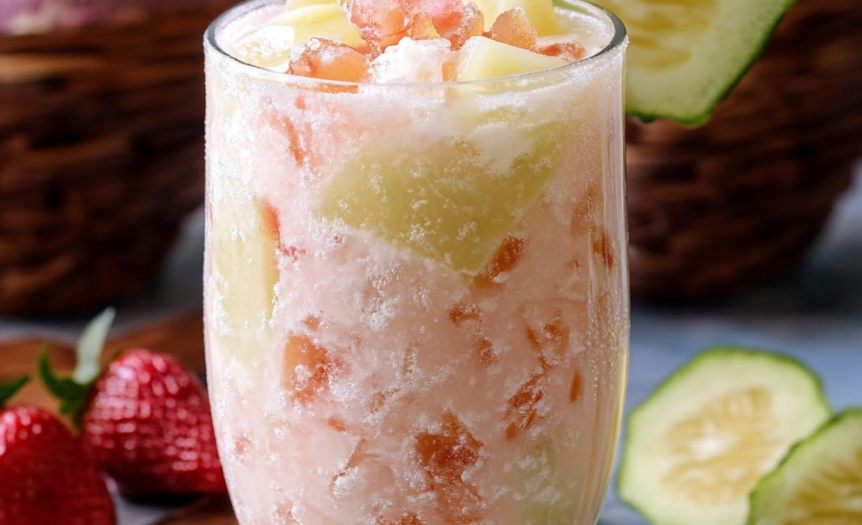
This buko salad drink transforms the beloved Filipino dessert into a refreshing beverage that captures all the creamy, tropical flavors of the original while being perfectly sippable through a straw. The combination of tender young coconut, sweet mixed fruits, and rich cream creates a dessert-like drink that’s both nostalgic and satisfying for hot weather refreshment. If you enjoy this style of creamy fruit drink, you might also like halo-halo shakes, mais con yelo, or other Filipino-inspired beverage treats.
Why You’ll Love This Recipe
- Nostalgic comfort in liquid form – delivers all the familiar flavors of traditional buko salad in a format that’s perfect for parties, picnics, or anytime you want a cooling treat
- Customizable sweetness and texture – easily adjustable for different preferences while maintaining the essential tropical character that makes this drink special
- Party-perfect presentation – looks beautiful served in clear glasses and scales up effortlessly for large gatherings or special occasions
- Quick assembly with familiar ingredients – uses the same components as traditional buko salad but requires no cooking or complex preparation techniques
Ingredients Breakdown
Young coconut strips (buko): The star ingredient that gives this drink its name and distinctive character. Fresh young coconut provides the best texture and flavor with its tender, slightly chewy consistency and subtle sweetness. The coconut strips should be soft enough to drink through a wide straw but still maintain some texture for interest. Canned young coconut in syrup works well as a convenient alternative and is often more readily available than fresh. If using canned, drain the syrup and rinse briefly if you prefer less sweetness, though many people enjoy the extra sweetness the syrup provides. The coconut pieces should be cut into thin strips rather than chunks to make the drink easier to consume.
Mixed fruit cocktail: Provides the colorful variety and diverse flavors that make each sip interesting and visually appealing. Canned fruit cocktail offers convenience and consistent results, typically containing peaches, pears, grapes, pineapple, and cherries in a sweet syrup. For the best flavor, choose fruit cocktail packed in juice rather than heavy syrup to avoid overwhelming sweetness. Fresh fruits can substitute for a more vibrant flavor, though the preparation time increases significantly. If using fresh fruits, choose options that hold their shape well and won’t break down in the creamy mixture, such as diced mango, pineapple, and firm pears.
Kaong (sugar palm fruit): This traditional Filipino ingredient adds unique texture and subtle sweetness while contributing authentic flavor to the drink. Kaong has a firm, slightly chewy texture similar to firm gelatin and a mild, sweet taste that complements the other fruits beautifully. Available in bottles or cans at Filipino grocery stores, kaong comes pre-sweetened and ready to use. If unavailable, substitute with nata de coco or small tapioca pearls for similar textural interest, though the flavor will be different.
Condensed milk: Provides the rich sweetness and creamy base that binds all the ingredients together while creating the dessert-like quality that makes this drink so satisfying. Sweetened condensed milk is essential rather than evaporated milk, as the sugar content is crucial for both flavor and the thick consistency that characterizes buko salad drinks. The condensed milk also helps preserve the drink when stored, though it’s best consumed fresh. For a lighter version, you can reduce the amount slightly, but don’t eliminate it entirely as it’s fundamental to the authentic flavor profile.
Heavy cream or all-purpose cream: Creates the luxurious, smooth texture that makes this drink feel indulgent while providing the creamy backdrop that allows the fruit flavors to shine. Heavy cream whips slightly when mixed, creating a light, airy texture that’s more appealing than using milk alone. All-purpose cream, commonly used in Filipino cooking, works equally well and is often preferred for its slightly thicker consistency and neutral flavor. The cream should be well-chilled before mixing to maintain the best texture and prevent the drink from becoming too thin.
Step-by-Step Instructions
- Begin by ensuring all ingredients are properly chilled, as this drink is best served very cold and the temperature affects both flavor and texture. If using canned ingredients, drain them thoroughly in a fine mesh strainer to remove excess syrup that could make the drink overly sweet or thin. For fresh coconut, extract the meat and cut into thin strips about 1/4 inch wide and 1-2 inches long for optimal drinking through a straw.
- In a large mixing bowl, combine 2 cups of drained young coconut strips, 1 cup of drained mixed fruit cocktail, and 1/2 cup of kaong. Gently fold these ingredients together to distribute them evenly without crushing the more delicate fruits. The goal is to maintain the individual integrity of each component while creating an appealing mix of colors and textures.
- In a separate bowl, whisk together 1 can (14 ounces) of sweetened condensed milk with 1 cup of heavy cream until smooth and well combined. The mixture should be thick but pourable, with no lumps of condensed milk remaining. If the condensed milk seems particularly thick, whisk vigorously or use a hand mixer briefly to ensure complete incorporation with the cream.
- Pour the cream mixture over the fruit combination and gently fold together until all fruits are evenly coated and suspended in the creamy base. Use a large spoon or spatula and fold from the bottom up to avoid crushing the fruits while ensuring even distribution. The mixture should have a thick but pourable consistency that coats all the fruit pieces.
- Taste the mixture and adjust sweetness if needed. Some brands of canned fruits are sweeter than others, so you may want to add 2-4 tablespoons of additional condensed milk if the drink isn’t sweet enough for your preference. Remember that the flavors will develop and meld as the drink chills, so avoid over-sweetening at this stage.
- Cover the bowl with plastic wrap and refrigerate for at least 2 hours, though 4-6 hours produces optimal flavor as the ingredients meld together and the mixture becomes well-chilled throughout. During this chilling time, the cream thickens slightly and the fruit flavors infuse into the creamy base, creating a more cohesive and flavorful drink.
- Before serving, stir the mixture gently to recombine any ingredients that may have separated during chilling. The drink may thicken considerably when cold, so you can thin it slightly with additional cream or even cold milk if needed to achieve your preferred consistency for drinking. The texture should be thick enough to coat the fruits but thin enough to flow easily through a wide straw.
- To serve, use a large spoon or ladle to portion the drink into tall glasses, ensuring each serving gets a good mix of all the different fruits and coconut pieces. Fill glasses about 3/4 full to leave room for garnishes and to prevent overflow when stirring. The visual appeal of seeing all the colorful components through clear glasses is part of the drink’s charm.
- Provide wide straws or bubble tea straws that can accommodate the fruit pieces, along with long spoons for mixing and eating the larger pieces. Some people prefer to eat this drink more like a dessert soup, alternating between sipping and spooning, so having utensils available enhances the experience.
- Garnish each glass with a few extra coconut strips on top, a cherry from the fruit cocktail, or a sprinkle of toasted coconut flakes for added visual appeal and texture contrast. Fresh mint leaves also make an attractive garnish that adds a subtle aromatic element without competing with the tropical flavors.
Perfect Texture: What to Look For
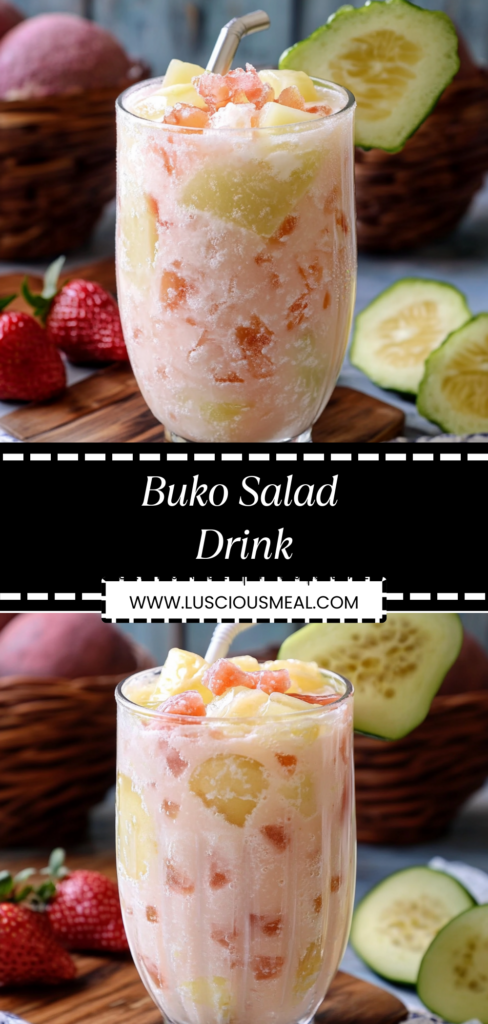
The ideal buko salad drink achieves a perfect balance between creamy smoothness and textural interest from the various fruit components. The base should be thick enough to suspend the fruits evenly without them sinking to the bottom, but thin enough to be easily sippable through a wide straw. The coconut strips should maintain their tender chewiness, providing pleasant texture without being tough or stringy. The mixed fruits should retain their individual shapes and flavors while being thoroughly coated with the creamy mixture. When properly prepared, each sip should deliver a combination of smooth creaminess punctuated by distinct pieces of fruit that require gentle chewing, creating an engaging drinking experience that’s more substantial than a typical beverage.
Customization Options
This versatile base recipe welcomes numerous variations to suit different tastes and occasions. For a more tropical focus, add diced fresh mango, pineapple, and kiwi while reducing the canned fruit cocktail proportionally. Create a more indulgent version by incorporating small cubes of cream cheese or mascarpone that have been softened and mixed smooth. For textural variety, add cooked tapioca pearls, small cubes of gelatin, or even mini marshmallows that soften slightly in the cream. During special occasions, consider adding a splash of coconut rum or pandan extract for adult versions, or incorporate ube (purple yam) flavor for a colorful Filipino twist that children especially enjoy.
Practical Tips
Storage: This drink keeps well refrigerated for 2-3 days, though it’s best consumed within 24 hours for optimal texture and freshness. Store in an airtight container and stir gently before serving as separation is natural. The fruits will soften slightly over time, which some people prefer, though the coconut maintains its texture well. Avoid freezing as the cream will separate and the fruits will become mushy when thawed.
Consistency management: The drink will thicken considerably when chilled due to the condensed milk and cream. If it becomes too thick for comfortable drinking, thin it gradually with cold milk, additional cream, or even coconut milk to maintain the tropical flavor profile. Add liquid slowly while stirring to avoid making it too thin. The consistency should be similar to a thick smoothie rather than a milkshake.
Ingredient preparation: When using canned fruits, drain them thoroughly and pat dry with paper towels to prevent excess liquid from thinning the drink. If the fruit cocktail pieces seem too large for comfortable drinking, chop them into smaller, more manageable sizes. For fresh coconut, ensure it’s properly cleaned and cut into uniform strips that will fit through straws while still providing good texture.
Serving optimization: Chill all serving glasses in the refrigerator for 15-20 minutes before serving to keep the drink cold longer. This is particularly important for outdoor gatherings or warm weather serving. Consider setting up a self-serve station with different toppings so guests can customize their drinks with additional fruits, nuts, or garnishes according to their preferences.
Common Questions
Can I make this without heavy cream for a lighter version? Yes, though the texture and richness will change significantly. Substitute evaporated milk, whole milk, or even coconut milk for a lighter consistency. You may need to increase the condensed milk slightly to maintain sweetness and body. Coconut milk works particularly well as it complements the tropical flavors while providing some richness, though the result will be less creamy than the traditional version.
Where can I find kaong and other Filipino ingredients? Most Asian grocery stores, particularly those with Filipino sections, carry kaong and young coconut strips. Many Filipino ingredients are also available online through specialty retailers. If you can’t find kaong specifically, substitute with nata de coco, which has a similar texture and is more widely available, or use small tapioca pearls cooked until tender for a different but pleasant textural element.
How far in advance can I prepare this for a party? The drink can be prepared up to 24 hours in advance and actually benefits from the resting time as flavors meld together. Prepare everything except the final garnishes, then cover and refrigerate. Stir gently before serving and add fresh garnishes at the last minute. For larger quantities, consider preparing the cream base separately and combining with fruits just before serving to maintain optimal texture.
Is there a dairy-free version of this drink? Yes, substitute the condensed milk with coconut condensed milk (available at health food stores) and use full-fat coconut milk in place of heavy cream. The flavor will be more intensely coconut-forward, which actually complements the buko beautifully. You may need to adjust the sweetness by adding sugar or agave nectar to taste, as dairy-free alternatives often have different sweetness levels.
Serving Suggestions
This buko salad drink works beautifully for various occasions, from casual family gatherings to more festive celebrations. For Filipino-themed parties, serve it alongside other traditional treats like leche flan or turon for a complete dessert experience. During summer barbecues or pool parties, serve in large punch bowls with ladles so guests can serve themselves, providing wide straws and spoons for easy consumption.
For more elegant presentations, layer the drink in clear glass containers to showcase the colorful fruits, or serve in chilled martini glasses for a sophisticated twist on the traditional preparation. Consider offering both regular and mini versions for children, using smaller glasses and adjusting the consistency to be easier for young ones to manage. The drink pairs wonderfully with spicy Filipino dishes as it provides cooling relief from heat while complementing the tropical flavor profiles common in the cuisine.
Nutritional Benefits
While definitely a treat rather than a health drink, buko salad drink does offer some nutritional benefits from its fruit content and natural ingredients. Young coconut provides electrolytes, particularly potassium, along with some fiber and healthy fats. The mixed fruits contribute vitamins, particularly vitamin C from any citrus components, along with various antioxidants and fiber. The dairy components provide calcium and protein, making this more nutritionally substantial than many other sweet beverages.
To enhance the nutritional profile, consider adding fresh fruits high in vitamins and antioxidants, or incorporate ingredients like chia seeds that provide omega-3 fatty acids and additional fiber. While this drink is certainly indulgent, it uses real fruit and dairy rather than artificial flavors and chemicals found in many commercial beverages, making it a more wholesome option for special occasions and celebrations when you want something sweet and satisfying that also provides some nutritional value alongside the pleasure.