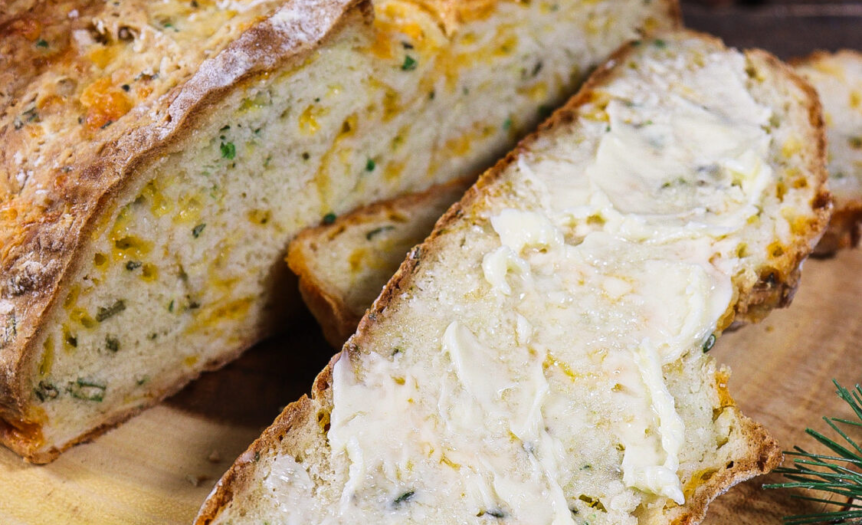
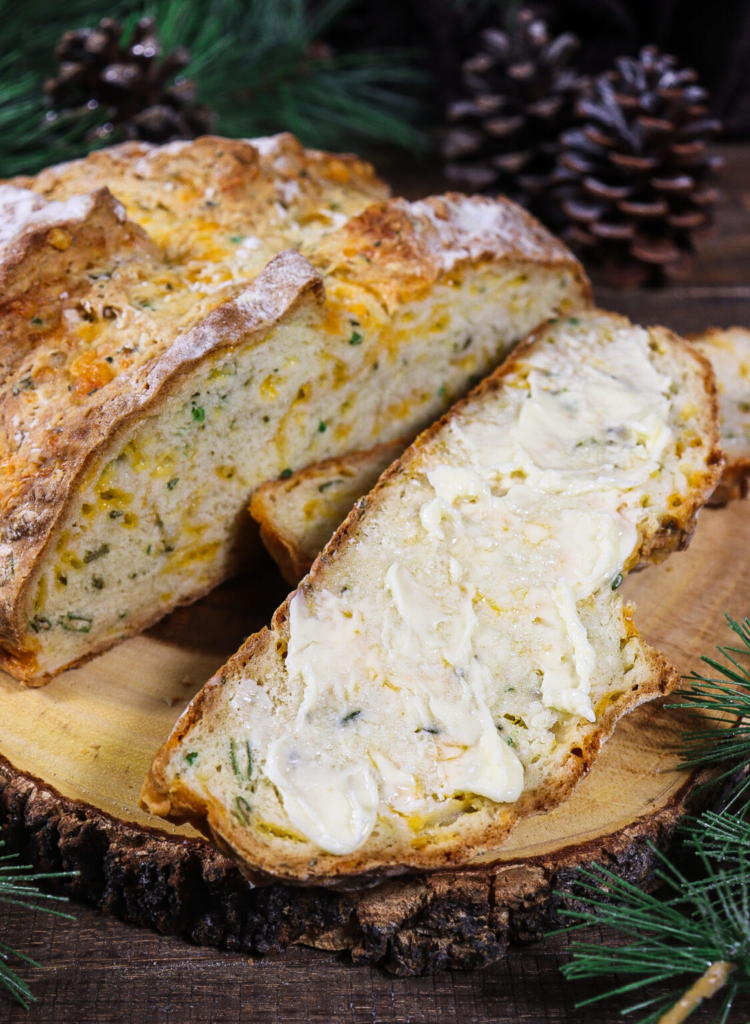
This Cheddar and Herb Soda Bread is a rustic, no-yeast loaf that brings together the sharp tang of aged cheddar with a fragrant bouquet of fresh garden herbs. By utilizing the classic chemical reaction between buttermilk and baking soda, this bread achieves a hearty, tender crumb and a beautifully crusted exterior without the need for rising time.
Why You’ll Love This Recipe
- No Yeast Required — Perfect for beginners or last-minute baking, this loaf relies on baking soda for a quick and reliable rise.
- Complex Herb Profile — The combination of chives, thyme, rosemary, and sage creates a sophisticated savory aroma that fills the entire home.
- Molten Cheese Pockets — Shredded cheddar melts into the dough during baking, creating savory, golden ribbons throughout the bread.
- Rapid Preparation — With only 15 minutes of hands-on time, you can have a fresh, warm loaf on the table in under an hour.
- Authentic Texture — Wrapping the warm loaf in a tea towel is a traditional technique that ensures a perfectly softened, sliceable crust.
- Hearty and Versatile — This dense, flavorful bread is sturdy enough for thick sandwiches yet tender enough to accompany a bowl of soup.
Ingredients You’ll Need
The Dry Base
- 4 cups All-purpose flour (plus extra) — The structural foundation of the loaf; keep extra nearby for dusting the counter and dough.
- 1 ½ tsp Baking soda — The leavening agent that reacts with the acid in the buttermilk to create a lift.
- 1 tsp Salt — Essential for tightening the gluten structure and enhancing the savory flavors of the herbs.
The Savory Enhancements
- 2 tbsp Chopped fresh chives — Provides a delicate, onion-like brightness.
- 1 tbsp Each chopped fresh thyme, rosemary, and sage — A powerful trio of woody, earthy herbs that define the “Tuscan” flavor profile.
- 1 cup Shredded cheddar cheese — Adds richness, moisture, and a sharp, salty kick to every bite.
The Catalyst
- 1 ¾ cups Buttermilk — The acidic liquid that activates the soda and ensures a moist, tender crumb.
Step-by-Step Instructions
Mix the Ingredients Preheat your oven to 425°F. In a large mixing bowl, whisk together the flour, baking soda, and salt; stir in the fresh herbs and shredded cheese before adding the buttermilk. Mix until a shaggy dough forms and no dry flour remains.
Shape the Loaf Turn the dough onto a lightly floured surface and bring it together into a ball. Knead the dough only a few times until smooth, being careful not to overwork it; pat it down into a 7-inch circle.
Score the Surface Transfer the dough to a lightly floured baking sheet and dust the top with a bit more flour. Using a sharp knife, score a deep “X” or cross into the top (about 1/2 inch deep) to allow the bread to expand evenly in the heat.
Bake and Reduce Bake the bread at 425°F for 15 minutes to establish the crust. Reduce the oven temperature to 375°F and continue baking for 30–35 minutes until the loaf sounds hollow when tapped on the bottom.
Steam and Soften Remove the bread from the oven and immediately wrap it in a clean, dry tea towel. Let it cool while wrapped; the trapped steam will soften the thick crust, making it easier to slice and enjoy.
Recipe Notes & Tips
- The Kneading Rule — Soda bread is closer to a giant biscuit than a traditional yeast bread; over-kneading will develop too much gluten, resulting in a tough, rock-hard loaf.
- Buttermilk Substitute — If you lack buttermilk, add 1 tablespoon of lemon juice or white vinegar to 1 ¾ cups of regular milk and let it sit for 10 minutes before using.
- Cheese Selection — An extra-sharp white or yellow cheddar provides the best flavor contrast against the floury dough.
- Checking for Doneness — If you aren’t sure about the “hollow knock,” use an instant-read thermometer; the center of the loaf should reach approximately 190°F to 200°F.
- Fresh vs. Dried Herbs — While fresh is preferred for the best aroma, you can use 1 teaspoon of dried herbs for every tablespoon of fresh required.
Nutritional Information
- Prep Time: 15 minutes
- Cook Time: 45–50 minutes
- Total Time: Approx. 1 hour 5 minutes
- Servings: 1 Loaf (approx. 10–12 slices)
- Calories: ~280 kcal per slice (Estimation based on standard 10-slice yield).
Perfect Pairings
- Salted Irish Butter — A thick slab of high-quality butter melting into a warm slice is the ultimate way to enjoy this bread.
- Creamy Tomato Soup — The cheddar and herbs are a natural companion to the acidity of a hot tomato bisque.
- Beef Stew — This sturdy loaf is perfect for mopping up rich, savory gravies.
- Honey Drizzle — A surprising but delicious pairing; the sweetness of honey highlights the sharpness of the cheddar.
Ideal Occasions
- St. Patrick’s Day — A flavorful, cheesy twist on the traditional Irish soda bread staple.
- Last-Minute Dinner Guest — Since there is no rising time, you can have fresh bread ready by the time your guests arrive.
- Soup Season Lunches — Elevates a simple lunch into a comforting, restaurant-style experience.
- Weekend Brunch — Slice and toast this bread to serve alongside soft-scrambled eggs.
Storage & Serving Tips
- Freshness Window — Soda bread is best enjoyed on the day it is baked, as it lacks the preservatives and yeast structures of store-bought loaves.
- Toasting Leftovers — If the bread is a day or two old, toasting it in the oven or toaster will revive the texture and the oils in the cheese.
- Freezing Strategy — Once completely cool, wrap the loaf tightly in plastic wrap and foil; it can be frozen for up to 3 months.
- Slicing Technique — Use a long, serrated bread knife to saw through the crust without crushing the tender interior.
Creative Variations to Try
- Jalapeño Cheddar — Add 1–2 finely diced jalapeños for a spicy Southwestern version of this loaf.
- Bacon and Chive — Fold in ½ cup of cooked, crumbled bacon with the chives for a smoky, meaty addition.
- Whole Wheat Blend — Replace 1 cup of the all-purpose flour with whole wheat flour for a nuttier, more rustic texture.
- Parmesan and Garlic — Use shredded Parmesan instead of cheddar and add 2 cloves of finely minced fresh garlic.
Troubleshooting Common Issues
- Dense, Heavy Bread — Solution: This is usually caused by over-mixing the dough or using old baking soda. Mix until just combined and ensure your soda is fresh.
- Raw Center — Solution: Soda bread is very thick. If the outside is browning too fast, tent the loaf loosely with foil for the final 15 minutes of baking.
- Crust is Too Hard — Solution: Do not skip the tea towel wrap! This is essential for converting a hard shell into a soft, edible crust.
- Bread Didn’t Rise — Solution: The reaction starts as soon as the buttermilk hits the soda; get the loaf into the oven as quickly as possible once the liquid is added.
Why This Recipe Works
The science of this loaf relies on the acid-base reaction between the lactic acid in the buttermilk and the sodium bicarbonate (baking soda). This produces carbon dioxide bubbles that expand in the high-heat environment of the 425°F oven. The inclusion of cheddar cheese adds fat, which helps to shorten the gluten strands, contributing to the tender, crumbly texture. At roughly 280 kcal per slice, this bread provides a satiating mix of carbohydrates and fats, making it a substantial addition to any meal.
Final Thoughts
Cheddar and Herb Soda Bread is a triumph of simple chemistry and bold flavor. It offers the immediate gratification of a quick bread with the rustic charm of a hearth-baked loaf. While the herbs provide an elegant aromatic layer, it is the sharp cheddar that truly makes this bread a family favorite.