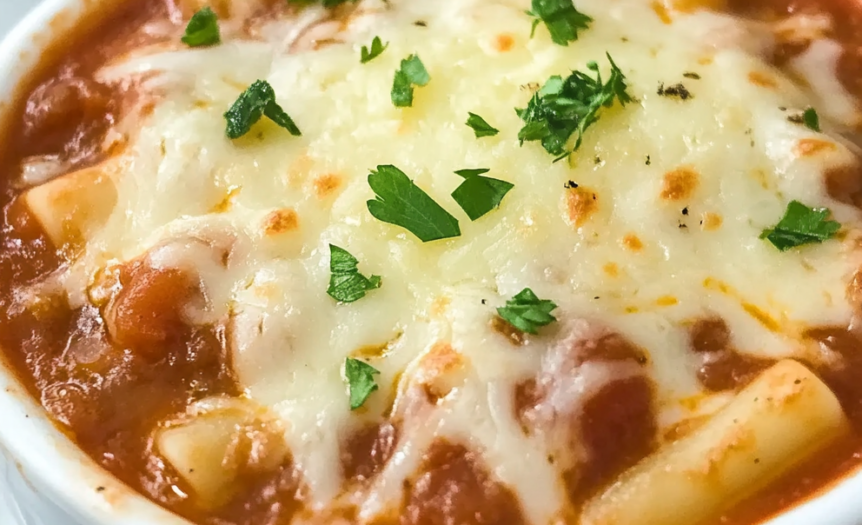
This crockpot lasagna soup captures all the beloved flavors of traditional lasagna – rich meat sauce, creamy cheese, and tender pasta – in a comforting bowl that requires minimal effort and delivers maximum satisfaction. The slow cooker does all the work while the ingredients meld together into a hearty, soul-warming soup that tastes like you’ve been cooking all day. If you enjoy this style of deconstructed comfort food, you might also like crockpot pizza soup, slow cooker enchilada soup, or Italian wedding soup.
Why You’ll Love This Recipe
- Set-and-forget convenience – requires just 15 minutes of prep before the slow cooker takes over, making it perfect for busy days when you want a homemade meal waiting when you return
- All the lasagna flavor without the work – delivers the complex, layered tastes of traditional lasagna without the time-consuming assembly, baking, or cleanup
- Feeds a crowd economically – stretches a modest amount of meat into a filling meal for 6-8 people using affordable pantry staples and vegetables
- Customizable for all tastes – easily adaptable for different dietary needs, spice preferences, and ingredient availability while maintaining the essential comfort food appeal
Ingredients Breakdown
Ground beef: Provides the hearty protein foundation that makes this soup satisfying and substantial. Choose 80/20 ground beef for the best balance of flavor and texture – the fat content keeps the meat moist during long cooking while adding richness to the broth. Lean ground beef can be used but may result in drier texture after hours of slow cooking. The beef should be browned before adding to the crockpot to develop deep, savory flavors and prevent it from becoming gray and unappetizing during the slow cooking process.
Italian sausage: Adds authentic Italian flavors and complexity that distinguishes this from ordinary vegetable soup. Sweet Italian sausage provides classic fennel and herb notes, while spicy versions add heat and depth. Remove the casings before browning to create smaller, more soup-appropriate pieces. The combination of ground beef and Italian sausage creates a more interesting flavor profile than using either meat alone, with the sausage providing aromatic herbs and spices that infuse the entire soup.
Crushed tomatoes: Form the base of the soup, providing body, acidity, and essential tomato flavor that defines lasagna. High-quality crushed tomatoes make a significant difference in the final taste – look for brands with minimal additives and good reviews. San Marzano tomatoes offer superior flavor if budget allows. The acidity in tomatoes helps tenderize the meat during long cooking while providing the characteristic red color and fresh taste that balances the rich cheese and meat.
Lasagna noodles: Provide the pasta element that makes this recognizably lasagna-inspired. Break regular lasagna noodles into bite-sized pieces before adding to create manageable, spoon-friendly portions. The broad, flat noodles hold sauce better than other pasta shapes and maintain their texture during extended slow cooking. Add them during the last hour of cooking to prevent them from becoming mushy – they should be tender but still have some structure when served.
Ricotta and mozzarella cheese: Create the creamy, cheesy component that makes lasagna so comforting and satisfying. Full-fat ricotta provides richness and helps thicken the soup slightly while adding the characteristic lasagna flavor. Mozzarella cheese should be shredded for easy melting and even distribution. Add these cheeses near the end of cooking to prevent them from becoming stringy or separating during the long cooking process.
Step-by-Step Instructions
- Heat a large skillet over medium-high heat and brown 1 pound of ground beef and 1/2 pound of Italian sausage (casings removed), breaking the meat into small pieces as it cooks. This browning step is crucial for developing flavor and preventing gray, unappetizing meat in the final soup. Cook until no pink remains and the meat has good color, about 6-8 minutes. Drain excess fat, leaving just enough to keep the meat moist.
- Add 1 diced medium onion, 3 minced garlic cloves, and 1 diced bell pepper to the skillet with the cooked meat. Sauté for 3-4 minutes until the vegetables begin to soften and become fragrant. This step builds the aromatic foundation of the soup and ensures the vegetables are properly cooked by the end of the slow cooking time.
- Transfer the meat and vegetable mixture to your slow cooker (6-quart capacity works best for this recipe). Add one 28-ounce can of crushed tomatoes, one 14.5-ounce can of diced tomatoes (with juice), 4 cups of beef broth, 2 tablespoons of tomato paste, 1 tablespoon of Italian seasoning, 1 teaspoon each of dried basil and oregano, 1/2 teaspoon of salt, and 1/4 teaspoon of black pepper.
- Stir all ingredients thoroughly to combine and ensure the tomato paste is fully incorporated into the liquid. The mixture should have a rich, tomatoey color and smell aromatic with the herbs and seasonings. Cover and cook on low for 6-7 hours or on high for 3-4 hours, allowing the flavors to meld and develop complexity.
- About 1 hour before serving, break 8-10 lasagna noodles into bite-sized pieces (roughly 2-inch squares) and add them to the slow cooker. Stir gently to submerge the pasta pieces in the liquid. The pasta will absorb some of the broth as it cooks, thickening the soup slightly while becoming tender.
- During the last 30 minutes of cooking, prepare the cheese mixture by combining 1 cup of ricotta cheese, 1/2 cup of grated Parmesan cheese, and 1/4 cup of chopped fresh basil (or 2 tablespoons dried basil) in a bowl. Mix until smooth and set aside. This mixture will be stirred into individual bowls rather than the entire pot to maintain the best texture.
- In the final 15 minutes, add 1 1/2 cups of shredded mozzarella cheese to the slow cooker, stirring gently to incorporate. The cheese should melt smoothly into the soup, creating a creamy, unified consistency. Taste and adjust seasoning with additional salt, pepper, or Italian herbs as needed.
- Just before serving, stir in 2 tablespoons of fresh chopped parsley for color and freshness. The parsley brightens the rich, heavy flavors and adds visual appeal to the finished soup. If the soup seems too thick, add additional beef broth or water to reach your preferred consistency.
- Ladle the hot soup into bowls and top each serving with a dollop of the ricotta mixture. The contrast between the hot soup and cool, creamy ricotta creates the layered experience reminiscent of traditional lasagna. Garnish with additional mozzarella, Parmesan, and fresh herbs if desired.
- Serve immediately with crusty bread or garlic toast for a complete, satisfying meal. The soup should be rich and flavorful with tender pasta, well-seasoned meat, and a good balance of tomato and cheese flavors that capture the essence of lasagna in soup form.
Perfect Texture: What to Look For
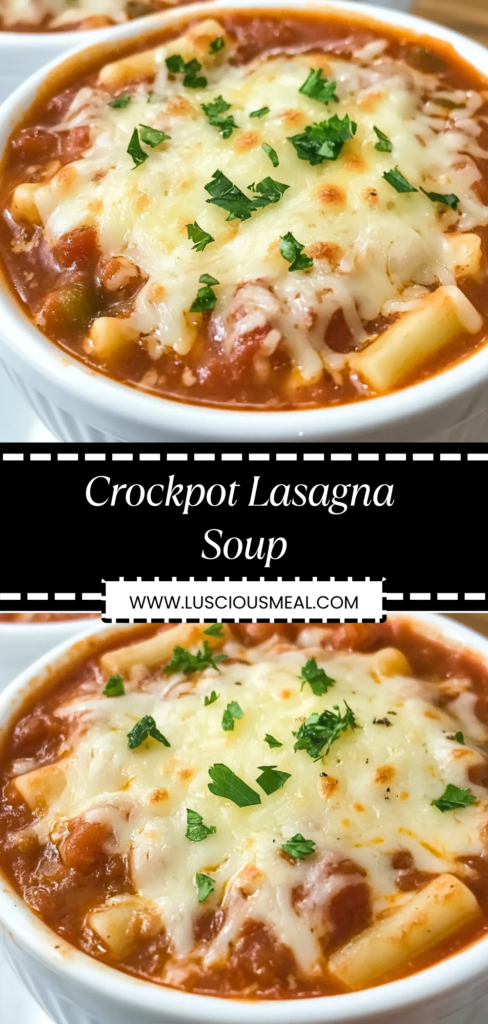
The ideal crockpot lasagna soup should have a rich, slightly thick consistency that coats a spoon but isn’t so thick that it resembles stew. The pasta pieces should be tender but still hold their shape rather than falling apart into mush. The meat should be well-incorporated and flavorful, broken into bite-sized pieces that don’t dominate any single spoonful. The melted mozzarella should be smoothly integrated throughout the soup, while the ricotta mixture on top should provide creamy contrast and additional richness. The overall flavor should be well-balanced with prominent tomato, herb, and cheese notes that clearly evoke lasagna while maintaining the comforting, liquid nature of soup.
Customization Options
This versatile recipe adapts beautifully to different dietary needs and taste preferences. For a lighter version, substitute ground turkey or chicken for the beef and use part-skim cheeses. Vegetarians can replace the meat with a combination of diced mushrooms, zucchini, and extra cheese, or use plant-based meat alternatives. For additional vegetables, consider adding diced carrots, celery, or spinach during the last hour of cooking. Those who enjoy heat can add red pepper flakes or use spicy Italian sausage. For a richer soup, add a splash of heavy cream during the last 30 minutes of cooking.
Practical Tips
Pasta timing: Adding the pasta too early will result in mushy noodles that fall apart. Wait until the last hour of cooking to add broken lasagna noodles, and check them periodically to ensure they don’t overcook. If you’re planning to have leftovers, consider cooking the pasta separately and adding it to individual bowls to prevent it from continuing to absorb liquid during storage.
Cheese handling: Add cheeses gradually and avoid high heat to prevent them from becoming stringy or separating. If the mozzarella seems to clump, stir gently and reduce the temperature. The ricotta mixture should be added to individual servings rather than the entire pot to maintain its creamy texture and visual appeal.
Slow cooker size: A 6-quart slow cooker is ideal for this recipe. If using a smaller cooker, reduce all ingredients proportionally. If using a larger one, the soup may cook faster, so check earlier than the recommended times. The soup should fill the slow cooker about 2/3 full for optimal cooking.
Make-ahead strategy: The soup base (without pasta and final cheeses) can be made up to 2 days ahead and refrigerated. Reheat in the slow cooker and add pasta and cheese as directed. This actually improves the flavor as the ingredients have more time to meld together.
Common Questions
Can I use a different type of pasta? Yes, though the texture and cooking time may vary. Short pasta shapes like rotini, penne, or shells work well and require similar cooking times. Avoid long pasta like spaghetti, which becomes difficult to eat in soup form. If using smaller pasta, reduce the cooking time to prevent overcooking.
Why did my cheese become stringy or separated? This usually happens when cheese is added at too high a temperature or cooked too long. Add cheese during the last 15-30 minutes and ensure the slow cooker is on low heat. If separation occurs, stir gently and add a splash of broth to help re-emulsify the mixture.
Can I freeze this soup? The soup base freezes well for up to 3 months, but it’s best to freeze it before adding pasta and final cheeses. The pasta can become mushy after freezing and thawing. Thaw overnight in the refrigerator, then reheat in the slow cooker and add fresh pasta and cheese as directed.
How do I prevent the soup from being too thick or thin? If the soup is too thick, add more broth or water gradually until you reach the desired consistency. If it’s too thin, simmer uncovered for 30 minutes to allow excess liquid to evaporate, or mix a tablespoon of cornstarch with cold water and stir into the soup.
Serving Suggestions
This hearty soup serves as a complete meal when paired with crusty Italian bread or garlic toast that’s perfect for dipping and soaking up the flavorful broth. A simple Caesar salad or mixed green salad with Italian dressing provides fresh contrast to the rich, cheesy soup. For a more casual presentation, serve with breadsticks or focaccia bread that guests can tear and share.
For special occasions, garnish individual bowls with fresh basil leaves, a drizzle of good olive oil, and additional grated Parmesan for an elevated presentation. The soup works beautifully for casual entertaining since it can simmer all day and be ready when guests arrive. Consider setting up a toppings bar with different cheeses, herbs, and crusty bread options so guests can customize their bowls.
Nutritional Benefits
This satisfying soup provides substantial protein from the ground beef and Italian sausage, supporting muscle maintenance and providing sustained energy. The tomatoes contribute lycopene, vitamin C, and other antioxidants that are enhanced by cooking and the presence of fat from the meat and cheese. The combination of pasta and protein creates a balanced meal that provides both quick and sustained energy.
To boost the nutritional profile, consider adding vegetables like diced carrots, celery, zucchini, or spinach, which increase vitamin and fiber content without significantly altering the core flavors. Using whole grain pasta when available adds fiber and nutrients. The dairy components provide calcium and additional protein, while the herbs and spices contribute antioxidants and anti-inflammatory compounds. While definitely a comfort food, the homemade nature allows you to control sodium levels and ingredient quality, creating a more balanced option than many restaurant or packaged alternatives.