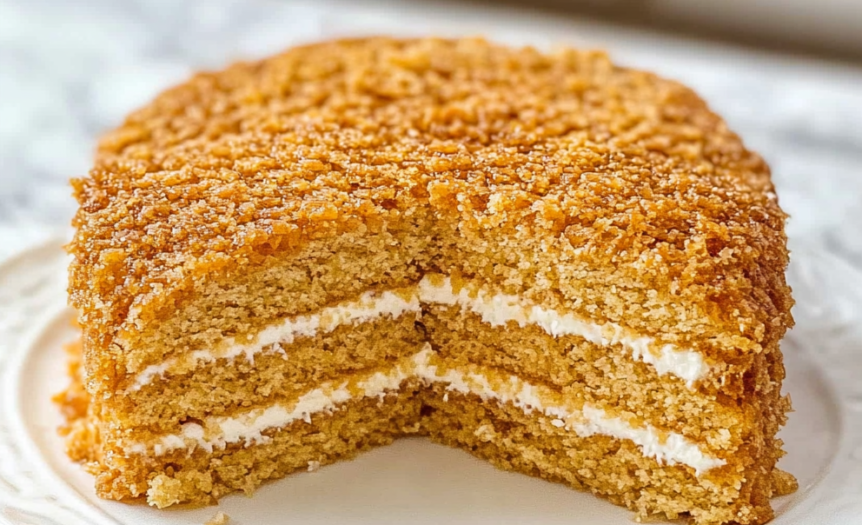
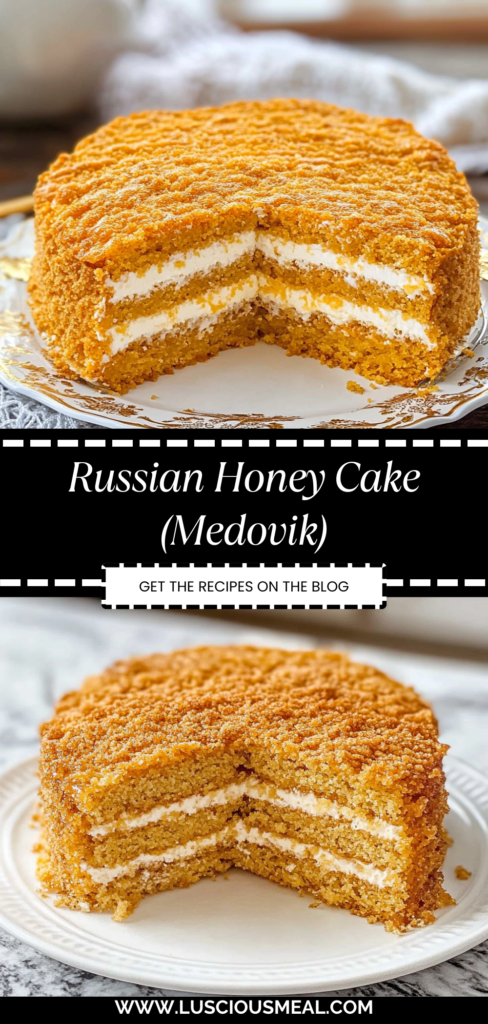
Delicate honey-infused cake layers sandwiched between clouds of sweetened sour cream create a dessert experience unlike anything in Western baking traditions. This Russian honey cake, known as Medovik, transforms simple ingredients through patient technique into an impressive showstopper worthy of special celebrations. The delightful contrast between tender cake and creamy filling with subtle honey undertones throughout creates a harmonious balance that explains why this dessert has endured for centuries. I first encountered this cake at a Russian friend’s home and spent months perfecting my version to capture that unforgettable first experience.
Why You’ll Love This Recipe
• Creates genuinely unique dessert beyond common American classics • Develops extraordinary flavor from ordinary pantry ingredients • Improves over several days as flavors meld together • Presents beautifully with minimal decorating skill required • Serves as impressive dinner party finale that guests will remember
My pastry chef friend initially questioned whether homemade Medovik could match authentic versions from specialized Russian bakeries. After tasting my carefully crafted layers, she conceded that the freshness and precise honey notes actually surpassed commercial versions she’d previously enjoyed. Sometimes patient home preparation creates results that truly exceed professional alternatives through attention to detail impossible in commercial settings.
Traditional Ingredients
• High-quality honey provides essential flavor foundation throughout • Granulated sugar balances sweetness without overwhelming honey notes • Fresh eggs bind components while adding richness and structure • Unsalted butter creates tender crumb with proper moisture content • Sour cream delivers characteristic tangy filling impossible to substitute • All-purpose flour creates ideal structure with proper tenderness • Baking soda reacts with honey’s acidity for proper leavening • Vanilla extract enhances warm flavor notes without dominating • Heavy cream stabilizes filling for proper slicing and presentation
Honey selection dramatically impacts your final result. I prefer light wildflower or clover honey which provides distinct flavor without overwhelming bitterness sometimes present in darker varieties. While more specialized varieties like buckwheat create interesting complexity, their pronounced flavor can dominate rather than complement other components. My Russian grandmother emphasized that honey quality determines Medovik’s ultimate success, wisdom that proves especially relevant when honey provides both primary flavor and essential chemical reaction for proper texture development.
Baking Method
Create Honey Mixture Combine honey, sugar, and butter in heavy saucepan over medium heat. Melt completely while stirring occasionally until mixture appears uniform with slight bubbling at edges. Control temperature carefully to prevent scorching which introduces bitterness. This warming process creates caramelized notes that distinguish authentic Medovik from simpler honey-flavored desserts.
Develop Dough Base Add eggs to slightly cooled honey mixture, whisking continuously to prevent curdling. The temperature balance requires careful attention—too hot scrambles eggs while too cool prevents proper incorporation. Add baking soda and watch for characteristic foaming reaction that indicates proper chemistry for authentic texture. Fold in flour gradually until cohesive dough forms that pulls away from bowl sides. Proper dough should appear somewhat sticky yet workable with floured hands.
Form Delicate Layers Divide dough into equal portions, typically 8-10 depending on desired height. Working with one portion at a time while keeping others covered to prevent drying, roll each extremely thin on parchment paper dusted with flour. Aim for nearly translucent sheets approximately 1/8-inch thickness. Transfer to baking sheets by flipping parchment over. Cut perfect circles using plate or cake pan as guide, reserving scraps for later decoration.
Bake With Precision Place rolled dough in preheated oven and bake until golden brown with slight darkening at edges, typically 7-9 minutes depending on thickness. Watch carefully during final minutes as honey content causes rapid browning once started. Remove immediately to cooling rack, peeling parchment away while still warm before hardening occurs. Layers continue crisping as they cool, eventually creating perfect firm texture that softens during assembly.
Prepare Luxurious Filling Whip cold heavy cream to soft peaks in chilled bowl. In separate bowl, combine sour cream, sugar, and vanilla until completely smooth with no remaining graininess. Fold whipped cream into sour cream mixture carefully to maintain airy texture without deflating. Proper filling appears thick enough to hold shape when spread while remaining silky and spreadable. Refrigerate briefly if too soft for proper assembly.
Assemble The Masterpiece Place first cake layer on serving plate and spread thin, even coating of filling across entire surface extending slightly beyond edges. Position second layer atop filling, pressing very gently to secure. Continue alternating cake and filling, ensuring layers remain level throughout building process. After placing final cake layer, create thin crumb coat across entire exterior including sides. Refrigerate partially assembled cake to set initial filling layer before applying final coating.
Complete The Presentation Crush reserved baked scraps into fine crumbs using food processor or rolling pin. Apply final filling layer across entire cake surface, creating smooth finish using offset spatula. Press prepared crumbs gently against sides and swirl across top surface for traditional appearance. Refrigerate completed cake minimum 8 hours though preferably overnight to allow proper moisture migration from filling into cake layers, transforming crisp layers into tender cake-like texture.
My first attempt at Medovik taught me important lessons about layer thickness. Rolling too thick created cookie-like texture that never properly softened, while excessive thinness caused breaking during assembly. Subsequent batches with proper thickness delivered the ideal texture transformation that distinguishes authentic versions. Traditional recipes often require discovering proper technique through experience rather than relying solely on written instructions.
You Must Know
• Cake layers initially bake completely crisp before softening during assembly • Extended refrigeration proves essential for proper texture development • Honey reacts with baking soda creating characteristic flavor and structure • Layer thinness determines final texture and overall cake height • Flavor continues improving for up to three days after assembly
My father, typically unimpressed by “fancy desserts” as he calls anything beyond basic cookies, surprised everyone by requesting second slice of this Medovik at our holiday gathering. He specifically commented on how it reminded him of desserts from his childhood visits to Eastern European neighbors, though he couldn’t recall their specific names. Creating food that connects people with pleasant memories provides the deepest satisfaction a home baker can experience.
Finishing Variations
While traditional presentation features simple crumb coating, this adaptable cake welcomes creative finishing touches. Honey drizzle version applies thin stream of warmed honey across top surface just before serving for enhanced flavor emphasis. Fresh fruit adaptation arranges berries in concentric circles atop final layer for color contrast. Chocolate enhancement incorporates thin shavings across top surface, complementing honey notes beautifully. Toasted nut variation presses chopped walnuts or pecans into sides for textural interest. For special occasions, consider edible flowers arranged simply across top surface for elegant visual impact without overwhelming traditional flavor profile.
Serving Suggestions
Proper serving enhances this remarkable cake’s enjoyment through thoughtful presentation and accompaniments. Remove from refrigerator approximately 30 minutes before serving to allow filling to soften slightly for ideal texture and flavor perception. Cut with sharp knife dipped in hot water between slices for cleanest presentation. Serve alongside small glass of traditional Russian tea for authentic experience. For elegant presentation, consider small dried honey comb piece alongside each serving. Fresh berries provide nice acidic counterpoint against cake’s richness when served as accompaniment rather than decoration.
Storage Success
Proper handling ensures this time-intensive cake maintains its exceptional quality for extended enjoyment. Store completed cake in refrigerator covered loosely with cake dome or inverted bowl rather than plastic wrap which damages delicate crumb coating. Expect quality to remain excellent for up to five days, with many connoisseurs preferring days 2-3 when moisture balance reaches perfection. For extended storage, freeze individual fully set slices wrapped carefully in plastic then foil up to one month. Thaw frozen slices overnight in refrigerator then allow reaching cool room temperature before serving for optimal texture restoration.
Baking Wisdom
• Roll dough between parchment sheets for easiest handling and transfer • Maintain scrupulously clean work surface to prevent dough sticking • Rotate baking sheets halfway through cooking if oven has hot spots
This Russian honey cake exemplifies how patience and proper technique transform simple ingredients into truly extraordinary desserts. While I appreciate simpler recipes for everyday occasions, this special cake demonstrates why some desserts rightfully require extended preparation to achieve their full potential. The magic happens gradually as moisture migrates between components during resting period, creating texture impossible through shortcuts or simplified methods. After countless Medovik cakes refined through both successes and learning experiences, this recipe continues proving that some culinary traditions endure across centuries because they simply cannot be improved upon through modern shortcuts.