

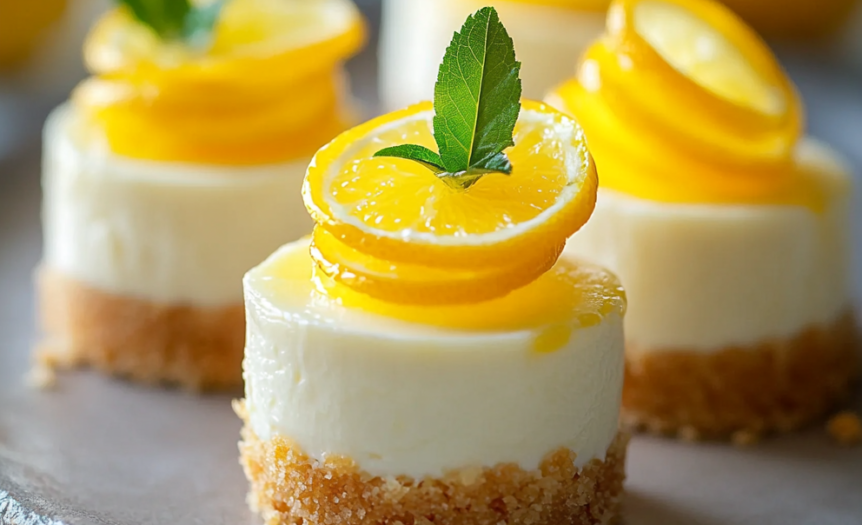
These mini cheesecakes au citron deliver the bright, elegant flavors of classic French lemon desserts in perfectly portioned individual servings that showcase the beautiful balance between rich, creamy cheesecake and vibrant citrus brightness. The silky smooth texture combined with intense lemon flavor creates a sophisticated dessert that’s both refreshing and indulgent. If you enjoy this style of French-inspired citrus dessert, you might also like lemon tarte au citron, individual lemon soufflés, or other refined desserts that celebrate the brightness of fresh citrus.
Why You’ll Love This Recipe
- Elegant individual presentation – creates restaurant-quality desserts that look professionally made while being perfectly portioned for sophisticated entertaining
- Bright, refreshing flavor – the intense lemon character provides a palate-cleansing finish that’s both satisfying and light, perfect after rich meals
- Make-ahead convenience – requires overnight chilling that actually improves the texture and flavor, making them ideal for stress-free entertaining
- French bakery sophistication – delivers the refined taste and presentation of high-end patisserie desserts using accessible techniques and ingredients
Ingredients Breakdown
Cream cheese: The rich foundation that creates the characteristic smooth, dense texture of exceptional cheesecake. Use only full-fat cream cheese at room temperature for the smoothest mixing and best flavor. Philadelphia brand consistently produces excellent results, though other high-quality brands work well. The cream cheese must be completely softened – this typically requires 2-3 hours outside the refrigerator. Properly softened cream cheese beats to a fluffy, lump-free consistency that creates the silky texture essential to these elegant desserts.
Fresh lemons: The star ingredient that provides both juice and zest for bright, authentic citrus flavor. Choose lemons that feel heavy for their size with bright yellow, unblemished skin. Meyer lemons offer more complex, slightly sweet flavor if available, though regular lemons work perfectly. The zest contains essential oils that provide intense lemon flavor, while the juice adds necessary acidity. Use a microplane zester for the finest zest, and roll lemons at room temperature before juicing to extract maximum liquid.
Graham cracker crumbs: Create the classic American cheesecake base that provides textural contrast to the smooth filling. Use honey graham crackers for the best flavor, crushing them yourself for optimal texture control. Pre-made crumbs work but may contain preservatives that affect flavor. The crumbs should be fine but with some small pieces remaining for textural interest. For a more refined French approach, substitute digestive biscuits or petit beurre cookies for a slightly different flavor profile.
Heavy cream: Provides richness and helps create the luxurious, mousse-like texture that makes these mini cheesecakes special. Heavy cream with 35-36% fat content whips best and creates the most stable structure. The cream lightens the dense cream cheese base while adding volume and creating a more delicate texture than traditional baked cheesecake. Cold cream whips more easily, so keep it refrigerated until ready to use.
Eggs: Bind the ingredients together while adding richness and the characteristic golden color. Room temperature eggs incorporate more smoothly than cold eggs, creating better emulsion and preventing lumps. Large eggs provide consistent results. The eggs help create the custard-like texture that sets beautifully when chilled, giving these no-bake cheesecakes their perfect consistency.
Step-by-Step Instructions
- Prepare 12 standard muffin cups by lining them with paper liners or lightly greasing them with butter for easy removal. Arrange the prepared cups on a baking sheet for easy handling and refrigerator storage. Having everything organized before beginning ensures smooth assembly and prevents the delicate mixture from sitting too long before chilling.
- Create the graham cracker crust by combining 1 1/2 cups fine graham cracker crumbs with 1/4 cup granulated sugar and 5 tablespoons melted unsalted butter. Mix thoroughly until the crumbs hold together when squeezed but aren’t overly wet. The mixture should resemble wet sand and clump together without being greasy.
- Divide the crust mixture evenly among the prepared muffin cups, using about 2 tablespoons per cup. Press firmly into the bottom using the back of a spoon or small measuring cup to create an even, compact layer. The crust should be level and firmly packed to provide a stable base for the filling. Refrigerate while preparing the filling to help set.
- In a large mixing bowl, beat 16 ounces (two 8-ounce packages) of softened cream cheese with an electric mixer on medium speed until completely smooth and fluffy, about 3-4 minutes. Scrape down the sides of the bowl frequently to ensure even mixing. The cream cheese should be noticeably lighter in color and texture when properly beaten.
- Gradually add 2/3 cup granulated sugar, beating continuously until fully incorporated and smooth. Add 2 large eggs one at a time, beating just until each is incorporated before adding the next. Avoid overmixing after adding eggs, which can incorporate too much air and affect the final texture.
- Beat in 1/4 cup fresh lemon juice, 2 tablespoons freshly grated lemon zest, 1 teaspoon vanilla extract, and 1/4 teaspoon salt until just combined. The mixture should be smooth and bright yellow from the lemon additions. Taste and adjust lemon flavor if needed – it should be bright and citrusy but balanced.
- In a separate bowl, whip 1/2 cup heavy cream until soft peaks form. Don’t over-whip, as the cream will be folded into the cheesecake mixture and you want to maintain a light texture. The whipped cream will lighten the dense cream cheese base and create a more delicate, mousse-like consistency.
- Gently fold the whipped cream into the lemon cheesecake mixture using a rubber spatula, being careful not to deflate the cream. The mixture should be light and airy while maintaining good body for filling the cups. This folding technique is crucial for achieving the perfect texture.
- Divide the filling evenly among the chilled crusts, filling each cup nearly to the top. Use a small offset spatula or the back of a spoon to smooth the tops attractively. The filling should dome slightly above the crust level, creating an elegant presentation when unmolded.
- Refrigerate the mini cheesecakes for at least 4 hours, though overnight chilling produces the best texture and allows flavors to meld completely. The filling should be completely set and firm to the touch when properly chilled. Cover with plastic wrap if chilling longer than 4 hours.
- Before serving, prepare optional lemon curd topping by whisking together 1/4 cup lemon juice, 1/4 cup sugar, 2 egg yolks, and 2 tablespoons butter in a small saucepan. Cook over low heat, stirring constantly, until thickened. Cool completely before using as garnish.
- Remove from muffin cups just before serving by gently twisting and lifting, or serve directly in the liners for casual presentations. Garnish with fresh lemon zest, thin lemon slices, or a small dollop of lemon curd for an elegant finish.
Perfect Texture: What to Look For
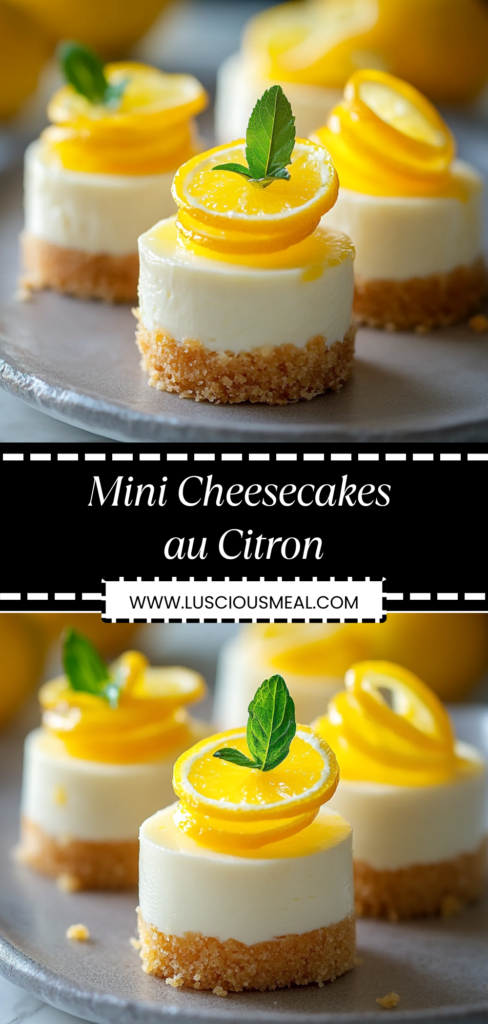
Exceptional mini cheesecakes au citron should have a smooth, creamy texture that’s lighter than traditional baked cheesecake but still rich and satisfying. The filling should be completely set and hold its shape when unmolded, slicing cleanly with a knife while remaining tender on the tongue. The graham cracker crust should provide a firm, slightly crunchy base that contrasts beautifully with the smooth filling without being too hard or crumbly. The lemon flavor should be bright and prominent but balanced, providing refreshing acidity without being harsh or overwhelming the creamy base.
Customization Options
This elegant base recipe adapts beautifully to different citrus flavors and presentation styles. Substitute lime juice and zest for a tangy lime version, or use orange for a sweeter, more mellow flavor profile. For a more sophisticated French approach, add a tablespoon of Grand Marnier or limoncello to the filling. Create berry versions by swirling in raspberry or strawberry puree before chilling. For extra elegance, top with candied lemon slices, fresh berries, or a light dusting of powdered sugar. Different crust options like crushed amaretti cookies or gingersnap crumbs provide interesting flavor variations.
Practical Tips
Temperature management: All dairy ingredients should be at room temperature for smooth mixing and optimal texture. Cold ingredients don’t blend as smoothly and can create lumps in the finished filling. Plan ahead by removing ingredients from the refrigerator 2-3 hours before preparation.
Preventing cracks: Unlike baked cheesecakes, these no-bake versions won’t crack, but proper folding technique when adding whipped cream is crucial for maintaining the light texture. Fold gently and don’t overmix, which can deflate the cream and create dense texture.
Lemon preparation: Use a microplane grater for the finest zest, avoiding the bitter white pith underneath the yellow skin. Fresh juice is essential – bottled lemon juice lacks the bright flavor and acidity needed for optimal results. One large lemon typically yields 2-3 tablespoons of juice and 1 tablespoon of zest.
Storage: These mini cheesecakes keep beautifully refrigerated for up to 3 days, actually improving in flavor as the lemon notes develop. Store covered to prevent absorbing refrigerator odors. They can be frozen for up to 1 month – thaw overnight in the refrigerator before serving.
Common Questions
Can I make these without eggs? While eggs contribute to the structure and richness, you can omit them for a lighter version. Add an extra 1/4 cup of whipped cream to maintain volume and texture. The result will be more mousse-like but still delicious.
Why is my filling too soft? This usually indicates insufficient chilling time or cream that was over-whipped. Ensure the cheesecakes chill for at least 4 hours, and whip cream only to soft peaks before folding in. If still soft after extended chilling, the cream cheese may not have been at proper room temperature during mixing.
Can I use bottled lemon juice? Fresh lemon juice is strongly recommended for the best flavor and acidity. Bottled juice often contains preservatives and lacks the bright, fresh taste essential to these desserts. If you must use bottled, increase the amount slightly and add extra zest for better flavor.
How do I prevent the filling from being lumpy? Ensure cream cheese is completely softened before mixing, and beat it thoroughly until smooth before adding other ingredients. If lumps persist, strain the mixture through a fine mesh sieve before folding in the whipped cream.
Serving Suggestions
These elegant individual desserts work beautifully for sophisticated dinner parties, presented on small dessert plates with delicate spoons and perhaps a crisp tuile cookie or delicate shortbread alongside. For French-inspired presentation, garnish each with a small sprig of fresh mint, a twist of candied lemon peel, or a light dusting of powdered sugar applied through a fine sieve.
The refreshing lemon flavor makes them perfect for spring and summer entertaining, especially after rich meals where their bright acidity provides palate-cleansing relief. For wine pairings, consider light dessert wines like Moscato or Sauternes that complement rather than compete with the citrus flavors. The individual format makes them ideal for buffet service or formal seated dinners where uniform presentation is important.
Nutritional Benefits
While definitely an indulgent dessert, these mini cheesecakes do provide some nutritional value from their quality ingredients. Lemons contribute vitamin C and citrus bioflavonoids that support immune function and provide antioxidant benefits. The cream cheese and eggs provide protein and calcium, while the moderate portion size naturally encourages reasonable consumption.
The fresh citrus elements add beneficial plant compounds without excessive calories, while the homemade preparation allows you to control sugar content and avoid the preservatives found in commercial desserts. The bright, satisfying flavors mean that smaller portions provide significant pleasure and satisfaction, supporting balanced eating habits while still delivering the elegance and indulgence that makes special occasions memorable and enjoyable.

