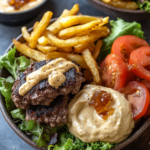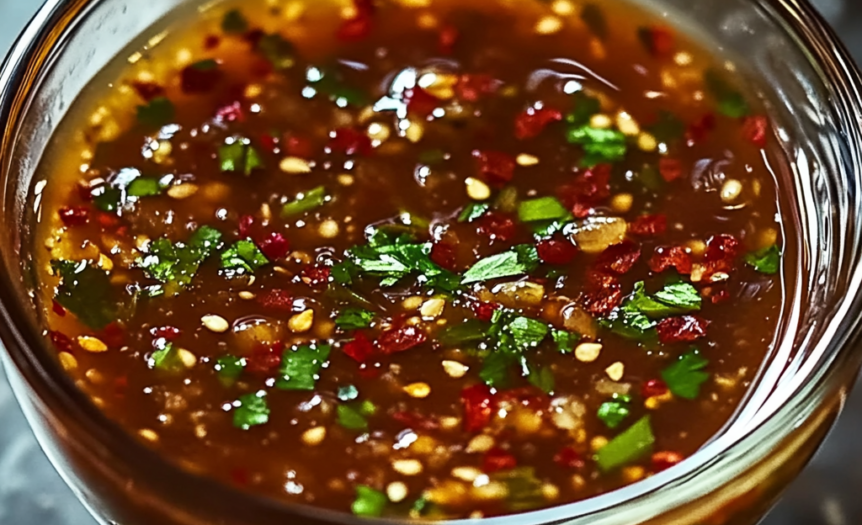
This homemade dragon sauce delivers an addictive combination of heat, sweetness, and umami that transforms even the most ordinary foods into crave-worthy meals. Unlike store-bought versions loaded with preservatives and excessive sugar, you control exactly what goes into this sauce, customizing the heat level while saving money in the process. If you enjoy this fiery dragon sauce, you’ll also want to try making homemade sriracha, chili crisp oil, or Korean gochujang sauce.
Why You’ll Love This Recipe
- Versatile kitchen staple – works as a marinade, dipping sauce, sandwich spread, or stir-fry base, giving you multiple uses from a single preparation
- Customizable heat level – easily adjust the spiciness up or down without compromising the complex flavor profile that makes this sauce special
- Make-ahead convenience – actually improves after 24-48 hours as the flavors meld, so it’s perfect for meal prep or weekend cooking
- Clean ingredient list – contains no artificial preservatives, corn syrup, or mystery additives found in commercial varieties, making it a healthier alternative with bolder flavor
Ingredients Breakdown
Chili peppers: The backbone of any dragon sauce, providing both heat and fruity complexity. Fresh red chilies like Fresno or red jalapeños offer the best balance of heat and flavor for authentic dragon sauce. Their thin walls break down easily during cooking, fully integrating into the sauce. If you prefer extreme heat, include some Thai bird’s eye chilies or habaneros, but remember that dragon sauce should have dimension beyond just heat. For a milder version, remove the seeds and membranes from the peppers before chopping, as these contain the highest concentration of capsaicin. When handling hot peppers, wear gloves to prevent the oils from burning your skin or accidentally transferring to your eyes later.
Garlic: Don’t be shy here – dragon sauce demands a robust garlic presence. Fresh cloves provide superior flavor with their sharp pungency that mellows and sweetens when cooked. The interaction between garlic and the chili peppers creates the distinctive dragon sauce profile. For the best texture, mince the garlic very finely or press it through a garlic press rather than chunky chopping. This allows it to distribute evenly throughout the sauce and partially dissolve during cooking. If you’re truly in a rush, pre-minced garlic from a jar will work, but the flavor won’t be quite as vibrant, so consider adding about 25% more to compensate.
Sweetener: This crucial element balances the heat from the peppers and the acidity from the vinegar. Brown sugar is traditional, providing molasses undertones that complement the complex pepper flavors. Honey makes an excellent alternative with its floral notes and slightly thicker consistency that helps the sauce cling better to foods. For a less refined option, maple syrup adds an interesting dimension without overwhelming the pepper flavor. Regardless of which sweetener you choose, add it gradually and taste as you go – dragon sauce should have noticeable sweetness but shouldn’t taste like candy.
Vinegar: Provides essential acidity that brightens the flavors and acts as a natural preservative. Rice vinegar offers mild acidity with subtle sweetness that works harmoniously with Asian flavor profiles. Apple cider vinegar contributes more robust fruity notes that stand up well to the peppers. White vinegar, while stronger, provides clean acidity without competing flavors. The vinegar also helps extract flavor compounds from the peppers and garlic, essentially curing them in the acidic environment. For the best balance, use a 3:1 ratio of mild vinegar (rice or apple cider) to stronger vinegar (white or red wine).
Soy sauce: Delivers the umami foundation that gives dragon sauce its satisfying depth. The fermented soybean brings glutamates that enhance all the other flavors in the sauce. Regular soy sauce works perfectly, but for a more complex flavor, consider using half regular and half dark soy sauce, which has been aged longer. For gluten-free versions, tamari makes an excellent substitute with similar richness. Liquid aminos or coconut aminos can also work, though the former tends to be saltier while the latter adds slight sweetness, so you may need to adjust other ingredients accordingly.
Step-by-Step Instructions
- Prepare your work area by setting out all ingredients before you begin. Dragon sauce comes together relatively quickly once you start cooking, so having everything measured and chopped prevents scorching or overcooking later stages. Ventilation is important when cooking hot peppers, so consider opening windows or using your stove’s exhaust fan to prevent coughing fits from the aerosolized capsaicin.
- Carefully wash and dry 6-8 fresh red chili peppers (such as Fresno, red jalapeño, or cayenne), then remove the stems. For a milder sauce, cut the peppers in half and remove the seeds and white membrane; for full heat, leave them intact. Chop the peppers finely, aiming for pieces around 1/8 inch in size. The consistency of your chopping affects the final texture – finer pieces break down more completely during cooking, while larger chunks provide sporadic heat bursts in the finished sauce.
- Peel and finely mince 6-8 cloves of garlic. The garlic should be chopped to a similar size as the peppers for even cooking. If you prefer a smoother sauce, consider using a garlic press or microplane to create a paste-like consistency. The more finely processed the garlic, the more its flavors will permeate the sauce, creating a more integrated rather than chunky result.
- Heat 2 tablespoons of neutral oil such as vegetable or grapeseed in a small saucepan over medium heat until shimmering but not smoking. Avoid olive oil for this recipe as its distinctive flavor can overwhelm the peppers and its lower smoke point makes it less ideal for this cooking method. The oil serves both to carry flavor and to extract fat-soluble compounds from the peppers that water-based liquids cannot access.
- Add the chopped peppers and garlic to the hot oil and reduce heat to medium-low. Cook for 2-3 minutes, stirring frequently to prevent browning. You want the aromatics to soften and become fragrant without taking on color, which can introduce bitter notes. This gentle frying in oil helps mellow the raw garlic bite while coaxing out the fruity qualities of the peppers.
- Pour in 1/3 cup rice vinegar, 2 tablespoons white vinegar, 3 tablespoons soy sauce, and 2-3 tablespoons brown sugar (adjust according to your preference for sweetness). The mixture will sizzle as the liquids hit the hot pan – this is normal and helps the flavors meld together. Stir thoroughly to ensure nothing sticks to the bottom of the pan and all the browned bits are incorporated into the liquid.
- Add optional flavor boosters if desired: 1 teaspoon grated fresh ginger for bright spiciness, 1/2 teaspoon toasted sesame oil for nutty depth, or 1 tablespoon of tomato paste for body and subtle sweetness. These additions aren’t traditional in every dragon sauce recipe but offer ways to customize the flavor profile to your preference. Each brings a different dimension to the sauce without overpowering the core chili-garlic character.
- Bring the mixture to a gentle simmer, then reduce heat to maintain a bare simmer (small bubbles breaking the surface occasionally rather than a rolling boil). Cook uncovered for 12-15 minutes, stirring occasionally, until the sauce has reduced by about one-third and thickened slightly. The peppers and garlic should be very soft, practically melting into the sauce. This slow reduction concentrates flavors while allowing enough time for the ingredients to fully infuse into the liquid base.
- Remove from heat and let cool for about 10 minutes. For a chunky sauce with visible pepper and garlic pieces, use as is. For a smoother consistency, transfer to a blender or food processor and pulse until you reach your desired texture, or use an immersion blender directly in the pot. The texture choice affects how the sauce will be used – chunkier versions work well as condiments, while smoother preparations are better for marinades or mixing into other dishes.
- Once cooled to room temperature, transfer to a clean glass jar with a tight-fitting lid. Allow the flavors to mature in the refrigerator for at least 24 hours before using for the best flavor development. During this resting period, the individual components meld together into a unified flavor that’s far greater than the sum of its parts.
Perfect Texture: What to Look For
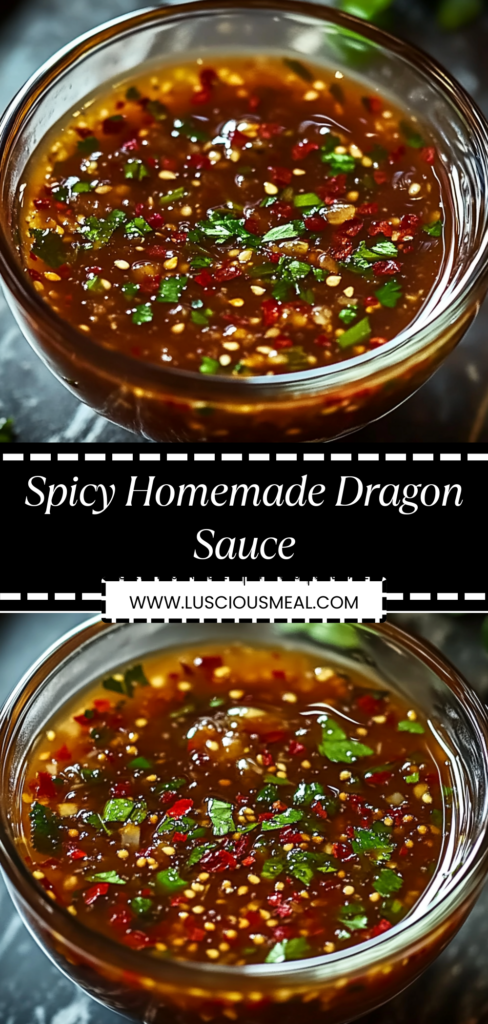
Your finished dragon sauce should coat the back of a spoon with a consistency similar to ketchup – not so thick it forms stiff peaks when stirred, but not so thin it runs freely when the spoon is tilted. The reduced liquid should have a slight syrupy quality from the dissolved sugars. If your sauce is too thin after the recommended cooking time, continue simmering for 3-5 minute intervals until it reaches the desired consistency. Conversely, if it reduces too much and becomes too thick, add water or vinegar a tablespoon at a time to adjust. Remember that the sauce will thicken slightly when refrigerated due to the sugar content, so it’s better to err on the side of slightly thinner when finishing the cooking process.
Customization Options
This base recipe serves as an excellent starting point that you can adapt to your taste preferences or what you have available. For a sweeter profile reminiscent of Thai sweet chili sauce, increase the brown sugar to 1/4 cup. Create a smokier variation by adding 1 teaspoon of smoked paprika or 1-2 chipotle peppers in adobo sauce (reduce the fresh chilies accordingly to maintain proper heat level). For a flavor reminiscent of Korean gochujang, add 1 tablespoon of miso paste for fermented complexity and umami depth. Citrus brightens the sauce beautifully – try adding the zest of one lime or orange during the simmering process, then finish with a tablespoon of the fresh juice after cooling.
Practical Tips
Storage: Keep refrigerated in an airtight glass container where it will maintain peak flavor for 2-3 weeks. The high acid content from the vinegar acts as a natural preservative, but homemade versions lack the commercial stabilizers that give store-bought sauces their extended shelf life. Glass containers are preferable to plastic as they won’t absorb the capsaicin oils or become stained by the vibrant red color. For longer storage, freeze in ice cube trays, then transfer the frozen sauce cubes to a freezer bag where they’ll keep for up to 3 months. These portioned cubes are perfect for adding to stir-fries or sauces without defrosting the entire batch.
Heat management: When handling hot peppers, wear gloves or coat your hands with a small amount of vegetable oil before chopping to create a barrier between your skin and the capsaicin oils. Avoid touching your face, especially your eyes, until you’ve thoroughly washed your hands with soap. For accidental pepper burns on skin, plain yogurt or milk applied to the affected area can help neutralize the capsaicin due to the casein protein binding to the oil. If you accidentally create a sauce that’s too spicy, don’t dilute it with water, which just spreads the heat – instead, add more of the other ingredients proportionally to maintain flavor balance while reducing the concentration of capsaicin.
Consistency adjustments: Dragon sauce will naturally thicken as it reduces during cooking and again slightly when refrigerated. If it becomes too thick after storage, bring it to room temperature and stir well before using, or add a small amount of water or vinegar to thin it to your desired consistency. For a sauce with more body that clings better to foods, add 1/2 teaspoon of cornstarch dissolved in 1 tablespoon of cold water during the last few minutes of simmering.
Balancing flavors: The key to exceptional dragon sauce is finding the right balance between heat, acidity, sweetness, and umami. When making the sauce for the first time, taste carefully throughout the process (being mindful of the heat). If it tastes flat, add a pinch of salt to heighten all flavors. Too sharp? Add a bit more sugar. Not enough depth? A splash more soy sauce. Too hot? Add a little more sugar and acid to balance the heat without diluting it. Your palate is the best guide to perfecting your personal version.
Common Questions
Can I use dried chilies instead of fresh? Yes, but the process changes slightly. Rehydrate 6-8 dried chilies by soaking them in hot water for 20-30 minutes until pliable, then remove stems and seeds before processing. Dried chilies often have a more concentrated, earthy flavor compared to the bright, fruity notes of fresh peppers. Consider using a mix of dried and fresh for complex flavor – ancho chilies add wonderful depth without excessive heat, while dried bird’s eye chilies contribute intense spiciness.
How can I make this sauce shelf-stable for gifting? True shelf stability requires precise pH levels and proper canning techniques with sterilized equipment. For gift-giving, prepare the sauce as directed, then process filled jars in a boiling water bath for 15 minutes. Use proper canning jars with new lids and store in a cool, dark place. Even with canning, refrigeration after opening is essential. Include a note with your gift explaining that the sauce should be refrigerated after opening and used within 3 weeks for best quality.
What’s the best way to use dragon sauce? The versatility of this sauce is part of its appeal. Use it as a dipping sauce for dumplings, spring rolls, or crispy tofu. Brush it onto grilled chicken, fish, or vegetables during the last few minutes of cooking for a flavorful glaze. Mix a tablespoon into mayonnaise for a spicy sandwich spread or burger topping. Add a few teaspoons to stir-fry dishes just before serving for a flavor boost. Drizzle over rice bowls, tacos, or roasted vegetables to add complexity and heat. Start with small amounts and adjust to your preference, as the flavor can be quite intense.
How can I make this sauce less spicy but still flavorful? The best approach is reducing the quantity of hot peppers while maintaining all other ingredients in their original amounts. Replace half the hot chilies with milder varieties like red bell peppers, which provide the fruity flavor and vibrant color without the heat. Removing all seeds and membranes from the chilies you do use also significantly reduces spiciness. Another effective technique is to add a tablespoon of tomato paste during cooking, which provides body and sweetness that helps balance the remaining heat while adding umami richness.
Serving Suggestions
Dragon sauce excels in multiple culinary applications beyond simple condiment use. Marinate chicken wings in 1/4 cup sauce mixed with 2 tablespoons oil for at least two hours before baking for intensely flavored dragon wings. Create a quick stir-fry sauce by combining 2 tablespoons dragon sauce with 1/4 cup chicken broth and 1 teaspoon cornstarch. For an impressive party appetizer, blend 3 tablespoons sauce with 8 ounces cream cheese for a spicy dip that pairs beautifully with crackers and fresh vegetables. Mix a tablespoon into scrambled eggs just before they finish cooking for a breakfast with serious personality.
Nutritional Benefits
Beyond flavor, this sauce offers several nutritional advantages. Chili peppers contain capsaicin, which has been studied for potential metabolism-boosting properties and pain-relieving effects. Fresh garlic provides allicin, a compound with antimicrobial properties and potential cardiovascular benefits. The minimal processing and absence of artificial preservatives or excessive sodium makes this homemade version nutritionally superior to most commercial alternatives. The sauce is naturally low in calories (about 15-20 calories per tablespoon) while delivering substantial flavor impact, making it an excellent option for adding interest to lighter meals without significantly affecting their nutritional profile.