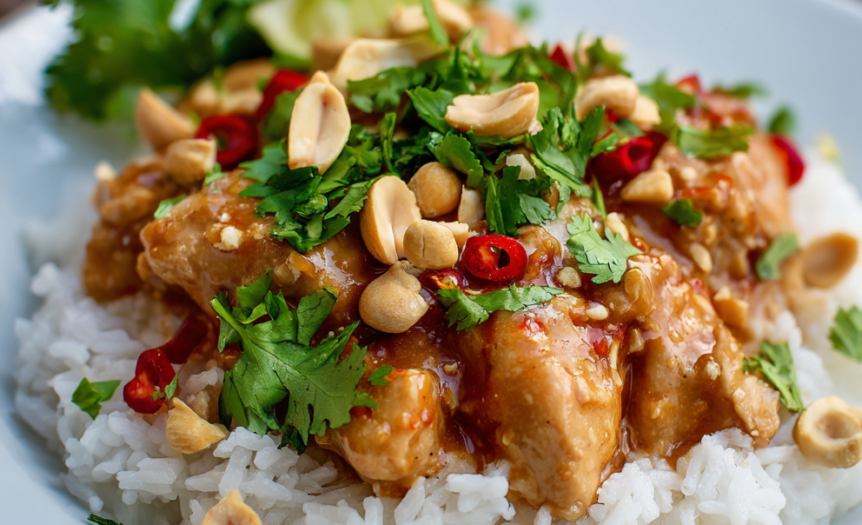
This is the dish that fills your home with aromas so intoxicating, neighbors start texting to ask what you’re cooking. Rich peanut sauce infused with Thai flavors slowly melds with tender chicken, creating a meal that tastes like it required hours of active cooking when really, your slow cooker did all the work. It’s comfort food with a passport—familiar enough for picky eaters yet exotic enough to feel special.
Ingredients
For the Chicken:
- 3 pounds boneless, skinless chicken thighs
- 1 tablespoon vegetable oil
- 1 teaspoon salt
- ½ teaspoon black pepper
For the Peanut Sauce:
- ¾ cup natural peanut butter (creamy or crunchy)
- ½ cup coconut milk (full-fat)
- ¼ cup soy sauce (low sodium)
- 3 tablespoons brown sugar
- 2 tablespoons rice vinegar
- 2 tablespoons fresh lime juice
- 1 tablespoon fish sauce
- 1 tablespoon Sriracha (adjust to taste)
- 2 tablespoons fresh ginger, minced
- 4 cloves garlic, minced
- 1 stalk lemongrass, bruised and cut into 3-inch pieces
- 3 kaffir lime leaves (or 1 teaspoon lime zest)
For the Vegetables:
- 1 red bell pepper, sliced
- 1 yellow bell pepper, sliced
- 1 medium onion, sliced
- 1 cup snap peas
- 1 can (8 oz) bamboo shoots, drained
- 1 can (8 oz) water chestnuts, drained and sliced
For Serving:
- 4 cups jasmine rice, cooked
- ½ cup roasted peanuts, crushed
- ½ cup fresh cilantro, chopped
- 4 green onions, sliced
- 1 lime, cut into wedges
- Thai basil leaves (optional)
- Red chili flakes (optional)
Instructions
- Prep the Chicken: Pat chicken thighs dry and season both sides with salt and pepper. Heat oil in a large skillet over medium-high heat. Sear chicken for 2-3 minutes per side until golden brown. This step isn’t mandatory but adds tremendous flavor depth.
- Build the Sauce Base: In your slow cooker, whisk together peanut butter, coconut milk, soy sauce, brown sugar, rice vinegar, lime juice, fish sauce, and Sriracha until smooth. The mixture will look separated—that’s normal and will come together during cooking.
- Layer the Aromatics: Add minced ginger and garlic to the sauce. Nestle in lemongrass pieces and kaffir lime leaves. These will infuse flavor throughout the cooking process and be removed before serving.
- Add Chicken and Start Cooking: Place seared chicken thighs into the sauce, turning to coat. Add onions and bell peppers. Cover and cook on LOW for 4-5 hours or HIGH for 2-3 hours.
- Shred the Chicken: After initial cooking time, remove chicken to a cutting board. Using two forks, shred into bite-sized pieces. The meat should fall apart easily—if not, it needs more time.
- Final Vegetables: Return shredded chicken to slow cooker. Add snap peas, bamboo shoots, and water chestnuts. These go in late to maintain some texture. Cook for additional 30 minutes on LOW.
- Adjust Consistency: If sauce is too thick, add coconut milk or chicken broth. If too thin, mix 1 tablespoon cornstarch with 2 tablespoons water and stir in, cooking 15 minutes more until thickened.
- Remove Aromatics: Fish out lemongrass pieces and lime leaves. Taste and adjust—more lime juice for brightness, brown sugar for sweetness, or Sriracha for heat.
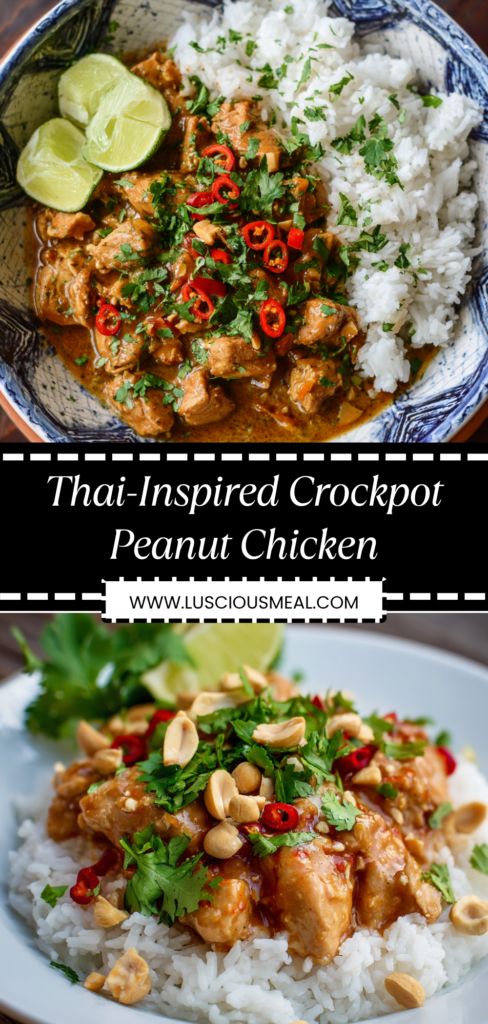
- Serve with Flourish: Spoon over jasmine rice, top with crushed peanuts, cilantro, and green onions. Serve with lime wedges for squeezing. Thai basil and chili flakes on the side for customization.
Recipe Notes
- Prep Time: 25 minutes
- Cook Time: 4-5 hours on LOW (2-3 hours on HIGH)
- Total Time: 5 hours 30 minutes
- Servings: 6-8
- Calories: 425 per serving (with rice)
Understanding Thai Flavor Balance
Thai cuisine masters the art of balancing five fundamental flavors, and this dish showcases that philosophy beautifully. Sweet (brown sugar, coconut milk), sour (lime juice, rice vinegar), salty (soy sauce, fish sauce), spicy (Sriracha), and umami (fish sauce, peanut butter) all play together in perfect harmony.
The peanut butter serves as more than just flavor—it’s the emulsifier that brings everything together. Natural peanut butter works best because it lacks stabilizers that can behave oddly when heated for long periods. The oil separation you see in natural peanut butter actually helps create a silkier sauce.
Fish sauce might seem intimidating to Thai cooking newcomers, but it’s the secret weapon that transforms good peanut sauce into restaurant-quality magic. It doesn’t make the dish taste fishy—instead, it adds a deep, savory complexity that MSG wishes it could achieve. Think of it as liquid umami.
The Slow Cooker Advantage
Slow cooking transforms tough chicken thighs into silk-tender shreds while allowing flavors to meld in ways stovetop cooking can’t match. The low, steady heat breaks down connective tissues without drying out the meat, while the closed environment traps aromatic compounds that would otherwise evaporate.
The magic happens in the first two hours as the sauce slowly heats. Proteins in the peanut butter denature and restructure, creating a creamier texture. The coconut milk’s fats melt and distribute evenly, carrying fat-soluble flavor compounds throughout the dish. Meanwhile, the aromatics release their essential oils gradually, infusing every molecule of sauce.
Temperature matters more than time markers. Low setting (around 200°F) allows gentle cooking that preserves texture. High setting (300°F) works for time-crunched cooks but can make chicken stringy if overdone. When possible, choose low and slow for superior results.
Ingredient Deep Dive
Chicken Thighs vs. Breasts: Thighs contain more connective tissue that converts to gelatin during slow cooking, creating that melt-in-your-mouth texture. Their higher fat content means they stay moist even if accidentally overcooked. Breasts work but require careful timing to prevent dryness—reduce cooking time by 1 hour if using.
Coconut Milk Matters: Full-fat coconut milk is non-negotiable. Light versions lack the richness needed to carry flavors and can separate during long cooking. Shake the can before opening—separation is natural. If it’s solidified, warm slightly before adding.
Lemongrass and Lime Leaves: These aromatics define authentic Thai flavor. Bruise lemongrass by smashing with knife handle to release oils. Can’t find kaffir lime leaves? Lime zest works, though it lacks the unique floral notes. Asian markets usually stock both in fresh or frozen form.
Natural vs. Processed Peanut Butter: Processed peanut butter contains stabilizers and extra sugar that can make sauce overly sweet and prevent proper consistency. Natural peanut butter’s simple ingredients (peanuts and salt) provide cleaner flavor and better texture in slow cooking.
Vegetable Strategy
The staged vegetable addition preserves textures and colors. Onions and peppers go in early—they benefit from long cooking, becoming sweet and silky while contributing to the sauce base. Their water content also helps thin the initial thick peanut mixture.
Snap peas, bamboo shoots, and water chestnuts enter during the final 30 minutes to maintain their characteristic crunch. Overcooked snap peas turn mushy and gray; properly cooked ones stay vibrant green with pleasant snap. This textural contrast elevates the dish from mushy slow-cooker stereotype to restaurant-quality meal.
Don’t skip the canned vegetables. Bamboo shoots add earthy flavor and interesting texture. Water chestnuts provide crucial crunch that survives saucing. Both absorb surrounding flavors while maintaining their structural integrity—fresh vegetables can’t replicate this.
Customization Options
Spice Levels: Start conservative with Sriracha—you can always add more. For mild versions, reduce to 1 teaspoon. For Thai-hot, add fresh bird’s eye chilies with the aromatics. Sambal oelek substitutes well for different heat profile.
Protein Variations:
- Beef: Use chuck roast cut into chunks, increase cooking time by 1-2 hours
- Pork: Shoulder or country-style ribs work beautifully
- Tofu: Add extra-firm cubed tofu in the last hour
- Shrimp: Add in final 15 minutes just until pink
Vegetable Additions:
- Baby corn for sweetness
- Thai eggplant for authentic touch
- Mushrooms for umami depth
- Spinach stirred in at the end
- Green beans added with early vegetables
Sauce Variations:
- Red Curry Style: Add 2 tablespoons red curry paste
- Green Curry Fusion: Use green curry paste and extra basil
- Cashew Cream: Replace half peanut butter with cashew butter
- Almond Version: For nut allergies, use sunflower seed butter
Advanced Techniques
Sauce Layering: Reserve 2 tablespoons each of lime juice and cilantro for finishing. Fresh additions at the end brighten flavors that mellow during cooking. This professional technique creates flavor complexity—background notes from cooked ingredients, foreground pop from fresh.
Toasted Spice Oil: In a small pan, toast 1 teaspoon coriander seeds and ½ teaspoon cumin seeds until fragrant. Grind and bloom in 2 tablespoons hot oil. Drizzle over finished dish for restaurant-style presentation and flavor depth.
Peanut Butter Preparation: Microwave peanut butter for 30 seconds before adding to slow cooker. This makes whisking easier and helps initial sauce integration. Warm peanut butter emulsifies better with other liquids.
Coconut Cream Finish: Reserve 2 tablespoons coconut cream (thick part from top of can) to swirl in before serving. Creates beautiful presentation and adds richness that slow cooking can diminish.
Troubleshooting Guide
“Sauce Is Separated/Oily”: Common with natural peanut butter. Whisk vigorously or use immersion blender for 30 seconds. Adding a splash of hot water while whisking helps re-emulsify.
“Too Thick”: Slow cookers vary in moisture retention. Add coconut milk or chicken broth ¼ cup at a time. The sauce thickens considerably as it cools, so err on thinner side.
“Too Thin”: Remove lid for last 30 minutes to allow evaporation. Or make cornstarch slurry (1 tablespoon cornstarch + 2 tablespoons water) and cook additional 15 minutes.
“Lacks Flavor Depth”: Usually needs more fish sauce or salt. Thai cooking requires aggressive seasoning. Add fish sauce 1 teaspoon at a time until flavors pop.
“Too Sweet/Not Sweet Enough”: Brown sugar amounts vary by peanut butter brand and personal preference. Taste after 3 hours and adjust. Lime juice counters excessive sweetness.
Make-Ahead and Storage
This dish improves overnight as flavors meld. Make up to 3 days ahead and refrigerate. Reheat gently on stovetop, adding liquid if needed. The peanut butter can thicken considerably when cold—this is normal.
Freezes beautifully for up to 3 months. Portion into meal-sized containers, leaving headspace for expansion. Thaw overnight in refrigerator. The sauce may separate when frozen but comes back together when reheated with stirring.
For meal prep, store rice separately to prevent mushiness. Pack vegetables and garnishes separately to maintain textures. Assemble just before eating for best results.
Serving Suggestions
Traditional Style: Mound rice in center of plate, ladle chicken and sauce around. Garnish elaborately—Thai cuisine values visual appeal. Arrange garnishes in small piles for diners to customize.
Family Style: Serve directly from slow cooker on buffet. Provide rice, garnishes, and sauce components separately. Let everyone build their own bowl. Include sriracha and fish sauce for individual seasoning.
Low-Carb Options: Serve over cauliflower rice, zucchini noodles, or shirataki noodles. The rich sauce makes vegetables more satisfying. Lettuce cups create fun, interactive meal.
Fusion Applications: Use as filling for tacos with Asian slaw. Stuff into baked sweet potatoes. Top flatbread for Thai pizza. The versatile sauce works in many contexts.
Nutritional Considerations
Despite its rich taste, this dish offers balanced nutrition. Peanut butter provides protein and healthy fats. Vegetables add fiber and vitamins. Using natural peanut butter eliminates added sugars and unhealthy oils.
To lighten: Use PB2 (powdered peanut butter) for half the peanut butter, light coconut milk, and increase vegetables. Still delicious but significantly fewer calories. Add extra lime juice and herbs to compensate for reduced richness.
The slow cooking method requires no added fats beyond the initial sear. Chicken thighs render their own fat, which gets distributed through the sauce rather than pooling separately.
Cultural Context and Authenticity
This recipe represents Thai-American fusion at its best. While not traditionally Thai (peanut sauce is more Indonesian/Malaysian), it captures Thai cooking principles: balance, fresh herbs, and aromatic complexity.
Thai cooks would likely use tamarind for sourness, palm sugar for sweetness, and fresh chilies for heat. Our adaptations use accessible ingredients while maintaining the spirit of Thai cuisine. It’s about honoring flavor principles rather than strict authenticity.
The slow cooker method obviously isn’t traditional, but it solves Western cooking challenges—time constraints and unfamiliarity with wok cooking. It makes Thai flavors accessible to home cooks who might otherwise never attempt this cuisine.
Final Thoughts
This Thai-Inspired Crockpot Peanut Chicken proves that slow cooker meals can be both convenient and extraordinary. It delivers complex, restaurant-quality flavors with minimal active cooking time. The combination of creamy peanut sauce, tender chicken, and crisp vegetables creates textural interest that elevates it beyond typical slow cooker mushiness. Master this recipe and you’ll have a dish that satisfies both adventure-seeking foodies and comfort-food lovers alike. It’s the kind of meal that transforms weeknight dinners into something special, filling your home with amazing aromas and your table with happy diners.