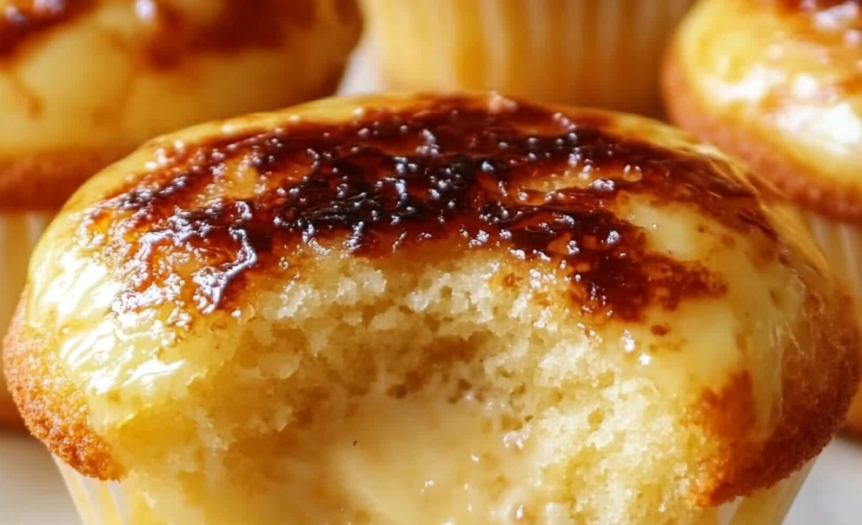
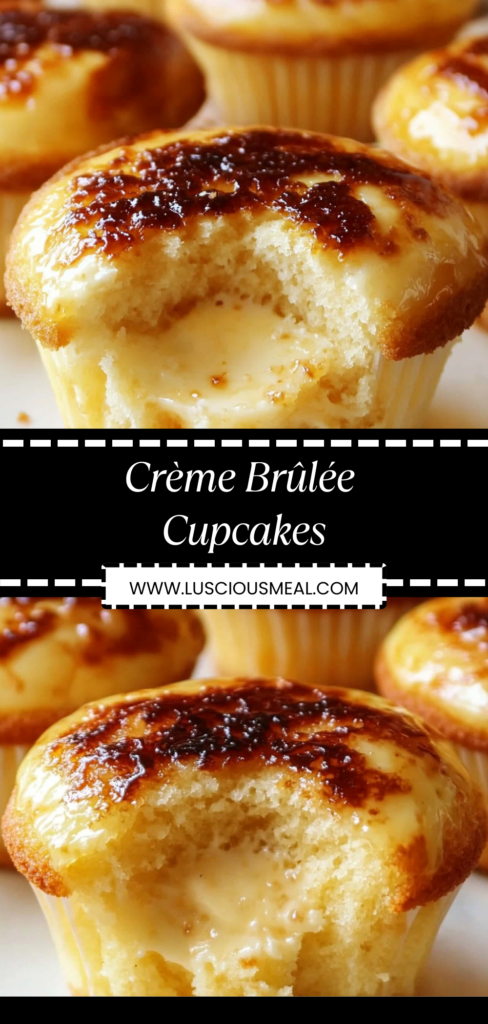
Fluffy vanilla cake filled with silky pastry cream and topped with crackling caramelized sugar creates an impressive dessert combining two beloved classics. These crème brûlée cupcakes transform traditional French custard into portable form while maintaining that distinctive contrast between creamy filling and crisp sugar shell. The delightful harmony between tender cake, rich vanilla custard, and glassy caramelized topping creates something far more exciting than standard cupcakes. I first developed this recipe for a friend’s bridal shower when seeking show-stopping desserts that could be prepared ahead and finished with dramatic flair.
Why You’ll Love This Recipe
• Creates elegant dessert combining two classic favorites • Delivers perfect textural contrast in every bite • Makes impressive presentation with dramatic finishing technique • Provides make-ahead convenience with last-minute finishing • Offers sophisticated flavor profile beyond ordinary cupcakes
My colleague initially questioned whether cupcakes could truly capture the essence of crème brûlée with its distinctive textural contrast. After tasting these carefully constructed versions during a holiday gathering, she immediately asked for the recipe and has since made them for several special occasions. Sometimes creative reimagining creates not only novel presentation but genuinely improved eating experiences by combining the best elements of multiple desserts.
Quality Ingredients
• Cake flour creates tender, fine-crumbed base • Fresh vanilla beans provide exceptional flavor in both components • Heavy cream develops silky custard texture • Egg yolks create rich, smooth filling • Unsalted butter allows precise flavor control • Granulated sugar forms critical caramelized top • Whole milk adds proper moisture to cake base • Vanilla extract enhances aromatic warmth throughout • Fine salt balances sweetness in both components
Vanilla selection dramatically impacts your final result. I prefer using actual vanilla beans for both cake and custard components, which provide superior flavor complexity with visible specks throughout. When beans prove prohibitively expensive, high-quality pure vanilla extract offers excellent results at lower cost. My pastry instructor emphasized that vanilla forms the foundation of these cupcakes rather than merely background note, wisdom that proves especially relevant when creating desserts where subtle flavor nuances determine overall success.
Preparation Method
Create Perfect Cupcake Base Begin with room temperature ingredients for optimal incorporation and structure development. Cream butter and sugar until exceptionally light and fluffy, typically 3-4 minutes with electric mixer, creating essential air incorporation for tender texture. Add eggs individually, incorporating completely before adding next to maintain proper emulsion. Alternate adding dry ingredients and milk, beginning and ending with flour mixtures to prevent overbeating and gluten development. This careful mixing creates ideal tender structure that complements custard filling.
Develop Vanilla Flavor Split vanilla bean lengthwise using sharp knife, then scrape tiny seeds directly into both cake batter and custard base rather than using extract alone. This provides not only superior flavor but distinctive visual appearance with tiny black specks throughout both components. Reserve empty bean pods for infusing into milk used in custard preparation, extracting maximum flavor from expensive ingredient.
Bake With Precision Fill cupcake liners approximately two-thirds full, allowing proper rise without overflow. Bake in preheated oven just until tester inserted in center comes out clean and tops spring back when lightly touched. Avoid overbaking which creates dry cake unable to contrast properly with creamy filling. Cool completely on wire racks before proceeding with filling process.
Create Silky Custard Heat milk with vanilla bean pods until steaming but not boiling, allowing flavor infusion while preventing scalding. Meanwhile, whisk egg yolks with sugar until pale yellow and slightly thickened, indicating proper aeration. Temper egg mixture by gradually adding hot milk while whisking constantly, preventing scrambling through careful temperature control. Return mixture to saucepan, cooking over medium-low heat while stirring constantly until thickened to coat back of spoon.
Strain For Perfection Pass cooked custard through fine-mesh strainer into clean bowl, removing any potential lumps or vanilla pod fragments for perfectly smooth texture. Cover surface directly with plastic wrap, preventing skin formation while cooling completely. This attention to textural detail ensures filling matches authentic crème brûlée’s silky consistency.
Assemble With Care Core center from each cooled cupcake using apple corer or small knife, creating cavity for custard filling while leaving bottom and sides intact. Reserve removed cake pieces for sealing if desired. Fill each cavity generously with chilled vanilla custard using piping bag for neatest application. The filling should reach just below top edge, allowing space for caramelized sugar topping.
Create Signature Topping Sprinkle thin, even layer of granulated sugar across custard surface immediately before serving. Use kitchen torch with controlled flame, moving constantly to caramelize sugar evenly without burning. The sugar should melt and bubble before cooling to hard, glossy surface replicating authentic crème brûlée’s distinctive “cracked” top. This finishing technique creates both visual drama and essential textural contrast defining the dessert.
Serve With Timing Present shortly after caramelizing sugar topping, while contrast between warm, crisp sugar and cool, creamy custard remains most pronounced. This temperature and textural difference provides authentic crème brûlée experience within cupcake format. For visual enhancement, consider garnishing with fresh berries or mint leaves creating color contrast against golden caramelized surface.
My first attempt at these cupcakes taught me important lessons about sugar caramelization. Using excessive sugar created bitter, overly thick topping, while insufficient coverage left bare patches without proper crunch. Subsequent batches with careful sugar distribution delivered the perfect crackly top that defines this dessert. Pastry often requires finding precise balance points rather than relying on approximate measurements.
You Must Know
• Room temperature ingredients create superior cake texture • Custard must cool completely before filling cupcakes • Sugar layer should be thin for proper caramelization • Torch flame should remain moving to prevent burning • Assembled cupcakes should be served shortly after caramelization for optimal texture contrast
My father, typically unimpressed by “fancy desserts” as he calls anything beyond basic cookies, surprised everyone by requesting these cupcakes specifically for his retirement celebration. He particularly appreciated how they combined his favorite dessert flavors without the fussiness of individual ramekins. Creating desserts that bridge sophistication with accessibility provides particular satisfaction when introducing culinary creativity to varied audiences.
Make-Ahead Strategy
Proper planning transforms these impressive desserts into manageable project even for busy entertaining schedules. Prepare cupcakes up to three days ahead, storing in airtight container at room temperature or freezing up to one month if needed. Create custard filling one day before assembly, refrigerating with plastic wrap directly on surface to prevent skin formation. Core and fill cupcakes up to eight hours before serving, refrigerating covered until approximately 30 minutes before presentation. Apply sugar and caramelize using torch immediately before serving for fresh, crisp topping impossible to maintain during extended storage. This staged preparation creates dramatic finale with minimal last-minute effort.
Flavor Variations
This adaptable base recipe welcomes thoughtful modifications while maintaining its fundamental appeal. Chocolate adaptation incorporates cocoa powder into cake batter with chocolate custard filling for darker, richer profile. Coffee infusion adds espresso powder to both components creating mocha interpretation with sophisticated flavor complexity. Citrus enhancement incorporates orange or lemon zest throughout both cake and custard for bright counterpoint against vanilla richness. Seasonal berry variation includes fresh berries between cake and custard layers for fruity brightness and color contrast. For special occasions, consider incorporating small amount of liqueur like Grand Marnier or Frangelico into custard filling for elevated complexity suitable for adult gatherings.
Presentation Suggestions
These special cupcakes welcome thoughtful presentation enhancing their distinctive character. Serve on elegant white plates allowing golden caramelized tops to shine without distraction. Consider creating dessert station where final torching occurs before guests, providing both visual entertainment and freshest possible topping. For formal events, place individual cupcakes on small dessert plates with fresh berries and mint alongside for color contrast. When transporting, carry unfilled components separately with portable torch for assembly at destination. Complete presentation with freshly brewed coffee or dessert champagne for sophisticated pairing enhancing vanilla notes.
Troubleshooting Tips
Understanding common challenges ensures consistently excellent results despite varying conditions. If custard appears lumpy, strain multiple times or blend briefly with immersion blender before chilling. When custard seems too loose for proper filling, incorporate small amount of whipped cream for additional structure. If sugar fails to caramelize properly, check torch fuel level and ensure sugar layer remains dry before applying heat. When cupcakes appear dry, brush lightly with simple syrup before filling to restore moisture. These strategic adjustments address specific issues while maintaining fundamental character defining these special cupcakes.
Chef Techniques
• Heat custard to precisely 175°F (79°C) for perfect texture without curdling • Consider shallow indentation rather than complete coring for higher cake-to-custard ratio • Use circular motion with torch flame for most even caramelization
These crème brûlée cupcakes exemplify how creative thinking transforms traditional desserts into new forms while honoring their essential character. While I appreciate both classic crème brûlée and traditional cupcakes individually, this hybrid creation demonstrates that thoughtful reinvention often yields superior eating experiences through complementary texture and flavor combinations. The magic happens through understanding fundamentals—proper custard preparation, ideal cake texture, sugar caramelization technique—rather than merely combining components without consideration for their interaction. After countless batches refined through both successes and learning experiences, this recipe continues proving that some of the most memorable desserts emerge from respecting tradition while embracing innovation through thoughtful technique.