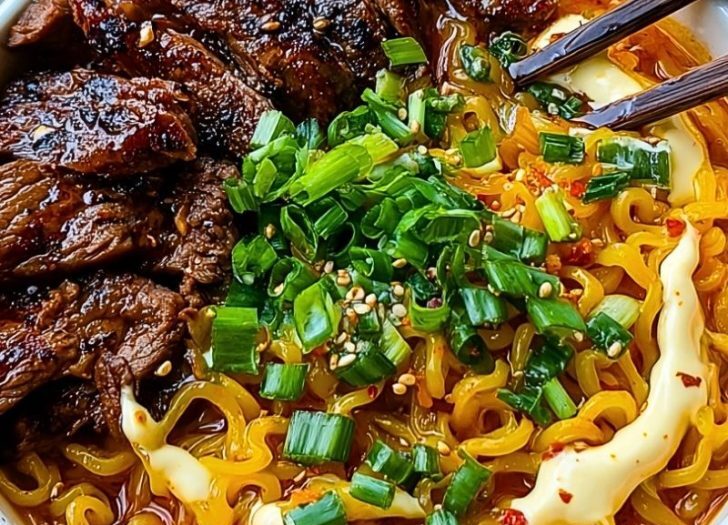
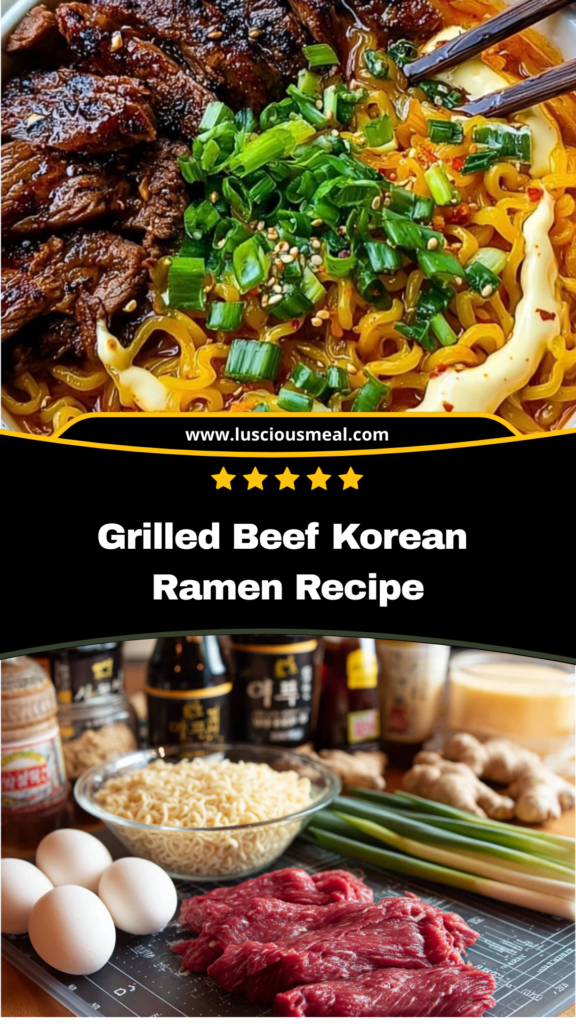
There’s something absolutely magical about the moment when perfectly charred, tender beef meets springy ramen noodles in a pool of spicy, garlicky Korean-inspired sauce. This grilled beef Korean ramen takes everything we love about comfort food and elevates it with bold Korean flavors that dance on your palate – the smoky heat of gochujang, the umami depth of soy sauce, and the cooling richness of a creamy spicy mayo that brings perfect balance to every fiery bite.
What makes this dish truly exceptional is how it transforms humble ramen noodles into something that feels both sophisticated and deeply satisfying. The thinly sliced beef, marinated in Korean flavors and grilled to caramelized perfection, provides protein and smoky richness, while the sauce-coated noodles deliver that perfect chewy texture that makes each bite addictive. The creamy topping adds a cooling element that lets you appreciate all the complex flavors without being overwhelmed by heat.
I developed this recipe during one of those evenings when I was craving something both comforting and exciting – familiar enough to satisfy but bold enough to feel like an adventure. The inspiration came from Korean BBQ and the realization that those incredible marinated, grilled flavors would be absolutely perfect over ramen noodles. The result is a dish that’s become my go-to when I want something that feels indulgent but comes together quickly, proving that fusion cuisine at its best creates something entirely new while honoring the traditions that inspired it.
Ingredients
For the Marinated Beef:
- 1 pound ribeye, flank steak, or sirloin, sliced thinly against the grain
- 3 tablespoons gochujang (Korean chili paste)
- 3 tablespoons soy sauce
- 2 tablespoons brown sugar
- 4 cloves garlic, minced
- 2 tablespoons sesame oil
- 1 tablespoon rice vinegar
- 1 teaspoon grated fresh ginger
- 1/4 teaspoon black pepper
For the Ramen Base:
- 4 portions fresh ramen noodles (or instant ramen, seasoning packets discarded)
- 2 tablespoons sesame oil
- 1 tablespoon vegetable oil (for grilling)
For the Korean Sauce:
- 2 tablespoons gochujang
- 2 tablespoons soy sauce
- 1 tablespoon brown sugar
- 2 cloves garlic, minced
- 1 tablespoon sesame oil
- 1 tablespoon rice vinegar
- 2-3 tablespoons warm water (to thin)
For the Creamy Spicy Topping:
- 1/3 cup mayonnaise
- 2 tablespoons sriracha (adjust to taste)
- 1 teaspoon rice vinegar
- 1/2 teaspoon sesame oil
For Garnish:
- 4 green onions, thinly sliced
- 2 tablespoons sesame seeds (white and black if available)
- 1 sheet nori, cut into thin strips (optional)
- Fresh cilantro leaves (optional)
- Lime wedges for serving
Instructions
Begin by preparing the beef marinade, which is crucial for developing those deep Korean flavors that make this dish special. In a large bowl, whisk together gochujang, soy sauce, brown sugar, minced garlic, sesame oil, rice vinegar, grated ginger, and black pepper until smooth and well combined.
Add the thinly sliced beef to the marinade, tossing to ensure every piece is thoroughly coated. The key to tender, flavorful beef is slicing it thinly against the grain – this breaks down the muscle fibers and allows the marinade to penetrate more effectively.
Cover the bowl and refrigerate for at least 30 minutes, though 2-4 hours will give you even more flavor. If you’re planning ahead, this can marinate overnight for maximum impact.
While the beef marinates, prepare your Korean sauce by whisking together gochujang, soy sauce, brown sugar, minced garlic, sesame oil, and rice vinegar in a small bowl. Add warm water gradually until you achieve a smooth, pourable consistency that will coat the noodles beautifully. Set aside.
For the creamy spicy topping, combine mayonnaise, sriracha, rice vinegar, and sesame oil in another small bowl. Whisk until smooth and taste for heat level – you can adjust the sriracha to your preference. This cooling element is crucial for balancing the spicy, bold flavors of the dish.
Bring a large pot of water to a rolling boil for the ramen noodles. Cook the noodles according to package directions until just al dente – they should still have a slight bite since they’ll continue to soften slightly when mixed with the hot sauce.
Drain the noodles thoroughly and immediately toss with sesame oil to prevent sticking and add flavor. Set aside while you grill the beef.
Heat a grill pan, cast iron skillet, or outdoor grill over medium-high heat until very hot. You want to hear an immediate sizzle when the beef hits the surface – this is what creates the caramelized edges that add so much flavor.
Remove the beef from the marinade, letting excess drip off but not patting completely dry – you want some of that flavorful marinade to caramelize on the meat. Discard the remaining marinade.
Grill the beef in batches to avoid overcrowding, which would cause steaming instead of searing. Cook for 1-2 minutes per side until nicely charred and caramelized. The thin slices cook very quickly, so watch carefully to avoid overcooking.
The beef should develop beautiful char marks while remaining tender inside. Transfer the grilled beef to a plate and cover loosely to keep warm.
Now for the assembly, which is where this dish really comes together. Divide the sesame oil-tossed noodles between serving bowls. Pour the Korean sauce over the noodles and toss gently to coat every strand.
Arrange the grilled beef over the sauced noodles, distributing it evenly so each bowl gets plenty of that perfectly charred meat.
Add generous dollops of the creamy spicy topping over the beef and noodles – don’t be shy here, as this component provides crucial cooling and richness that balances all the bold flavors.
Garnish generously with sliced green onions, sesame seeds, and nori strips if using. The green onions add fresh crunch and mild onion flavor, while the sesame seeds provide nutty richness and textural contrast.
Serve immediately with lime wedges on the side for those who want extra brightness and acidity to cut through the richness.
Flavor & Texture Notes
This grilled beef Korean ramen delivers an incredible explosion of flavors and textures that make every bite exciting and satisfying. The marinated beef provides rich, smoky flavor with complex notes from the gochujang’s fermented heat, soy sauce’s umami depth, and the caramelization from proper grilling.
The Korean sauce coating the noodles creates layers of flavor – spicy heat from gochujang, savory depth from soy sauce, and subtle sweetness that balances the intensity. The sauce clings perfectly to the ramen noodles, ensuring every strand is packed with flavor.
The creamy spicy topping is what makes this dish truly special – it provides cooling richness that allows you to appreciate all the complex flavors without being overwhelmed by heat. The sriracha adds another layer of spice that’s different from gochujang, creating depth and complexity.
The textures are perfectly balanced – chewy, springy noodles provide the satisfying base, tender but slightly charred beef adds protein and smokiness, while the creamy sauce and crunchy garnishes create textural variety that keeps every bite interesting.
Tips & Variations
The key to exceptional beef is proper slicing and not overcrowding the pan. Cut against the grain in thin, uniform slices, and grill in batches to ensure proper searing rather than steaming.
Fresh ramen noodles provide the best texture, but instant ramen (without the seasoning packet) works well too. The key is not overcooking them – they should retain some chewiness.
Adjust the spice level by varying the amount of gochujang and sriracha. Start conservatively and build up – you can always add more heat, but you can’t take it away.
For protein variations, try chicken thighs, pork shoulder, or even firm tofu for vegetarian options. Each will absorb the marinade differently but work beautifully with the Korean flavors.
Add vegetables like bell peppers, mushrooms, or bok choy either grilled alongside the beef or quickly sautéed and added to the bowl for extra nutrition and color.
Create different heat levels by offering additional gochujang and sriracha on the side, allowing diners to customize their spice preference.
Storage & Make-Ahead
This dish is best enjoyed fresh and hot, but components can be prepared ahead for quicker assembly. The beef can marinate for up to 24 hours, and both sauces can be made a day ahead and stored in the refrigerator.
Leftover assembled ramen keeps for 2-3 days refrigerated, though the noodles will soften considerably. Reheat gently in the microwave or on the stovetop, adding a splash of water if needed.
The marinated raw beef can be frozen for up to 2 months. Thaw overnight in the refrigerator before grilling.
For best results when reheating, store components separately if possible and recombine when warming to maintain better textures.
Serving Suggestions
This substantial bowl is a complete meal on its own, but Korean-inspired sides enhance the experience beautifully. Kimchi or quick-pickled vegetables provide acidic contrast that cuts through the richness.
Korean cucumber salad (oi muchim) adds refreshing crunch and coolness that complements the spicy, rich noodles perfectly.
Steamed or pan-fried dumplings make excellent appetizers or sides, while soft-boiled eggs can be added directly to the bowl for extra richness and protein.
For beverages, try Korean barley tea (boricha) or cold beer to cool the palate, or hot green tea to complement the Asian flavors.
FAQ
What cut of beef works best for this recipe? Ribeye provides the most flavor and tenderness, while flank steak is more economical and still delicious when sliced properly. Sirloin offers a good middle ground between flavor and price.
Can I make this less spicy? Absolutely! Reduce the gochujang in both the marinade and sauce, and use less sriracha in the creamy topping. You can also add more brown sugar to balance any remaining heat.
What if I can’t find gochujang? Mix sriracha with a little miso paste and honey to approximate the flavor, though it won’t be exactly the same. Many grocery stores now carry gochujang in the Asian foods section.
Can I use different types of noodles? Yes! Udon, soba, or even spaghetti can work. The key is choosing noodles that will hold up to the sauce and complement the beef.
How do I prevent the noodles from sticking together? Toss them with sesame oil immediately after draining, and don’t let them sit too long before saucing and serving.
This grilled beef Korean ramen represents the best of fusion cuisine – taking beloved elements from different culinary traditions and combining them in ways that honor both while creating something entirely new and exciting. It proves that the most memorable meals often come from bold experimentation and the willingness to combine unexpected flavors in harmonious ways. Whether you’re a ramen enthusiast, Korean food lover, or simply someone who appreciates bold, satisfying flavors, this dish delivers an experience that will have you craving it long after the last bite.