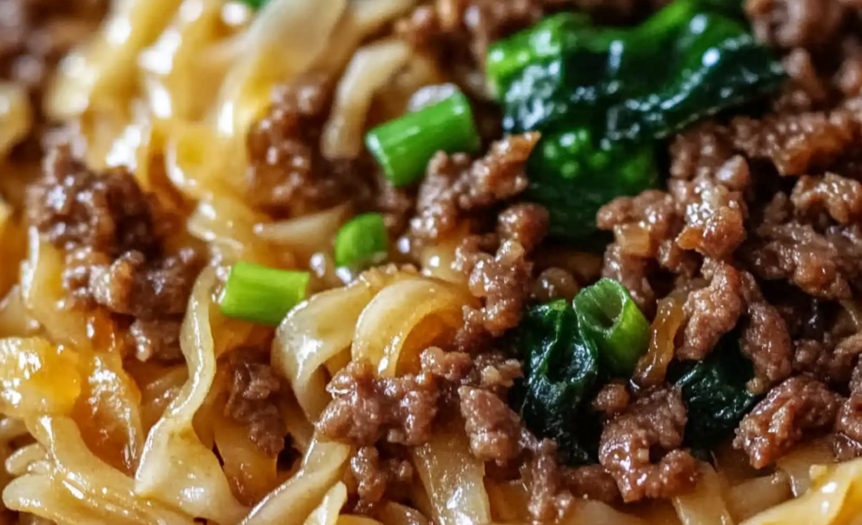
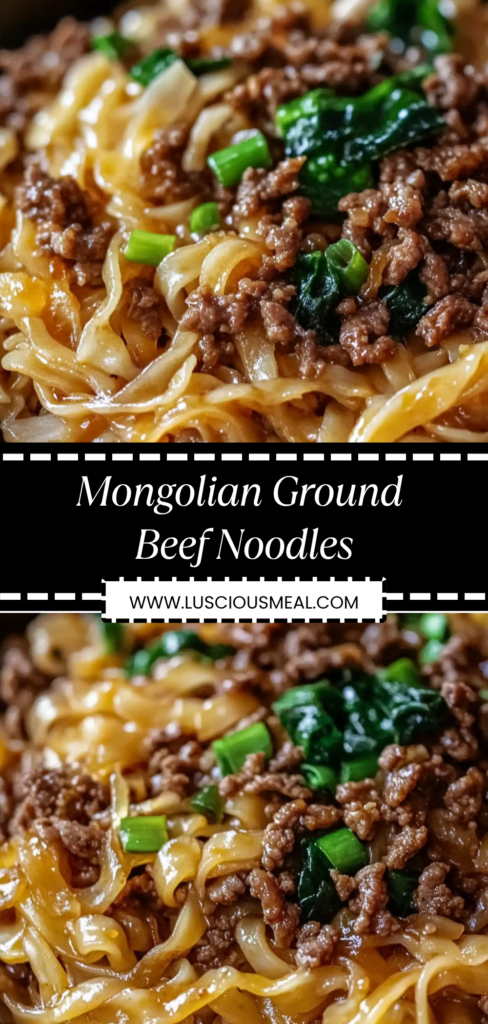
This is the takeout dish that makes delivery obsolete—silky noodles tossed with savory-sweet ground beef in a glossy sauce that perfectly balances soy, brown sugar, and ginger with just enough heat to keep things interesting. It’s the weeknight dinner that comes together faster than ordering in, transforming simple ingredients into the kind of meal that has everyone scraping their bowls clean and asking when you’re making it again.
Ingredients
For the Sauce:
- ½ cup low-sodium soy sauce
- ⅓ cup brown sugar, packed
- 3 tablespoons hoisin sauce
- 2 tablespoons rice vinegar
- 1 tablespoon sesame oil
- 2 teaspoons cornstarch
- ½ teaspoon red pepper flakes (adjust to taste)
- ¼ cup water
For the Beef and Noodles:
- 1 pound ground beef (85/15 blend)
- 12 ounces fresh lo mein noodles (or 8 oz dried)
- 2 tablespoons vegetable oil, divided
- 4 cloves garlic, minced
- 2 tablespoons fresh ginger, minced
- 1 bunch green onions (8-10), whites and greens separated
- 1 medium onion, thinly sliced
- 1 red bell pepper, julienned (optional)
- 2 tablespoons sesame seeds, toasted
For the Aromatics:
- 2 dried red chilies (optional)
- 1 star anise pod (optional)
- 2 teaspoons Shaoxing wine or dry sherry
For Serving:
- Additional green onions, sliced
- Sesame seeds
- Chili oil or sriracha
- Fresh cilantro
- Lime wedges
Instructions
- Prepare the Sauce: In bowl, whisk together soy sauce, brown sugar, hoisin, rice vinegar, and sesame oil until sugar dissolves. In small bowl, mix cornstarch with water to create slurry. Add to sauce mixture along with red pepper flakes. Set aside.
- Cook the Noodles: Bring large pot of water to boil. Cook noodles according to package directions minus 1 minute—they’ll finish cooking in the sauce. Reserve ½ cup pasta water, then drain. Toss with few drops of oil to prevent sticking.
- Brown the Beef: Heat 1 tablespoon oil in large wok or skillet over high heat. Add ground beef, breaking into small pieces. Let sear undisturbed for 2 minutes to develop crust. Continue cooking, stirring occasionally, until well-browned and crispy in spots, about 5-6 minutes total.
- Build Aromatics: Push beef to sides of wok. Add remaining oil to center. Add dried chilies and star anise if using, frying 30 seconds until fragrant. Add garlic, ginger, and white parts of green onions. Stir-fry 30 seconds until aromatic.
- Add Vegetables: Add sliced onion and bell pepper if using. Stir-fry 2-3 minutes until onions are translucent but still have slight crunch. The vegetables should retain some texture for contrast.
- Deglaze: Add Shaoxing wine, stirring to scrape up any browned bits. This deglazing captures all the caramelized flavors stuck to the pan.
- Combine with Sauce: Give sauce a quick stir to recombine, then pour over beef mixture. Bring to simmer—the sauce will thicken quickly due to cornstarch. If too thick, add pasta water tablespoon by tablespoon.
- Toss with Noodles: Add cooked noodles to wok. Using tongs or chopsticks, toss continuously for 2-3 minutes until noodles are evenly coated and heated through. The constant motion prevents sticking and ensures even distribution.
- Finish and Garnish: Remove from heat. Add green parts of scallions and half the sesame seeds, tossing once more. The residual heat will wilt the greens perfectly.
- Serve Immediately: Transfer to serving bowls. Top with remaining sesame seeds, extra green onions, and any desired accompaniments. Serve hot while noodles are still silky and sauce is glossy.
Recipe Notes
- Prep Time: 15 minutes
- Cook Time: 20 minutes
- Total Time: 35 minutes
- Servings: 4-6
- Calories: 485 per serving
The Mongolian Flavor Profile
Despite its name, Mongolian beef has little to do with actual Mongolian cuisine—it’s a Chinese-American creation that’s become beloved worldwide. The signature flavor comes from the interplay of salty soy sauce and sweet brown sugar, creating that addictive savory-sweet balance that defines the dish. This ground beef version maintains all those classic flavors while being more economical and faster-cooking than traditional sliced beef.
The sauce achieves its characteristic glossy sheen and clingy consistency through cornstarch, which thickens when heated while remaining clear. Unlike flour-based sauces that can taste pasty, cornstarch creates silk-smooth results that coat the noodles perfectly. The key is mixing it with cold water first to prevent lumps—adding dry cornstarch directly to hot liquid creates inevitable clumps.
Hoisin sauce adds depth beyond what soy and sugar alone provide. This fermented soybean paste brings umami complexity and subtle sweetness that rounds out the sauce. Combined with rice vinegar’s brightness and sesame oil’s nuttiness, you get layers of flavor in what appears to be a simple sauce.
Ground Beef Strategy
Using ground beef instead of traditional sliced beef offers several advantages beyond cost. It cooks faster, distributes more evenly through the noodles, and creates crispy bits that add textural interest. The 85/15 fat ratio provides enough fat for flavor and browning without making the dish greasy—the fat renders out during high-heat cooking.
That initial undisturbed searing is crucial for developing flavor. Ground beef releases moisture as it cooks, and constant stirring creates steam that prevents browning. By letting it sear for 2 minutes before stirring, you create those crispy, caramelized pieces that add both flavor and texture. Think of it as creating mini burger crusts throughout the dish.
Breaking the beef into small pieces ensures even distribution and better sauce adhesion. Large chunks would dominate certain bites while leaving others meatless. The goal is integration, not beef chunks with noodles on the side. Use your spatula to break pieces no larger than peas for optimal results.
Noodle Knowledge
Fresh lo mein noodles create the most authentic texture—chewy, slightly springy, and perfect for absorbing sauce. Find them in the refrigerated section of Asian markets. Their higher moisture content means they cook quickly and maintain better texture than dried. If unavailable, fresh fettuccine makes a reasonable substitute.
For dried noodles, slightly undercooking prevents mushiness when they finish in the sauce. That reserved pasta water contains starch that helps the sauce adhere better while allowing consistency adjustment. Always reserve more than you think you’ll need—it’s impossible to go back for more once drained.
The light oil coating after draining prevents sticking while you finish other components. Don’t overdo it—you want just enough to keep noodles separate, not so much they become greasy. Toss quickly and thoroughly for even distribution.
Wok Hei and High Heat
The elusive “wok hei” or breath of the wok—that characteristic smoky flavor from restaurant versions—comes from extremely high heat. While home stoves can’t match restaurant wok burners, you can approximate it by working in batches and maintaining maximum heat throughout cooking.
Using a wok provides ideal heat distribution and sloped sides for easy tossing. If you don’t have one, use your largest skillet—the key is not overcrowding. Everything should sizzle aggressively when it hits the pan. If ingredients steam rather than sear, your pan is overcrowded or heat too low.
That constant motion during the final noodle tossing isn’t just showing off—it ensures even heat distribution and prevents sticking while helping sauce coat every strand. Use tongs or long chopsticks for best control. The vigorous tossing also helps sauce penetrate the noodles rather than just coating the surface.
Aromatic Additions
Those optional dried chilies and star anise might seem minor, but they add authentic depth. Frying them in oil releases their essential oils, infusing the entire dish with subtle complexity. Fish them out before serving or warn diners—biting into a whole dried chili provides unwelcome surprise heat.
Fresh ginger and garlic form the aromatic backbone. Mincing rather than grating prevents burning while ensuring even distribution. That 30-second frying time is precisely calculated—longer and they burn, shorter and they remain harsh. You want them fragrant and slightly softened but not browned.
Separating scallion whites and greens serves dual purposes. The whites act as aromatic base, cooking with garlic and ginger. The greens added at the end provide fresh, mild onion flavor and vibrant color. This technique maximizes scallion impact—cooked depth and fresh brightness.
Vegetable Integration
The optional vegetables add color, nutrition, and textural variety. Bell peppers provide sweetness and crunch that contrasts beautifully with soft noodles. Julienning ensures even cooking and elegant presentation. Keep vegetables slightly crisp—overcooked vegetables add nothing to the dish.
Onions should retain some structure rather than completely softening. That translucent-but-crisp stage provides subtle crunch and sweetness without the harsh bite of raw onions. Slicing thinly ensures quick cooking while maintaining some texture.
Other vegetables work beautifully—snap peas, baby corn, water chestnuts, or bok choy. Add harder vegetables earlier, delicate ones later. The key is maintaining distinct textures rather than creating uniform mushiness. Each component should be identifiable in the final dish.
Customization Options
Spice Levels: Adjust red pepper flakes in sauce and fresh chilies in stir-fry. For mild, omit both. For fire-breathing heat, add sambal oelek or Chinese chili-garlic sauce.
Protein Swaps: turkey work excellently. For vegetarian, use crumbled firm tofu or plant-based ground. Adjust cooking times accordingly—turkey cooks faster, tofu needs extra browning time.
Noodle Alternatives: Rice noodles for gluten-free, though texture differs. Zucchini noodles for low-carb require just 1-2 minutes cooking. Udon creates heartier dish with chewier texture.
Sauce Variations: Add oyster sauce for deeper umami. Peanut butter creates Thai-fusion version. Black bean sauce transforms into completely different but delicious dish.
Vegetable Loading: Transform into veggie-packed meal with broccoli, carrots, mushrooms, and cabbage. Maintain high heat and work in batches to prevent steaming.
Make-Ahead and Storage
While best served immediately, components can be prepped ahead. Mix sauce up to 3 days in advance. Brown beef and refrigerate up to 2 days. Prep all vegetables and store separately. Come dinnertime, you’re 10 minutes from eating.
Leftovers store surprisingly well. The noodles absorb sauce overnight, creating different but still delicious texture. Reheat in microwave with splash of water, stirring halfway through. Or reheat in skillet with bit of oil for restored crispiness.
For meal prep, store components separately—sauced beef mixture in one container, plain cooked noodles in another. Combine and heat when ready to eat. This prevents noodles from becoming mushy while maintaining distinct textures.
Common Mistakes to Avoid
Overcrowding the Pan: Reduces temperature, creates steam, prevents browning. Work in batches if needed. Everything should sizzle aggressively.
Oversaucing: Noodles should be coated, not swimming. Start with less sauce—you can always add more. Reserve extra for serving alongside.
Overcooking Noodles: They continue cooking in hot sauce. Slight firmness initially ensures perfect final texture. Mushy noodles ruin the dish.
Low Heat: This isn’t a gentle simmer dish. High heat creates flavor through caramelization and provides authentic taste. Timid heat produces bland results.
Sauce Separation: Cornstarch sauce can break if overheated after thickening. Once thick, reduce heat and work quickly. Constant motion prevents separation.
Serving Suggestions
Present in large bowls with chopsticks for authentic experience. The long noodles are meant to be slurped—it’s not impolite, it’s proper technique that aerates noodles and enhances flavor perception.
Accompany with simple sides that don’t compete—steamed edamame, light cucumber salad, or crisp spring rolls. The rich main dish needs fresh, light accompaniments for balance.
For beverage pairing, crisp beer cuts through richness while complementing Asian flavors. Riesling’s slight sweetness echoes the sauce while acidity provides balance. Green tea offers traditional pairing that cleanses palate between bites.
The Takeout Competition
This homemade version surpasses most takeout in several ways. You control quality ingredients, sodium levels, and spice heat. No MSG if you prefer to avoid it. Fresh vegetables instead of tired ones. Most importantly, it’s hot from wok to table, not steaming in containers during delivery.
Cost analysis reveals significant savings—ingredients total about $12-15 for 4-6 servings versus $40+ for takeout. Time investment is comparable to delivery wait. The techniques learned apply to countless other Asian noodle dishes.
Final Thoughts
These Homemade Mongolian Ground Beef Noodles prove that restaurant favorites translate beautifully to home kitchens. By understanding the balance of flavors, mastering high-heat cooking, and using quality ingredients, you create a dish that satisfies takeout cravings while being fresher, faster, and more economical. The combination of silky noodles, crispy beef, and that addictive sweet-savory sauce creates the kind of meal that becomes a regular rotation favorite. Master this recipe and you’ll never need to order Mongolian beef again—yours will be better.