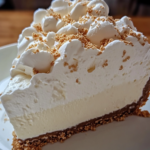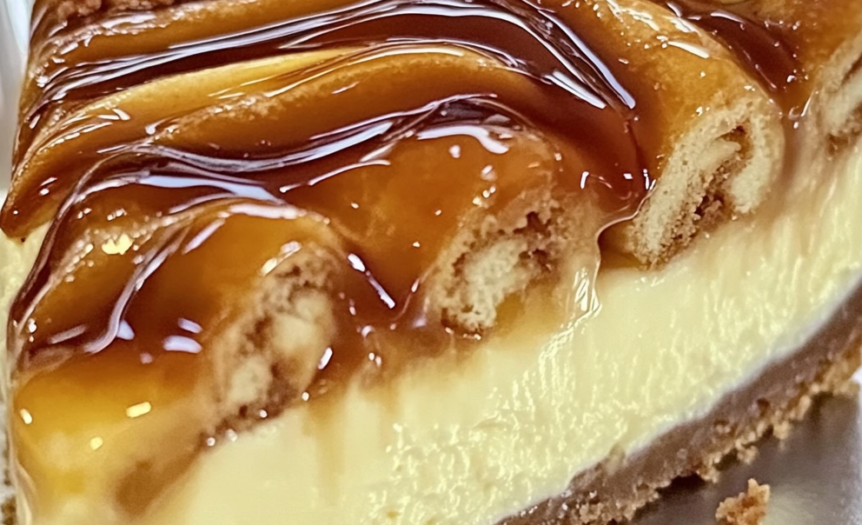
This honey bun cheesecake combines the beloved flavors of classic honey buns with the rich, creamy indulgence of New York-style cheesecake to create a dessert that’s both nostalgic and sophisticated. The cinnamon-swirl filling and golden honey glaze transform ordinary cheesecake into something extraordinary that captures the essence of the childhood favorite in elegant dessert form. If you enjoy this style of elevated comfort food dessert, you might also like cinnamon roll cheesecake, caramel apple cheesecake, or other fusion desserts that reimagine classic treats.
Why You’ll Love This Recipe
- Nostalgic flavor innovation – transforms the beloved honey bun into an elegant cheesecake that appeals to both childhood memories and sophisticated dessert preferences
- Show-stopping presentation – creates a visually stunning dessert with beautiful cinnamon swirls and glossy honey glaze that impresses guests at any gathering
- Perfect texture contrast – combines the smooth, creamy richness of cheesecake with the warm spice flavors and sweet glaze that define honey buns
- Make-ahead convenience – requires overnight chilling that actually improves the texture and flavor, making it ideal for entertaining without last-minute stress
Ingredients Breakdown
Cream cheese: The foundation that creates the rich, velvety texture essential to exceptional cheesecake. Use full-fat cream cheese exclusively – reduced-fat versions contain more water and stabilizers that prevent the smooth, dense texture that defines quality cheesecake. The cream cheese must be completely softened to room temperature, which typically takes 2-3 hours outside the refrigerator. Properly softened cream cheese mixes smoothly without lumps and creates the silky consistency that makes this dessert irresistible. Philadelphia brand consistently produces excellent results, though other high-quality brands work well too.
Graham cracker crust: Provides the classic cheesecake foundation with sweet, slightly salty crunch that complements the creamy filling. You can use store-bought crusts for convenience, but homemade crusts offer superior flavor and texture control. When making your own, use full-sheet graham crackers rather than low-fat versions, and bind them with butter rather than margarine for the best flavor. The crust should be pressed firmly into the pan to prevent crumbling when sliced, creating a stable base that supports the rich filling.
Cinnamon swirl ingredients: The signature element that transforms ordinary cheesecake into honey bun-inspired bliss. High-quality ground cinnamon makes a noticeable difference – Ceylon cinnamon offers more complex, sweeter notes than standard cassia cinnamon. Brown sugar provides molasses depth that complements the cinnamon beautifully, while butter creates the paste-like consistency needed for swirling. The mixture should be smooth and spreadable but not so loose that it disappears into the cheesecake batter.
Honey for glaze: Creates the glossy, sweet finish that captures the essence of honey buns while adding beautiful visual appeal. Use pure honey rather than honey-flavored corn syrup for authentic flavor and proper consistency. Clover honey offers mild, pleasant sweetness, while wildflower honey provides more complex flavors. The honey should be warmed slightly before glazing to achieve the perfect flowing consistency that coats the cheesecake evenly without being too thick or thin.
Sour cream: Adds tangy richness that balances the sweetness while contributing to the characteristic New York cheesecake flavor profile. Full-fat sour cream provides the best texture and flavor – avoid light versions which can make the cheesecake watery or grainy. The acidity in sour cream also helps tenderize the texture and provides the slight tang that prevents the dessert from being overwhelmingly sweet. Room temperature sour cream incorporates more smoothly than cold.
Step-by-Step Instructions
- Preheat your oven to 325°F (165°C) and wrap the outside of a 9-inch springform pan with heavy-duty aluminum foil to prevent water from seeping in during the water bath. The lower temperature prevents cracking and ensures even cooking throughout the thick cheesecake. Position a rack in the center of the oven for optimal heat circulation.
- Prepare the cinnamon swirl by combining 1/4 cup brown sugar, 2 tablespoons softened butter, and 1 tablespoon ground cinnamon in a small bowl. Mix until smooth and paste-like in consistency. The mixture should hold together when stirred but be spreadable enough to create swirls in the batter. Set aside at room temperature to maintain workability.
- In a large mixing bowl, beat 32 ounces (four 8-ounce packages) of room temperature cream cheese with an electric mixer on medium speed until completely smooth and fluffy, about 3-4 minutes. Scrape down the sides of the bowl frequently to ensure even mixing. The cream cheese should be lump-free and noticeably lighter in texture when properly beaten.
- Gradually add 1 cup granulated sugar, beating continuously until fully incorporated and the mixture is smooth. Add 4 large eggs one at a time, beating just until each is incorporated before adding the next. Avoid overmixing after adding eggs, which can incorporate too much air and cause cracking during baking.
- Beat in 1/2 cup sour cream, 1/4 cup honey, 2 teaspoons vanilla extract, and 1/4 teaspoon salt until just combined. The batter should be smooth, rich, and well-integrated without being overmixed. Taste the batter and adjust sweetness with additional honey if desired, keeping in mind that the glaze will add more sweetness.
- Pour half of the cheesecake batter into the prepared springform pan with graham cracker crust. Drop spoonfuls of the cinnamon mixture randomly over the batter, then use a knife to create swirling patterns by drawing through the cinnamon and batter. Don’t overswirl, which can muddy the pattern.
- Pour the remaining cheesecake batter over the first layer and repeat the swirling process with the remaining cinnamon mixture. The swirls should be visible throughout the cheesecake but not so extensive that they blend completely together. Gently tap the pan on the counter to release air bubbles.
- Place the springform pan in a large roasting pan and carefully pour hot water into the roasting pan until it reaches halfway up the sides of the springform pan. This water bath prevents cracking and ensures gentle, even cooking. Carefully transfer to the preheated oven.
- Bake for 55-65 minutes until the center is almost set but still slightly jiggly when gently shaken. The edges should be set and lightly golden. Avoid overbaking, which causes cracking and dry texture. The cheesecake will continue to cook from residual heat after removal from the oven.
- Turn off the oven and crack the door open, allowing the cheesecake to cool gradually in the oven for 1 hour. This prevents temperature shock that can cause cracking. Remove from the water bath and cool completely at room temperature before refrigerating overnight.
- For the honey glaze, warm 1/3 cup honey with 2 tablespoons butter in a small saucepan over low heat until smooth and combined. Let cool slightly until just warm but still pourable. The glaze should coat the back of a spoon but flow easily when drizzled.
- Before serving, run a knife around the edges of the pan to loosen the cheesecake, then remove the sides of the springform pan. Drizzle the warm honey glaze over the top, allowing it to flow naturally down the sides. Let the glaze set for 15-20 minutes before slicing.
Perfect Texture: What to Look For
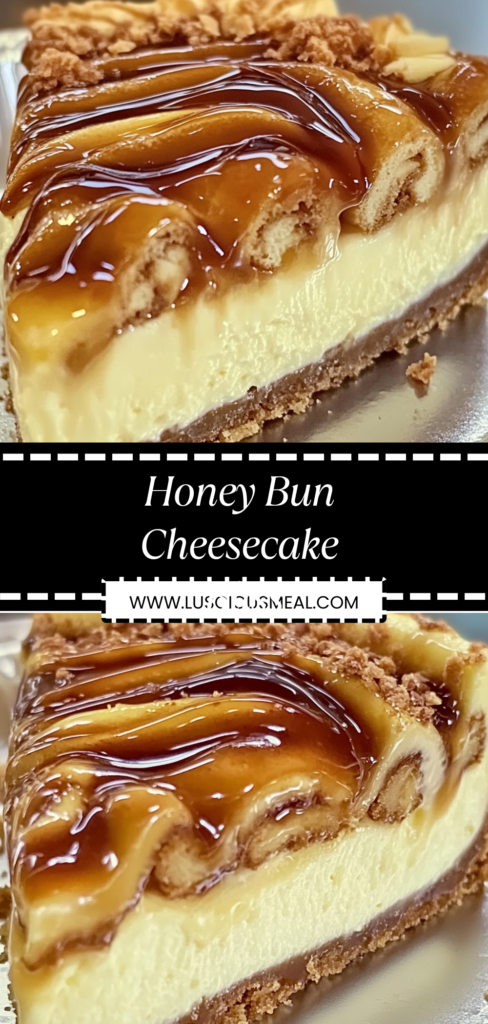
The ideal honey bun cheesecake should have a dense, creamy texture that’s smooth and rich without being heavy or gummy. When properly baked, the center should be just set with a slight jiggle remaining – it will firm up completely during chilling. The cinnamon swirls should be visible throughout the cheesecake, creating beautiful marbled patterns that don’t muddy together. The surface should be smooth and crack-free with an appealing golden color from the honey and eggs. The honey glaze should set to a glossy finish that’s not sticky to the touch but still somewhat flexible. When sliced, the cheesecake should cut cleanly with a sharp knife, showing distinct layers and swirl patterns.
Customization Options
This versatile base recipe welcomes several delicious variations while maintaining its essential honey bun character. For extra richness, add a layer of cinnamon streusel between the two batter layers, creating more textural interest. Incorporate 1/2 cup of mini cinnamon chips into the batter for bursts of concentrated cinnamon flavor. For a more intense honey flavor, replace some of the granulated sugar with additional honey, adjusting the liquid content accordingly. Consider adding a cream cheese frosting layer instead of just honey glaze for even more indulgence, or incorporate chopped pecans into the cinnamon swirl for added crunch and flavor complexity.
Practical Tips
Temperature control: Room temperature ingredients are crucial for smooth mixing and proper texture. Plan ahead by removing cream cheese, eggs, and sour cream from the refrigerator 2-3 hours before baking. If you forget, cut cream cheese into cubes and microwave briefly, or place sealed containers in warm water to speed the process.
Water bath success: Use a large roasting pan that comfortably holds the springform pan with room for water. Add hot tap water rather than boiling water to prevent temperature shock. The foil wrap must completely seal the bottom and sides of the pan to prevent leaks that could make the crust soggy.
Preventing cracks: Avoid overmixing the batter, overbaking, or sudden temperature changes. The gradual cooling process is essential – don’t rush it by placing the hot cheesecake directly in the refrigerator. If small cracks do appear, they’ll be covered by the honey glaze.
Storage: This cheesecake actually improves after 24-48 hours as flavors meld and the texture fully sets. Store covered in the refrigerator for up to 5 days. For longer storage, freeze the unglazed cheesecake for up to 2 months, then thaw and add fresh glaze before serving.
Common Questions
Why did my cheesecake crack? Cracking usually results from overmixing, overbaking, or rapid temperature changes. Ensure ingredients are at room temperature, mix just until combined after adding eggs, bake until just set, and cool gradually. The water bath helps prevent cracking by maintaining gentle, moist heat.
Can I make this without a water bath? While possible, the water bath significantly improves texture and prevents cracking. If you skip it, reduce the oven temperature to 300°F and watch carefully for doneness. Place a pan of hot water on the oven’s bottom rack to create steam that helps prevent cracking.
How do I know when the cheesecake is done? The center should be almost set with just a slight jiggle when gently shaken. It should not be liquid or sloshy. The edges will be set and may be slightly golden. A toothpick inserted near the center should come out mostly clean with perhaps a few moist crumbs.
Can I use a different crust? Absolutely – vanilla wafer, cinnamon graham cracker, or even gingersnap crusts complement the honey bun flavors beautifully. Adjust the sugar in homemade crusts based on the sweetness of your chosen cookies. The preparation method remains the same regardless of the crust type.
Serving Suggestions
This rich, indulgent cheesecake is best served in modest portions due to its density and sweetness. Pair with fresh berries or a light fruit salad to provide acidic contrast that cuts through the richness. A small dollop of lightly sweetened whipped cream adds textural interest without competing with the main flavors. For an elegant presentation, dust individual plates with cinnamon before placing the cheesecake slice.
The dessert works beautifully for special occasions like birthdays, holidays, or dinner parties where an impressive dessert is desired. Serve with coffee, espresso, or even dessert wine like Moscato that complements the honey and cinnamon flavors. For casual gatherings, offer it alongside other comfort food desserts for a varied dessert spread that appeals to different preferences.
Nutritional Benefits
While definitely an indulgent dessert, this cheesecake does provide some nutritional value from its quality ingredients. The cream cheese and eggs contribute protein and calcium, while the honey provides natural sweetness along with small amounts of antioxidants and minerals. The cinnamon offers potential anti-inflammatory benefits and may help regulate blood sugar levels.
To enjoy this treat as part of a balanced approach to eating, serve appropriate portion sizes and balance it with lighter meals earlier in the day. The rich, satisfying nature means a small slice provides significant satisfaction, potentially preventing overindulgence in less nutritious sweets. The homemade nature allows you to control ingredient quality and avoid the preservatives and artificial flavors found in many commercial desserts, creating a more wholesome indulgence for special occasions and celebrations.