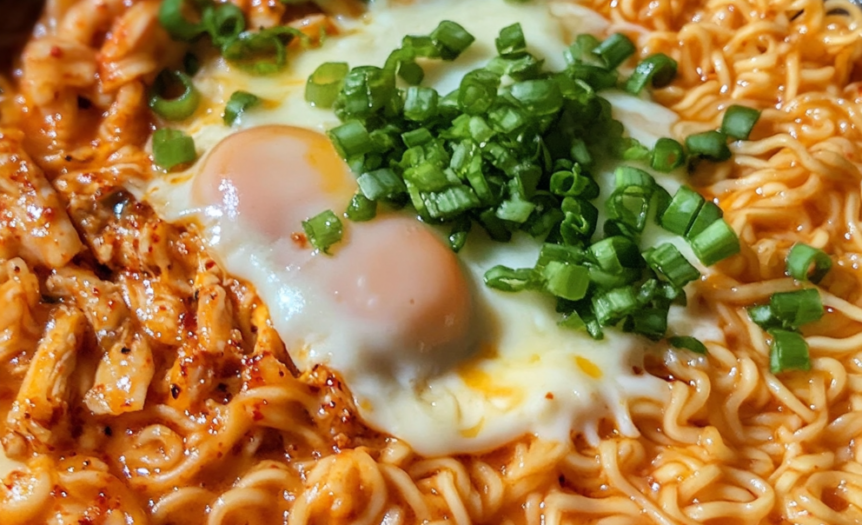
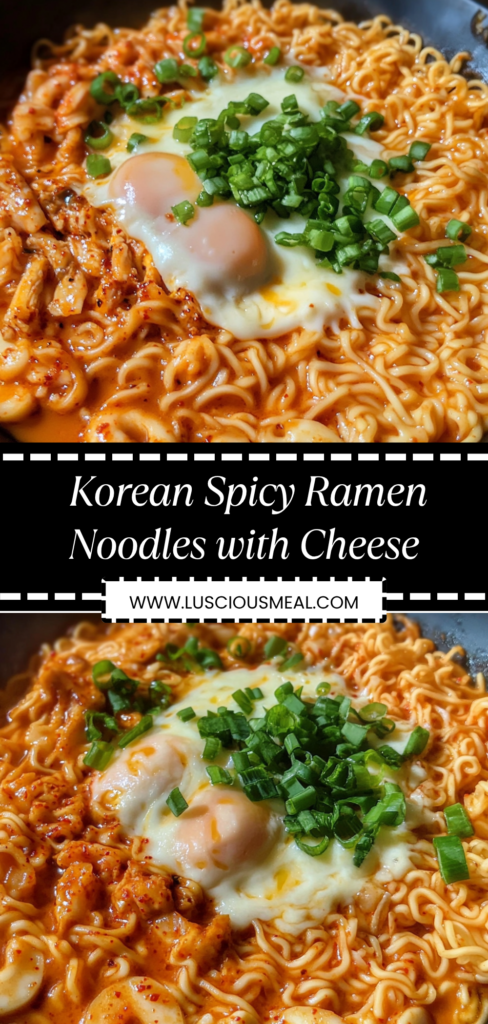
These Korean spicy ramen noodles with cheese are pure comfort food gold – chewy, springy noodles swimming in a rich, spicy broth that gets mellowed and made luxuriously creamy with melted cheese that creates the most satisfying, soul-warming bowl of noodles you’ll ever eat. What makes this dish absolutely irresistible is how the sharp, funky heat from Korean chili paste (gochujang) gets perfectly balanced by the cool, creamy richness of melted cheese, creating layers of flavor and texture that make every single bite completely addictive. I discovered this magical combination during a late-night Korean food craving when I decided to upgrade instant ramen with some gochujang and whatever cheese I had in the fridge, and it’s become such an obsession that I now keep the ingredients stocked at all times because this hits every comfort food craving imaginable. The best part is how this elevated ramen feels indulgent and restaurant-quality while still being incredibly quick and easy to make with mostly pantry ingredients.
Why This Korean Spicy Cheese Ramen Recipe Actually Works
The genius of Korean spicy cheese ramen lies in the perfect balance between heat, umami, and richness that creates a complex flavor profile way beyond what you’d expect from such simple ingredients. Gochujang provides the foundation with its deep, fermented heat that’s spicy but also slightly sweet and incredibly savory, while the cheese adds cooling creaminess that tempers the heat without masking the complex flavors. The key is using the right type of cheese that melts smoothly and complements rather than competes with the Korean flavors.
What elevates this from instant ramen to something truly special is the technique of building layers of flavor through proper aromatics and timing. Starting with garlic and ginger creates an aromatic base, while the gochujang gets bloomed briefly to develop its full flavor potential before adding liquids. The cheese gets added at exactly the right moment – when the soup is hot enough to melt it but not so hot that it breaks or becomes stringy. This creates that signature creamy, spicy broth that’s become so popular in Korean comfort food that entire restaurants are dedicated to cheese ramen variations.
Key Benefits That Make This Worth Making
Ultimate Comfort Food Satisfaction – This dish hits every comfort food craving at once – it’s warm, creamy, spicy, and incredibly satisfying. Perfect for cold days, late-night cravings, or anytime you need something that feels like a warm hug in a bowl.
Quick and Easy Weeknight Dinner – From start to finish, this takes about 15 minutes using mostly pantry ingredients. It’s perfect for busy weeknights when you want something more exciting than basic instant ramen but don’t have time for complicated cooking.
Incredibly Customizable – The basic formula works with countless additions and variations. Add vegetables, proteins, different types of cheese, or adjust the spice level to suit your preferences. It’s a great base recipe that you can make your own.
Budget-Friendly Indulgence – This creates a restaurant-quality experience using inexpensive ingredients. A single serving costs just a few dollars but tastes like something you’d pay $15+ for at a trendy ramen shop.
Complete Ingredients Breakdown
For the Spicy Broth Base:
2 Packages Instant Ramen Noodles (discard seasoning packets) Use good quality instant ramen noodles – Korean brands like Nongshim or Japanese brands like Nissin work best because they have better texture and flavor than cheap store brands. The noodles should be firm and springy, not mushy. Discard the seasoning packets since you’ll be making your own flavorful broth.
3 Cups Chicken or Vegetable Broth Use good quality broth as the foundation of your soup – it should taste like something you’d want to drink on its own. Low-sodium is preferable so you can control the salt level. Homemade broth is ideal, but high-quality store-bought works perfectly. For vegetarian version, use vegetable broth or mushroom broth for extra umami.
2 Tablespoons Gochujang (Korean chili paste) Gochujang is the star ingredient that gives this dish its distinctive Korean flavor. Look for it in the Asian section of grocery stores or Korean markets. It should be thick, dark red, and smell complex – sweet, spicy, and fermented. Different brands vary in heat level, so start with less if you’re sensitive to spice. Store it in the refrigerator after opening.
2 Tablespoons Soy Sauce Use good quality soy sauce for depth and umami. Korean brands like Sempio work particularly well, but Japanese soy sauce like Kikkoman is excellent too. The soy sauce adds saltiness and savory depth that balances the sweetness in gochujang.
1 Tablespoon Sesame Oil Toasted sesame oil is crucial for authentic Korean flavor – it adds nutty richness that ties all the flavors together. A little goes a long way, so don’t use more than called for or it can become overpowering. Store it in the refrigerator after opening to prevent rancidity.
1 Tablespoon Rice Vinegar Rice vinegar adds subtle acidity that brightens the rich, heavy flavors and helps balance the heat. It’s milder than white vinegar and has a slightly sweet quality that works perfectly with Korean flavors. Don’t substitute with other vinegars as they’ll change the flavor profile.
1 Teaspoon Sugar A touch of sugar balances the heat and acidity while enhancing the natural sweetness in gochujang. This helps create a more complex, well-rounded flavor rather than just straight heat. Use regular granulated sugar or brown sugar for slightly deeper flavor.
For the Aromatics:
3 Garlic Cloves (minced) Fresh garlic is essential for authentic Korean flavor. The cloves should be firm and pungent, minced very finely so they cook quickly and distribute evenly. Garlic forms the aromatic base that supports all the other flavors.
1-Inch Piece Fresh Ginger (minced) Fresh ginger adds warmth and complexity that dried ginger can’t match. Choose ginger that’s firm and smooth-skinned, not wrinkled or soft. Peel it with the edge of a spoon and mince very finely so it doesn’t create chunks in your smooth broth.
2 Green Onions (chopped, white and green parts separated) Green onions add mild onion flavor and beautiful color. Use the white parts for cooking to build flavor in the broth, and reserve the green parts for garnish. They should be fresh and crisp, not wilted or slimy.
For the Cheese Component:
4 oz American Cheese Slices or Processed Cheese American cheese might seem like an odd choice, but it melts incredibly smoothly and creates that signature creamy texture without breaking or becoming stringy. Korean cheese ramen traditionally uses processed cheese for its superior melting properties. Velveeta also works excellently for this purpose.
2 oz Sharp Cheddar Cheese (shredded) Sharp cheddar adds flavor complexity and a slight tang that complements the spicy broth beautifully. Shred it yourself for the best melting properties – pre-shredded cheese has anti-caking agents that can affect texture.
For Toppings and Garnish:
2 Large Eggs Fresh eggs add richness and protein while creating a creamy texture when the yolk mixes with the broth. Choose eggs with bright orange yolks for the best flavor and visual appeal. You can cook them soft-boiled, poached, or cracked directly into the soup.
1 Sheet Roasted Seaweed (kim/nori, cut into strips) Roasted seaweed adds authentic Korean flavor and beautiful visual contrast. Look for seasoned seaweed snacks in the Asian section, or use plain nori cut into thin strips. The seaweed should be crisp and smell oceanic, not fishy.
1 Tablespoon Sesame Seeds (toasted) Toasted sesame seeds add crunch and nutty flavor that complements the sesame oil beautifully. You can buy them pre-toasted or toast your own in a dry skillet for 2-3 minutes until golden and fragrant.
Reserved Green Onion Tops (sliced) The green parts of the scallions add fresh flavor and beautiful color that brightens the rich, dark broth. Slice them thinly just before serving for the best appearance and flavor.
Optional Add-ins:
1 Cup Fresh Spinach Baby spinach wilts quickly in the hot broth and adds nutrition and color. Add it at the very end of cooking so it stays bright green and doesn’t become mushy.
4 oz Sliced Mushrooms Shiitake or cremini mushrooms add umami depth and meaty texture. Sauté them separately before adding to preserve their texture, or add them raw to the broth if you prefer them softer.
Korean Rice Cakes (tteok) Chewy rice cakes are a traditional addition that makes the dish more substantial. Look for them in Korean markets – they should be soft and chewy, not hard or dry.
Step-by-Step Instructions
1. Prepare all your ingredients before you start cooking since this dish comes together very quickly. Mince the garlic and ginger, separate the white and green parts of the scallions, shred the cheddar cheese, and have all your seasonings measured and ready.
2. Bring a pot of water to boil for the ramen noodles. Cook the noodles according to package directions until they’re just slightly underdone – they’ll finish cooking in the broth. Drain and rinse briefly with cold water to stop the cooking process. Set aside.
3. In a large pot or deep skillet, heat 1 tablespoon of sesame oil over medium heat. Add the minced garlic, ginger, and white parts of the green onions. Cook for 1-2 minutes until fragrant but not browned, stirring constantly to prevent burning.
4. Add the gochujang to the aromatics and cook for 1 minute, stirring constantly. This blooming process helps develop the full flavor of the chili paste and removes any raw taste. The mixture should be very fragrant and slightly darkened.
5. Slowly pour in the chicken or vegetable broth, whisking to combine with the gochujang mixture. Add the soy sauce, rice vinegar, and sugar, stirring well to dissolve the sugar completely. Bring the mixture to a gentle simmer.
6. Add the cooked ramen noodles to the simmering broth and cook for 2-3 minutes until they’re heated through and have absorbed some of the flavor. The noodles should be tender but still have a slight chew.
7. Reduce the heat to low and gradually add the American cheese slices, stirring gently until they’re completely melted and incorporated. The broth should become creamy and slightly thickened. Don’t let it boil vigorously or the cheese might break.
8. Add the shredded cheddar cheese gradually, stirring until melted and smooth. Taste and adjust seasoning – you might want more gochujang for heat, soy sauce for saltiness, or sugar for balance.
9. If using eggs, crack them directly into the soup and let them poach gently for 2-3 minutes for runny yolks, or longer if you prefer them more set. Alternatively, you can soft-boil them separately and add them as a topping.
10. Remove from heat and ladle into serving bowls. Top with sliced green onions, toasted sesame seeds, strips of roasted seaweed, and any other desired toppings. Serve immediately while hot and creamy.
Pro Tips & Variations
Cheese Melting Tips: The key to smooth, creamy cheese incorporation is low heat and gradual addition. Add the cheese in small amounts and stir gently until each addition is completely melted before adding more. If the cheese breaks or becomes stringy, reduce the heat and whisk in a splash of cold broth.
Spice Level Adjustment: Gochujang brands vary significantly in heat level. Start with 1 tablespoon if you’re sensitive to spice, or add up to 3 tablespoons if you love heat. You can also add kimchi juice for extra fermented flavor and heat, or gochugaru (Korean chili flakes) for more intense spice.
Protein Additions: This is delicious with added protein like sliced beef, pork belly, chicken, or tofu. Cook proteins separately and add them to the soup at the end to prevent overcooking. Spam or Korean sausage are also popular additions that add authentic Korean flavors.
Vegetable Variations: Try adding bean sprouts, corn kernels, sliced onions, or cabbage for extra nutrition and texture. Most vegetables should be added early in the cooking process so they have time to soften and absorb flavors.
Troubleshooting Common Issues
“My cheese is clumpy or broken” – This happens when the soup is too hot or the cheese is added too quickly. Remove from heat, let it cool slightly, then whisk in the cheese gradually. If it’s already broken, try whisking in a splash of cold milk or cream to smooth it out.
“It’s too spicy/not spicy enough” – Gochujang heat levels vary widely between brands. If too spicy, add more cheese, a splash of milk, or some sugar to balance the heat. If not spicy enough, add more gochujang, some kimchi, or gochugaru (Korean chili flakes).
“The broth is too thin/thick” – For thinner broth, add more chicken or vegetable broth. For thicker broth, simmer longer to reduce, or add more cheese. The consistency should be creamy but still soup-like, not sauce-thick.
“My noodles are mushy” – Cook the noodles slightly underdone initially since they’ll continue cooking in the hot broth. If they’re already mushy, there’s not much you can do except remember for next time. Fresh ramen noodles hold their texture better than dried ones.
“The flavors seem unbalanced” – Korean cuisine relies on balancing sweet, salty, spicy, and umami flavors. Adjust with more gochujang (spicy/umami), soy sauce (salty/umami), sugar (sweet), or rice vinegar (acidic) until you achieve a harmonious balance that tastes complex and satisfying.