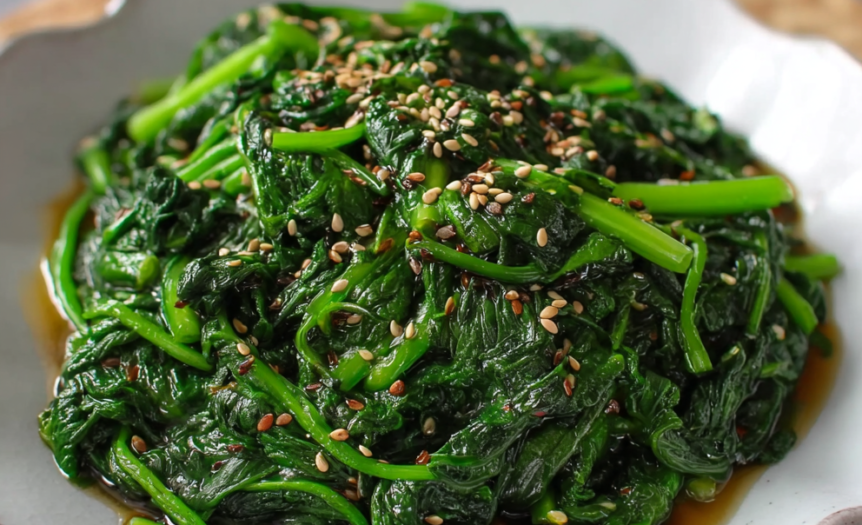
There’s something deeply satisfying about the way Korean cuisine transforms simple vegetables into extraordinary side dishes, and sigeumchi namul perfectly exemplifies this culinary philosophy. This classic Korean spinach banchan takes humble spinach and elevates it through careful seasoning and technique into something that’s both refreshing and deeply savory.
I first encountered this dish at a small Korean restaurant tucked away in a busy neighborhood, where it appeared as one of many colorful banchan spread across the table. What struck me immediately was how such a simple preparation could deliver such complex, satisfying flavors. The spinach retained its vibrant green color while being perfectly tender, and the seasoning blend of sesame oil, garlic, and soy sauce created an umami-rich profile that made me crave more with every bite.
What makes sigeumchi namul special is its perfect balance of textures and flavors achieved through proper blanching technique and traditional Korean seasoning. The spinach is briefly cooked to maintain its nutritional value and bright color, then seasoned with aromatic sesame oil, savory soy sauce, and pungent garlic that creates layers of flavor in every strand.
This banchan serves 4-6 people as a side dish and takes only about 15 minutes to prepare from start to finish. It’s naturally vegan, packed with nutrients, and keeps well in the refrigerator, making it perfect for meal prep or as part of a larger Korean feast. The dish exemplifies the Korean approach to vegetables—treating them with respect and transforming them into something irresistible.
Ingredients
Main Ingredients:
- 1 pound fresh spinach, stems trimmed
- 2 tablespoons sesame oil
- 1 tablespoon soy sauce (Korean ganjang preferred)
- 3 garlic cloves, minced
- 1 teaspoon toasted sesame seeds
- ½ teaspoon salt
- ¼ teaspoon sugar
For Blanching:
- 8 cups water
- 1 tablespoon salt
Optional Garnish:
- Additional toasted sesame seeds
- Thin strips of red chili for color
Instructions
Begin by preparing a large bowl of ice water and setting it aside—this will be crucial for stopping the cooking process and maintaining the spinach’s bright green color. Fill a large pot with 8 cups of water and add 1 tablespoon of salt. Bring this to a vigorous boil over high heat.
While the water heats, carefully clean your spinach. Remove any thick stems and damaged leaves, then wash the spinach thoroughly in several changes of cold water to remove all dirt and grit. Spinach can be quite sandy, so don’t rush this step. Shake off excess water but don’t worry about getting it completely dry.
Once the water reaches a rolling boil, add the cleaned spinach all at once. The water temperature will drop initially, but it should return to a boil quickly. Blanch the spinach for exactly 30-45 seconds—just until the leaves are bright green and wilted but still have some texture. This brief cooking time preserves both nutrients and color while making the spinach tender enough to absorb the seasonings.
Immediately drain the spinach and plunge it into the prepared ice water bath. This shocking process stops the cooking instantly and sets the bright green color. Let the spinach sit in the ice water for about 1 minute until completely cooled.
Drain the spinach thoroughly in a fine-mesh strainer, then use your hands to squeeze out as much water as possible. This step is crucial—excess water will dilute the seasonings and make the dish watery. Form the spinach into a tight ball and squeeze firmly, then squeeze again until very little water comes out.
Place the well-drained spinach on a cutting board and roughly chop it into 2-3 inch lengths. This makes it easier to eat with chopsticks and helps the seasonings distribute more evenly throughout the dish.
Transfer the chopped spinach to a mixing bowl. Add the minced garlic, sesame oil, soy sauce, salt, and sugar. Using your hands or chopsticks, mix everything together thoroughly, making sure every strand of spinach is coated with the seasoning mixture. The spinach should glisten with sesame oil and smell aromatic.
Taste and adjust the seasoning as needed. The dish should be savory and nutty with a hint of sweetness and a pleasant garlic bite. Add more soy sauce for saltiness, sesame oil for richness, or sugar for balance as desired.
Sprinkle with toasted sesame seeds and mix gently to distribute. Let the seasoned spinach sit for about 10 minutes before serving to allow the flavors to meld and penetrate the vegetables.

Flavor and Texture Notes
Properly made sigeumchi namul delivers a perfect harmony of flavors that showcases why Korean cuisine excels at vegetable preparations. The spinach itself retains a pleasant bite—tender enough to eat easily but with enough structure to provide satisfying texture. The brief blanching preserves the vegetable’s natural earthiness while making it receptive to the aromatic seasonings.
The sesame oil provides rich, nutty depth that coats each strand of spinach with luxurious flavor. Korean sesame oil tends to be more intensely flavored than other varieties, creating that distinctive taste that’s essential to authentic banchan. The soy sauce adds savory umami complexity without overwhelming the delicate spinach, while the garlic provides sharp, pungent notes that brighten the entire dish.
The touch of sugar might seem unusual, but it’s crucial for achieving the balanced flavor profile that Korean cooking is known for. It doesn’t make the dish sweet—instead, it rounds out the savory elements and enhances the natural sweetness of the spinach itself.
The toasted sesame seeds add both visual appeal and textural contrast, providing little bursts of concentrated nutty flavor and satisfying crunch that complement the tender spinach beautifully.
Tips and Variations
The key to exceptional sigeumchi namul lies in proper water removal after blanching. Many home cooks don’t squeeze out enough moisture, which results in watery, poorly seasoned spinach. Don’t be afraid to really squeeze hard—the spinach can handle it and needs this treatment to achieve the right texture.
Use the freshest spinach you can find, preferably with smaller, tender leaves. Baby spinach works well, but mature spinach with larger leaves is actually traditional and provides better texture after blanching. Avoid pre-washed spinach if possible, as it’s often less fresh and flavorful.
Korean soy sauce (ganjang) creates the most authentic flavor, but Japanese soy sauce works as a substitute. Avoid thick, sweet soy sauces which will overpower the delicate spinach. If you can only find regular soy sauce, use slightly less to start and adjust to taste.
For variations, try adding a pinch of Korean red pepper flakes (gochugaru) for gentle heat, or a few drops of rice vinegar for extra brightness. Some regions add finely chopped scallions or a touch of minced ginger for additional flavor complexity.
If you can’t find Korean sesame oil, look for Japanese or Chinese versions, which tend to be more intensely flavored than Western varieties. The sesame oil should smell strongly nutty and aromatic—if it’s bland, the dish won’t have the proper character.
Storage and Make-Ahead Tips
Sigeumchi namul actually improves after sitting for a few hours, as the seasonings have time to penetrate the spinach more deeply. It can be made up to 2 days ahead and stored in the refrigerator, making it excellent for meal prep or preparing banchan in advance for Korean meals.
Store the finished dish in an airtight container in the refrigerator. The flavors will continue to develop, and many people prefer it after it’s had time to marinate overnight. Give it a gentle stir before serving if any liquid has separated out.
This banchan freezes reasonably well for up to 1 month, though the texture will be slightly softer after thawing. Freeze in portion-sized containers and thaw in the refrigerator overnight before serving.
If you notice any liquid accumulating in the container during storage, simply drain it off or stir it back in, depending on your preference. A little liquid is normal as the spinach continues to release moisture over time.
For the best texture and flavor, bring refrigerated sigeumchi namul to room temperature before serving, or let it sit out for 10-15 minutes after removing from the fridge.
Serving Suggestions
Sigeumchi namul is traditionally served as one of several banchan alongside Korean main dishes like bulgogi, bibimbap, or galbi. The cool, refreshing nature of the spinach provides an excellent contrast to rich, grilled meats and spicy dishes.
Serve it in small individual bowls or as part of a larger banchan spread on the table. Provide chopsticks or small spoons for easy eating. The dish works beautifully as part of a Korean barbecue meal, where its clean flavors help cleanse the palate between bites of meat.
This spinach preparation also works wonderfully as a component in bibimbap, where it contributes both color and nutrition to the mixed rice bowl. It can be served warm, at room temperature, or cold, making it versatile for different meal presentations.
For non-Korean meals, sigeumchi namul makes an excellent healthy side dish alongside grilled fish, roasted chicken, or even as part of a vegetarian meal with rice and other Asian-inspired vegetables.
The dish pairs particularly well with other Korean banchan like kimchi, pickled radish, or seasoned bean sprouts, creating a varied and nutritious spread of vegetable side dishes.
FAQ
Can I use frozen spinach instead of fresh? Fresh spinach is strongly preferred for the best texture and flavor. If you must use frozen, thaw it completely and squeeze out all excess moisture before seasoning. The texture won’t be quite the same, but the flavors will still be good.
Why is my spinach bitter or too salty? Bitterness usually comes from overcooking the spinach or using old, tough leaves. Keep blanching time very brief and use fresh, tender spinach. If it’s too salty, rinse the seasoned spinach briefly and re-season with just sesame oil and a touch of sugar.
Can I make this without sesame oil? Sesame oil is really essential for authentic flavor, but in a pinch you could substitute a high-quality olive oil mixed with a small amount of tahini for nutty flavor. The taste will be different but still pleasant.
How do I know if I’ve blanched the spinach correctly? Properly blanched spinach should be bright green, wilted but not mushy, and still have a slight bite to it. If it’s dull green or mushy, you’ve overcooked it. If it’s still quite raw and tough, it needs a few more seconds in the boiling water.
Can I add other vegetables to this preparation? While sigeumchi namul is traditionally just spinach, you can apply similar seasoning techniques to other blanched greens like watercress, chrysanthemum leaves, or even broccoli. Adjust blanching times based on the vegetable’s density and size.
This Korean spinach side dish proves that the simplest ingredients can create the most satisfying results when treated with proper technique and respect for traditional flavors. Sigeumchi namul embodies everything wonderful about Korean banchan—it’s healthy, flavorful, and demonstrates how thoughtful seasoning can transform humble vegetables into something truly special. Whether you’re exploring Korean cuisine for the first time or adding to your repertoire of authentic banchan, this spinach dish will quickly become a favorite that you’ll want to make again and again. The combination of proper technique and balanced seasonings creates a side dish that’s both nourishing and deeply satisfying—exactly what good food should be.