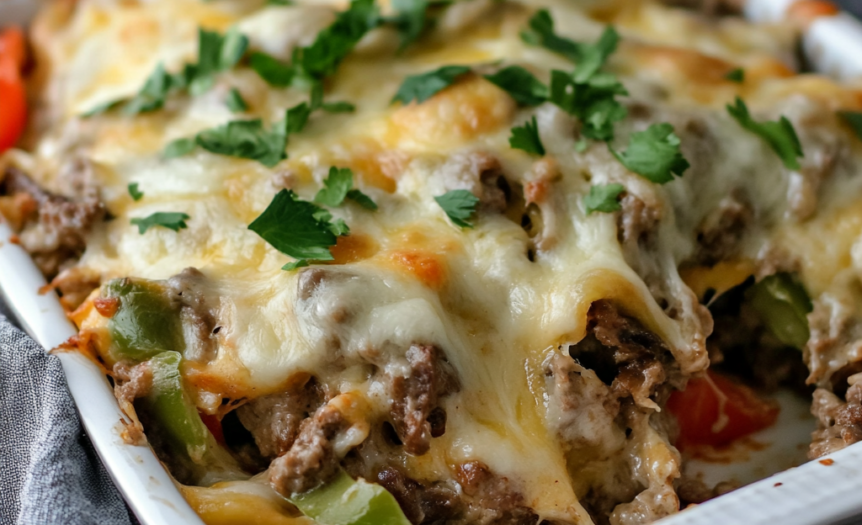
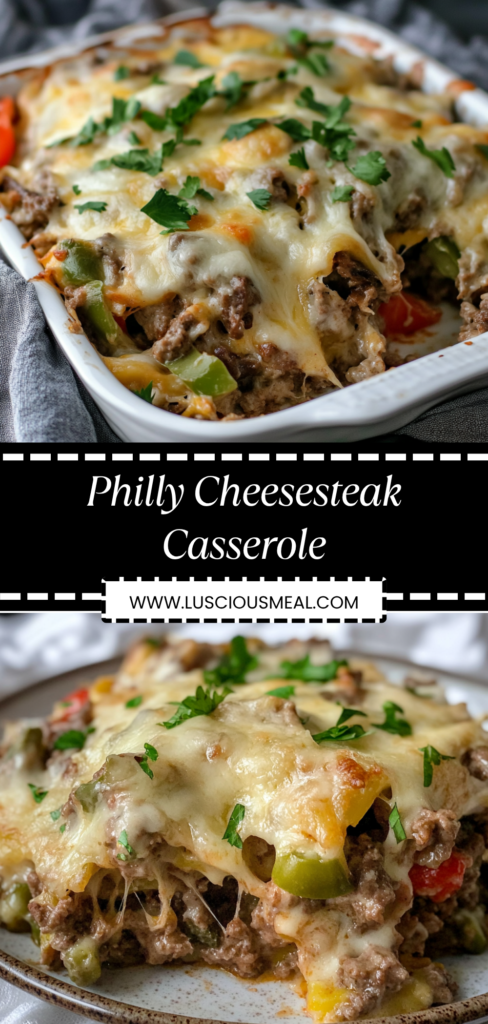
This Philly cheesesteak casserole is pure genius – all the incredible flavors of an authentic Philly cheesesteak transformed into the most comforting, family-friendly casserole that captures every delicious element you love about the iconic sandwich but in a form that’s perfect for feeding a crowd and way easier to eat. Picture tender slices of seasoned beef, perfectly caramelized onions and peppers, and layers of gooey melted cheese all baked together over a base of crispy bread that soaks up all those amazing flavors while staying satisfyingly substantial. I created this recipe when I was craving that specific Philly cheesesteak experience but wanted something I could make for the whole family without the hassle of assembling individual sandwiches, and it’s become such a requested dinner that we now have “Philly night” because this casserole somehow tastes even better than the original sandwich while being infinitely more practical for busy weeknights. The best part is how this captures that authentic Philly flavor – the perfectly seasoned beef, the sweet caramelized vegetables, and that incredible cheese blend – while being substantial enough to serve as a complete meal that leaves everyone completely satisfied.
Why This Philly Cheesesteak Casserole Recipe Actually Works
The brilliance of this casserole lies in deconstructing the classic Philly cheesesteak and rebuilding it in layers that allow each component to shine while creating a cohesive, satisfying dish. The key is properly cooking each element – the beef gets seasoned and seared to develop maximum flavor, the onions and peppers get caramelized to sweet perfection, and the cheese blend melts into every crevice to create that signature cheesesteak experience. The bread base acts like the hoagie roll, providing substance and soaking up all the delicious flavors.
What makes this technique so successful is the layered construction that ensures the bread doesn’t get soggy while still absorbing the savory beef juices and melted cheese. The vegetables are cooked until perfectly tender and sweet, which concentrates their flavors and prevents them from releasing excess moisture during baking. The cheese blend of provolone and American cheese creates that authentic Philly flavor and texture – creamy, melty, and rich without being greasy.
Key Benefits That Make This Worth Making
Perfect Family Dinner Solution – This casserole serves 6-8 people easily and provides all the satisfaction of Philly cheesesteaks without the mess and effort of making individual sandwiches. It’s perfect for busy weeknights when you want something special but manageable.
Incredible Make-Ahead Convenience – You can assemble this casserole completely ahead of time and bake it when ready, making it ideal for meal prep, entertaining, or busy schedules. The flavors actually improve as they sit together, making advance preparation a bonus.
Authentic Philly Flavor in Comfort Food Form – This captures every element that makes Philly cheesesteaks so beloved – the seasoned beef, sweet peppers and onions, and gooey cheese – but in a format that’s more filling and satisfying than the original sandwich.
Budget-Friendly Crowd Pleaser – Using ribeye or similar cuts in a casserole stretches the meat further while still delivering incredible flavor. This feeds a family generously for much less than buying individual cheesesteaks from a restaurant.
Complete Ingredients Breakdown
For the Bread Base:
1 Large Loaf Italian or French Bread (day-old preferred) Choose a sturdy bread with good crust and dense crumb that can hold up to the meat juices and cheese without becoming mushy. Day-old bread is actually better than fresh because it’s slightly drier and will absorb flavors without falling apart. The loaf should be about 12-16 inches long and 4-5 inches wide.
3 Tablespoons Olive Oil Use regular olive oil rather than extra virgin since you’ll be using it to brush the bread for browning. The oil helps the bread develop a golden, crispy exterior while preventing it from drying out during baking.
2 Garlic Cloves (minced) Fresh garlic adds aromatic depth to the bread base. Mix it with the olive oil to create a garlic oil that infuses the bread with flavor. The garlic should be firm and pungent, minced finely so it distributes evenly.
For the Philly Cheesesteak Filling:
2 Pounds Ribeye Steak or Sirloin (sliced thin) Ribeye is the traditional choice for authentic Philly cheesesteaks because of its marbling and flavor, but sirloin works well too and is more budget-friendly. Ask your butcher to slice it thin (about ⅛ inch), or freeze the steak for 30 minutes to make slicing easier. The meat should be bright red with good marbling.
2 Large Yellow Onions (sliced) Yellow onions become sweet and caramelized when cooked slowly, which is essential for authentic Philly flavor. Slice them into half-moons about ¼ inch thick so they cook evenly. The onions should be firm and pungent when raw, with no soft spots or sprouting.
2 Large Bell Peppers (red and green, sliced) Use a combination of red and green bell peppers for the best flavor and visual appeal. Red peppers are sweeter while green peppers add slight bitterness that balances the dish. Slice them into strips about ¼ inch wide, removing all seeds and white ribs.
3 Tablespoons Vegetable Oil (divided) Use a neutral oil with high smoke point for cooking the vegetables and meat. You’ll need to cook in batches to avoid overcrowding, so having enough oil is important for proper browning and caramelization.
2 Teaspoons Worcestershire Sauce Worcestershire adds umami depth and complexity that enhances the beef flavor. Use a good quality brand like Lea & Perrins for the best flavor. This adds that savory depth that makes the meat taste more developed and restaurant-like.
1 Teaspoon Garlic Powder Garlic powder distributes more evenly than fresh garlic when seasoning the meat and won’t burn during the high-heat cooking. It should smell strongly of garlic and be free of lumps or caking.
1 Teaspoon Onion Powder Onion powder adds savory depth that complements the fresh onions while providing more even distribution throughout the meat. Like garlic powder, it should smell strongly aromatic and have a smooth texture.
1 Teaspoon Salt Use kosher salt or fine sea salt for even distribution and the best flavor. The salt is crucial for seasoning the meat and vegetables properly – don’t be afraid to use enough to bring out all the flavors.
½ Teaspoon Black Pepper Freshly ground black pepper adds warmth and complexity. Use enough to provide noticeable pepper flavor that enhances the meat without overpowering the other elements.
For the Cheese Layer:
8 Slices Provolone Cheese Provolone is one of the traditional Philly cheesesteak cheeses, providing sharp, tangy flavor and excellent melting properties. Choose aged provolone for more flavor, or mild if you prefer less intensity. The cheese should be fresh and smell clean and nutty.
8 Slices American Cheese American cheese might not be gourmet, but it’s traditional for Philly cheesesteaks and melts perfectly to create that creamy, gooey texture everyone expects. Use good quality American cheese, not processed cheese food, for the best flavor and melting.
1 Cup Shredded Mozzarella Cheese Mozzarella adds extra meltiness and helps bind everything together while providing mild flavor that doesn’t compete with the other cheeses. Use whole milk mozzarella for the best flavor and melting properties.
For the Finishing Touches:
2 Tablespoons Fresh Parsley (chopped) Fresh parsley adds color and bright flavor that cuts through the richness of the meat and cheese. Choose flat-leaf parsley for the best flavor, and make sure it’s fresh and bright green with no wilting or yellowing.
Optional Additions:
Sliced Mushrooms Sautéed mushrooms are a popular Philly addition that adds earthy flavor and meaty texture. Use button or cremini mushrooms, sliced and cooked until golden brown and tender.
Hot Pepper Rings Pickled hot peppers add tangy heat that cuts through the richness. Use them sparingly as a garnish or mix them into the vegetables for those who like heat.
Italian Seasoning A sprinkle of Italian seasoning over the cheese adds aromatic herb flavor that complements the other ingredients. Use a good quality blend or make your own with basil, oregano, and thyme.
Step-by-Step Instructions
1. Preheat your oven to 375°F and grease a 9×13 inch baking dish with butter or cooking spray. This prevents sticking and makes serving easier. Choose a dish that’s at least 2 inches deep to accommodate all the layers.
2. Prepare the bread base by cutting the loaf into 1-inch thick slices, then arranging them in a single layer in the prepared baking dish. You may need to cut some pieces to fit. Mix olive oil and minced garlic, then brush this mixture over all the bread slices.
3. Bake the bread for 10-12 minutes until lightly golden and slightly crispy on top. This partial baking prevents the bread from becoming soggy while still allowing it to absorb the delicious flavors from the meat and cheese.
4. While the bread bakes, heat 1 tablespoon of vegetable oil in a large skillet over medium-high heat. Add the sliced onions and cook, stirring occasionally, for 8-10 minutes until they start to caramelize and turn golden brown. The onions should be soft and sweet.
5. Add the sliced bell peppers to the onions and continue cooking for 5-7 minutes until the peppers are tender and slightly caramelized. Season with salt and pepper, then transfer the vegetable mixture to a plate and set aside.
6. In the same skillet, heat the remaining 2 tablespoons of oil over high heat. Season the sliced steak with Worcestershire sauce, garlic powder, onion powder, salt, and pepper, tossing to coat evenly.
7. Cook the seasoned steak in batches to avoid overcrowding, stirring frequently, for 2-3 minutes per batch until the meat is browned and cooked through. Don’t overcook – the meat should be tender and juicy. Transfer cooked meat to a plate.
8. Layer the cooked vegetables evenly over the toasted bread in the baking dish, then top with the cooked steak, distributing everything as evenly as possible for consistent flavor in every serving.
9. Layer the cheeses over the meat and vegetables, starting with the provolone slices, then the American cheese, and finally sprinkling the mozzarella over everything. The cheese should cover the entire surface for even melting.
10. Cover the dish tightly with aluminum foil and bake for 20 minutes, then remove the foil and continue baking for 10-15 minutes until the cheese is melted, bubbly, and lightly golden on top.
11. Let the casserole rest for 5-10 minutes before serving to allow the cheese to set slightly and make cutting easier. This brief resting period also helps all the flavors meld together.
12. Garnish with fresh chopped parsley and serve hot. Cut into squares and serve with a spatula, making sure each serving gets some of every layer for the complete Philly cheesesteak experience.
Pro Tips & Variations
Meat Preparation: For the easiest slicing, freeze the steak for 30 minutes before cutting, or ask your butcher to slice it for you. The thinner the better – aim for ⅛ inch or less. If you can’t get it thin enough, you can pound it lightly between plastic wrap to flatten.
Vegetable Technique: Take your time caramelizing the onions and peppers – this step is crucial for authentic Philly flavor. They should be golden brown and sweet, not just softened. If they start to brown too quickly, reduce the heat and cook longer.
Make-Ahead Strategy: You can assemble this casserole completely up to 24 hours ahead and refrigerate, then bake when ready. If baking from cold, add 10-15 minutes to the covered baking time to ensure it’s heated through.
Cheese Variations: While provolone and American are traditional, you can experiment with sharp cheddar, Swiss, or even a cheese sauce made with Velveeta for ultra-creamy results. The key is using cheeses that melt well and complement the beef.
Troubleshooting Common Issues
“My bread is getting soggy” – Make sure to toast the bread first and don’t skip this step. Also, ensure your vegetables are properly cooked and not releasing excess moisture. If the bread seems very soft, use day-old bread which is drier and holds up better.
“The meat is tough” – This usually means the steak wasn’t sliced thin enough or was overcooked. Slice against the grain as thinly as possible, and don’t cook it too long – just until browned and cooked through.
“The cheese isn’t melting evenly” – Make sure all your cheese is at room temperature before adding, and distribute it evenly over the entire surface. If using thick slices, tear them into smaller pieces for more even coverage and melting.
“Everything seems bland” – Don’t skimp on seasoning the meat and vegetables at each stage. The Worcestershire sauce, garlic powder, and proper salt and pepper are crucial for building flavor. Also make sure to caramelize the vegetables properly for maximum sweetness.
“It’s too greasy” – This can happen if you use too much oil or very fatty meat. Drain excess fat from the skillet after cooking the meat, and use just enough oil to prevent sticking. Good quality cheese also makes a difference – avoid very processed cheeses that can be oily.