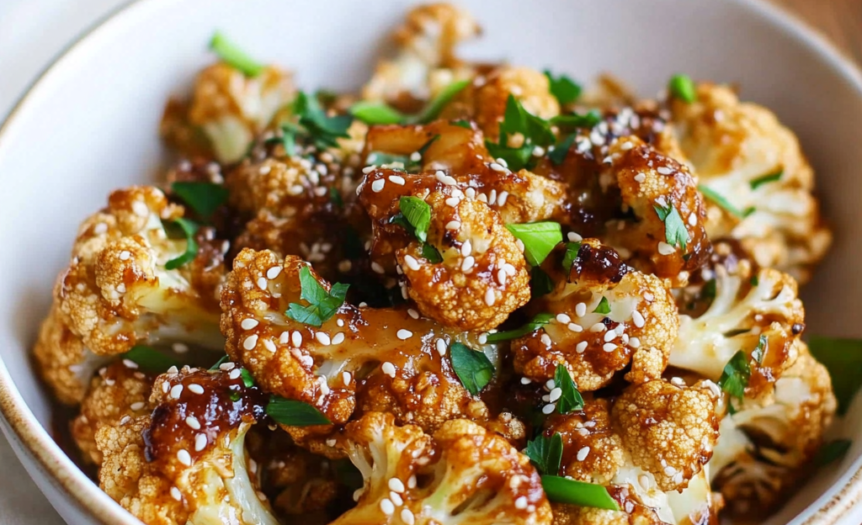
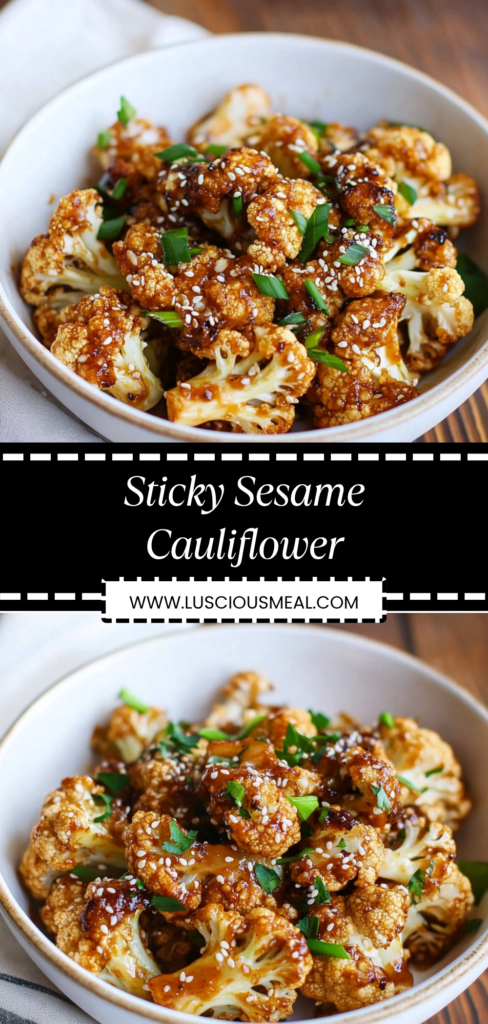
This sticky sesame cauliflower is the kind of dish that converts even the most dedicated vegetable skeptics into believers – crispy, golden cauliflower florets coated in a glossy, sweet and savory sesame sauce that’s so addictive you’ll find yourself sneaking pieces straight from the pan. What makes this recipe absolutely magical is how the cauliflower gets perfectly crispy on the outside while staying tender inside, then gets tossed in a sauce that’s the perfect balance of sweet honey, nutty sesame, tangy rice vinegar, and just enough heat to keep things interesting. I started making this when I was craving Chinese takeout but wanted something healthier and more satisfying, and it’s become such a favorite that I now make double batches because everyone always wants seconds (and thirds). The best part is how restaurant-quality this looks and tastes, but it comes together in about 30 minutes using simple ingredients you probably already have.
Why This Sticky Sesame Cauliflower Recipe Actually Works
The secret to incredible sticky sesame cauliflower lies in the two-step coating process that creates maximum crispiness, followed by a sauce that’s perfectly balanced to complement rather than overpower the cauliflower’s natural flavor. The cauliflower gets coated in a seasoned flour mixture, then dipped in a light batter that creates an incredibly crispy shell when baked at high heat. This crispy exterior provides the perfect surface for the sticky sauce to cling to, creating those irresistible glossy, caramelized edges.
What makes the sauce so special is the combination of sweet, salty, tangy, and nutty flavors that create complexity in every bite. The honey provides natural sweetness that caramelizes slightly when heated, while the soy sauce adds umami depth and the rice vinegar brings bright acidity that cuts through the richness. The sesame oil and toasted sesame seeds add that distinctive nutty flavor that makes this taste authentically Asian, while a touch of garlic and ginger provide aromatic depth that ties everything together perfectly.
Key Benefits That Make This Worth Making
Healthier Than Takeout – This satisfies all those Chinese restaurant cravings but uses baked cauliflower instead of deep-fried meat, making it naturally lighter while still being incredibly satisfying. You get all the flavors you love without the grease and with way more vegetables and nutrients.
Impressive Vegetarian Main Course – This is substantial enough to be the star of the meal, not just a side dish. The crispy texture and complex flavors make even dedicated meat-eaters happy, and it’s filling enough to serve as a main course over rice with some steamed vegetables.
Quick and Convenient – From start to finish, this takes about 30 minutes and uses simple ingredients you can find at any grocery store. No special equipment needed beyond a baking sheet and mixing bowls, making it perfect for busy weeknights when you want something special but don’t have hours to spend in the kitchen.
Perfect for Meal Prep – The cauliflower stays crispy even when reheated, and the flavors actually improve after sitting for a day. You can make a big batch on Sunday and have quick, healthy lunches or dinners ready all week long.
Complete Ingredients Breakdown
For the Cauliflower:
1 Large Head Cauliflower (about 2 pounds, cut into bite-sized florets) Choose a cauliflower head that’s firm, white (or purple if you prefer), with tightly packed florets and bright green leaves. Avoid any with brown spots, soft areas, or yellowing florets. Cut into uniform pieces about 1-2 inches so they cook evenly – pieces that are too small will get mushy, while too-large pieces won’t cook through properly.
1 Cup All-Purpose Flour (divided) You’ll use this flour in two stages – for the initial coating and for the batter. All-purpose flour gives the best texture for creating that crispy exterior. Make sure it’s fresh and doesn’t smell stale. Measure it properly by spooning into the cup and leveling off with a knife.
½ Cup Cornstarch Cornstarch is the secret ingredient that makes the coating extra crispy and light. It creates a different texture than flour alone and helps the coating stay crispy even after being sauced. Make sure your cornstarch isn’t lumpy – if it is, sift it before using.
1 Teaspoon Garlic Powder Garlic powder distributes more evenly than fresh garlic in the coating and won’t burn during the high-heat baking. It should smell strongly of garlic when you open the container – if it’s old and weak, use a bit more. Don’t substitute with garlic salt, which would make the coating too salty.
1 Teaspoon Onion Powder Like garlic powder, onion powder adds savory depth that complements the Asian flavors beautifully. It should have a strong onion aroma – if yours is old and flavorless, consider replacing it or using a bit more.
½ Teaspoon Salt This seasons the cauliflower from the inside out and helps the coating adhere better. Use fine salt like table salt or fine sea salt for even distribution throughout the flour mixture.
¼ Teaspoon Black Pepper Freshly ground black pepper is best, but pre-ground works fine. This adds subtle warmth and complexity that enhances all the other flavors without being obviously “peppery.”
¾ Cup Cold Water Cold water creates the lightest, crispiest batter. The water should be genuinely cold – you can even add a few ice cubes to keep it cold while you work. Room temperature or warm water will create a heavier, less crispy coating.
2 Tablespoons Vegetable Oil Use a neutral oil like vegetable, canola, or avocado oil. This gets mixed into the batter to help create extra crispiness. Don’t use olive oil, which has too strong a flavor and lower smoke point for this high-heat cooking method.
For the Sticky Sesame Sauce:
⅓ Cup Honey Use good quality honey for the best flavor – it’s one of the main flavors in the sauce. Clover honey is mild and sweet, while wildflower honey has more complex flavors. The honey should be liquid; if it’s crystallized, warm it gently to liquify before using. This provides the “sticky” component that makes the sauce cling so beautifully.
¼ Cup Soy Sauce (low sodium preferred) Use good quality soy sauce – it makes a noticeable difference in the final flavor. Low sodium allows you to control the salt level better. Japanese soy sauce (shoyu) is slightly sweeter and less salty than Chinese soy sauce, both work well. Tamari can substitute if you need gluten-free.
2 Tablespoons Rice Vinegar Rice vinegar has a milder, slightly sweet acidity that’s perfect for Asian-inspired dishes. Don’t substitute with white vinegar, which is too harsh, or balsamic vinegar, which would change the flavor profile completely. Seasoned rice vinegar (which contains added sugar and salt) can work but reduce the honey slightly.
1 Tablespoon Sesame Oil Toasted sesame oil is crucial here – it provides that distinctive nutty, rich flavor that makes this taste authentically Asian. A little goes a long way, so don’t use more than called for or it can become overpowering. Store sesame oil in the refrigerator after opening to prevent it from going rancid.
2 Garlic Cloves (minced) Fresh garlic is essential in the sauce for aromatic depth. Mince it finely so it distributes evenly and cooks quickly when you heat the sauce. The garlic should be firm and pungent – avoid any that’s soft, sprouting, or dried out.
1-Inch Piece Fresh Ginger (peeled and minced) Fresh ginger adds warmth and complexity that ground ginger can’t match. Choose ginger that’s firm and smooth-skinned, not wrinkled or soft. Peel it with the edge of a spoon and mince it very finely so you don’t get chunks in your smooth sauce.
2 Teaspoons Cornstarch This thickens the sauce and helps it cling to the cauliflower beautifully. Make sure to whisk it completely smooth with a bit of the liquid ingredients to prevent lumps. The cornstarch creates that glossy, restaurant-style appearance.
1-2 Teaspoons Red Pepper Flakes (optional) Add these if you like heat – start with 1 teaspoon and add more to taste. The heat should be warming rather than overwhelming, allowing you to taste all the other beautiful flavors. You can also add them as garnish so people can control their own heat level.
For Garnish:
2 Tablespoons Sesame Seeds (toasted) Toasted sesame seeds add crunch and intensify the sesame flavor beautifully. You can buy them pre-toasted or toast your own in a dry skillet for 2-3 minutes until golden and fragrant. Both white and black sesame seeds work, or use a mixture for visual interest.
2 Green Onions (sliced) Use both the white and green parts, sliced thinly on the diagonal for the most attractive presentation. Green onions add fresh flavor and beautiful color that brightens the rich, dark sauce. Make sure they’re fresh and crisp, not wilted or slimy.
Fresh Cilantro (chopped, optional) Fresh cilantro adds brightness and color, but it’s completely optional since not everyone loves cilantro. If you’re serving this to a group, you can offer it on the side so people can add it themselves.
Step-by-Step Instructions
1. Preheat your oven to 450°F and line a large baking sheet with parchment paper. The high heat is crucial for creating crispy cauliflower, and parchment paper prevents sticking while making cleanup easier. If your baking sheet is small, use two sheets to avoid overcrowding.
2. Cut the cauliflower into uniform bite-sized florets, about 1-2 inches each. Try to make them roughly the same size so they cook evenly. Rinse them briefly and pat completely dry with paper towels – excess moisture will prevent proper crisping.
3. Set up your coating station with three shallow dishes: one with ½ cup flour mixed with cornstarch, garlic powder, onion powder, salt, and pepper; one with the remaining ½ cup flour; and one with the cold water and oil whisked together to create a smooth batter.
4. Working in batches, first toss the cauliflower florets in the seasoned flour mixture, shaking off excess. Then dip each piece in the plain flour, followed by the cold water batter, making sure each piece is well coated. The double coating creates maximum crispiness.
5. Arrange the coated cauliflower on the prepared baking sheet in a single layer, making sure pieces don’t touch each other. Overcrowding will cause steaming instead of crisping. If needed, use two baking sheets or work in batches.
6. Bake for 15-20 minutes, flipping once halfway through, until the cauliflower is golden brown and crispy on all sides. The coating should be set and crunchy, and the cauliflower should be tender when pierced with a fork.
7. While the cauliflower bakes, make the sauce by whisking together honey, soy sauce, rice vinegar, sesame oil, minced garlic, ginger, cornstarch, and red pepper flakes (if using) in a small saucepan. Whisk until completely smooth with no lumps of cornstarch.
8. Heat the sauce over medium heat, whisking constantly, until it comes to a gentle simmer and thickens enough to coat a spoon, about 2-3 minutes. The sauce should be glossy and thick enough to cling to the cauliflower but not so thick it becomes gluey.
9. Remove the crispy cauliflower from the oven and immediately transfer to a large mixing bowl. Pour the hot sauce over the cauliflower and toss gently but thoroughly to coat every piece. The heat from both the cauliflower and sauce helps the coating process.
10. Transfer to a serving platter and immediately garnish with toasted sesame seeds, sliced green onions, and fresh cilantro if using. Serve immediately while the cauliflower is still crispy and the sauce is warm and glossy.
Pro Tips & Variations
Crispiness Secrets: The key to maximum crispiness is making sure the cauliflower is completely dry before coating, using cold batter, and not overcrowding the baking sheet. If you want extra crispiness, you can spray the coated cauliflower lightly with cooking spray before baking.
Sauce Consistency: The sauce should be thick enough to cling to the cauliflower but not so thick it becomes gummy. If it’s too thin, simmer it a bit longer; if too thick, whisk in a tablespoon of water. The sauce will thicken slightly as it cools.
Flavor Variations: For spicier heat, add sriracha or gochujang to the sauce. For more sweetness, add a tablespoon of brown sugar. For citrus brightness, add a squeeze of fresh lime juice at the end. You can also substitute maple syrup for honey for a different flavor profile.
Make-Ahead Tips: You can prep the cauliflower coating and sauce separately up to a day ahead. Store the coated (unbaked) cauliflower in the refrigerator and the sauce in a covered container. When ready to serve, bake the cauliflower and warm the sauce before combining.
Troubleshooting Common Issues
“My coating isn’t crispy enough” – Make sure your oven is fully preheated to 450°F, don’t overcrowd the baking sheet, and ensure the cauliflower is completely dry before coating. Also, make sure you’re using cold water in the batter – warm water creates a heavier, less crispy coating.
“The sauce is too thick/thin” – Sauce consistency can vary based on cooking time and heat level. If too thick, whisk in water a tablespoon at a time. If too thin, simmer longer or whisk in a bit more cornstarch mixed with cold water. The sauce should coat a spoon but still be pourable.
“It’s too salty/sweet” – Taste the sauce before adding it to the cauliflower and adjust as needed. Different brands of soy sauce vary in saltiness, and different honeys vary in sweetness. Add a bit more honey for sweetness or a splash of rice vinegar to balance excessive saltiness or sweetness.
“The cauliflower gets soggy after saucing” – This happens if the sauce is too thin or if you let it sit too long before serving. Make sure the sauce is properly thickened and serve immediately after tossing. If making ahead, store the crispy cauliflower and sauce separately and combine just before serving.
“The sauce won’t stick to the cauliflower” – Make sure both the cauliflower and sauce are hot when you combine them, and toss gently but thoroughly. The cornstarch in the sauce helps it cling, but if your sauce is too thin, it won’t adhere properly. Thicken it slightly by simmering longer.