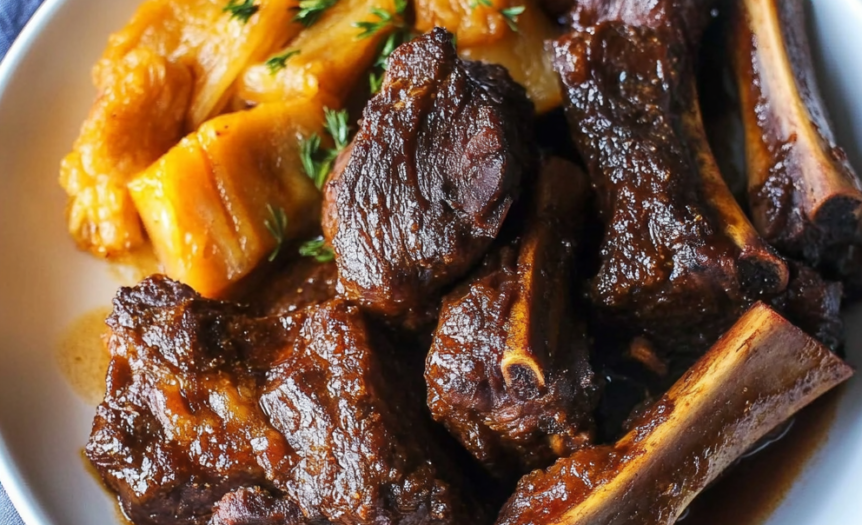
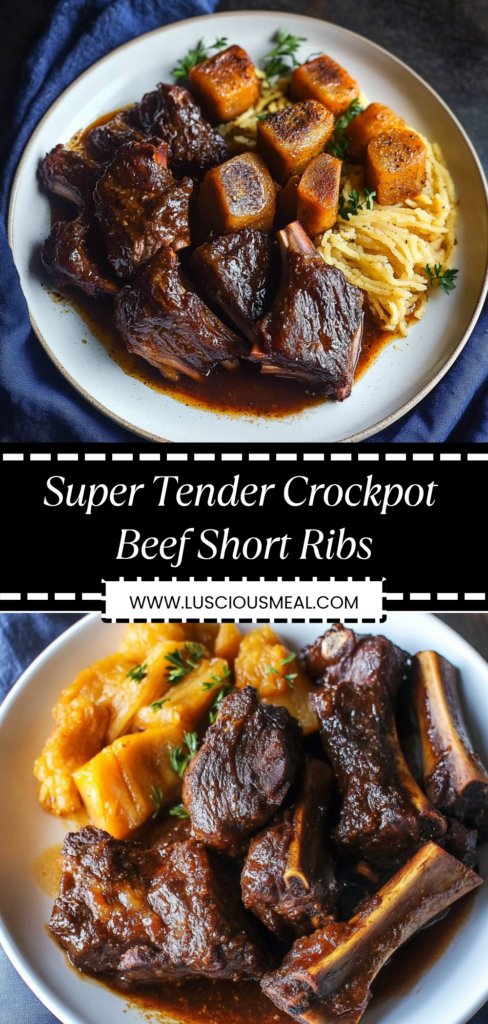
These super tender crockpot beef short ribs are the ultimate comfort food triumph – incredibly rich, fall-off-the-bone tender meat that’s been slow-cooked to absolute perfection in a deeply flavorful sauce that transforms tough short ribs into the most luxurious, melt-in-your-mouth experience you can imagine. What makes this recipe absolutely extraordinary is how the long, slow cooking process breaks down all the connective tissue and transforms it into silky, gelatinous richness while the meat becomes so tender you can cut it with a fork, all while developing layers of complex flavor that taste like you’ve been cooking all day when really the crockpot did all the work. I started making these when I wanted to create restaurant-quality short ribs at home without the intimidation factor of braising in the oven, and they’ve become such a family treasure that we save them for special occasions because they make any dinner feel like a celebration. The best part is how the house fills with the most incredible aroma while they cook, and then you’re rewarded with meat so tender and flavorful that everyone at the table goes completely silent with appreciation on that first bite.
Why This Crockpot Beef Short Ribs Recipe Actually Works
The magic of perfect short ribs lies in understanding how slow, moist heat transforms tough, collagen-rich meat into something incredibly tender and luxurious. Short ribs are naturally tough because they come from a well-exercised part of the cow, but that same connective tissue that makes them tough also makes them incredibly flavorful when cooked properly. The low, consistent heat of the crockpot breaks down the collagen into gelatin, which creates that signature rich, silky texture that makes short ribs so special.
What elevates this recipe from good to extraordinary is the technique of building layers of flavor through proper browning and aromatics before the slow cooking begins. Searing the short ribs develops deep, caramelized flavors through the Maillard reaction, while the aromatic vegetables and herbs create a complex flavor base that infuses the meat during the long cooking process. The key is balancing the liquid levels to create steam and moisture without diluting the concentrated flavors, resulting in meat that’s incredibly tender while the sauce reduces to a rich, glossy perfection.
Key Benefits That Make This Worth Making
Restaurant-Quality Results with Minimal Effort – These short ribs taste like something from an upscale steakhouse but require minimal hands-on time. The crockpot does all the hard work while you go about your day, yet the results are sophisticated enough for special occasions.
Perfect for Special Occasions and Entertaining – This dish feels luxurious and impressive enough for holiday dinners, anniversary meals, or any time you want to create something memorable. The tender meat and rich sauce make guests feel truly pampered.
Incredible Make-Ahead Convenience – Short ribs actually improve in flavor when made ahead and reheated, making them perfect for stress-free entertaining. You can cook them completely the day before and simply reheat when ready to serve.
Budget-Friendly Luxury – While short ribs can seem expensive, they’re often more affordable than premium steaks and the slow cooking method transforms them into something that feels incredibly luxurious and satisfying.
Complete Ingredients Breakdown
For the Beef Short Ribs:
4-5 Pounds Beef Short Ribs (bone-in, cut into individual ribs) Choose meaty short ribs with good marbling throughout. Each rib should be about 2-3 inches thick with a good amount of meat attached to the bone. The meat should be bright red with white marbling, not gray or brown. Bone-in ribs have more flavor than boneless, and the bones add gelatin that creates incredible richness in the sauce.
2 Tablespoons Vegetable Oil Use a neutral oil with high smoke point for browning the ribs. You need enough oil to prevent sticking and promote good browning, which is crucial for developing deep flavor. Vegetable, canola, or avocado oil all work well for this high-heat searing.
2 Teaspoons Salt Use kosher salt or coarse sea salt for the best flavor and texture. The salt should be applied generously to draw out moisture and help create a beautiful crust during browning. Don’t be shy with salt – short ribs are a large cut that needs adequate seasoning.
1 Teaspoon Black Pepper Freshly ground black pepper adds warmth and complexity. Use enough to provide noticeable pepper flavor that will complement the rich beef and wine flavors. Coarsely ground pepper creates nice texture and visual appeal.
For the Aromatic Base:
1 Large Yellow Onion (diced) Yellow onions become sweet and jammy during the long cooking process, adding natural sweetness and depth to the sauce. Dice them into uniform pieces about ½ inch so they break down properly during cooking. The onion should be firm and pungent when raw.
3 Large Carrots (cut into 2-inch pieces) Carrots add natural sweetness and earthy flavor while providing texture contrast in the finished dish. Cut them into substantial pieces that won’t completely break down during the long cooking time. Choose firm, bright orange carrots without soft spots.
3 Celery Stalks (cut into 2-inch pieces) Celery adds aromatic depth and slight bitterness that balances the rich meat and sweet vegetables. Use the inner stalks which are more tender, and cut them into pieces similar in size to the carrots for even cooking.
6 Garlic Cloves (smashed) Fresh garlic adds pungent depth that mellows into sweet, nutty flavor during the long cooking process. Smash the cloves with the flat side of a knife to release their oils while keeping them large enough not to burn or become bitter.
For the Braising Liquid:
1 Cup Red Wine (dry, like Cabernet Sauvignon or Merlot) Good quality red wine adds acidity, tannins, and complex flavors that complement the rich beef beautifully. Use a wine you’d enjoy drinking – if you wouldn’t drink it, don’t cook with it. The alcohol cooks off, leaving behind concentrated wine flavors that enhance the meat.
2 Cups Beef Broth Use high-quality beef broth or stock for the best flavor foundation. Low-sodium is preferable so you can control the salt level. The broth should taste rich and beefy on its own – if it’s weak or artificial tasting, it won’t enhance the dish properly.
2 Tablespoons Tomato Paste Tomato paste adds umami depth and helps thicken the sauce while contributing rich, concentrated tomato flavor. Look for tomato paste in tubes for convenience and freshness, or use canned and store leftovers in the freezer in tablespoon portions.
2 Tablespoons Worcestershire Sauce Worcestershire adds complex umami flavors with its blend of anchovies, molasses, and spices. Use a good quality brand like Lea & Perrins for the most authentic flavor. This ingredient adds incredible depth that makes the sauce taste more developed.
1 Tablespoon Soy Sauce Soy sauce provides additional umami and saltiness that enhances the beef flavor without making the dish taste Asian. Use regular soy sauce, not low-sodium, as you want the full flavor impact.
For the Herb Bundle:
3 Fresh Thyme Sprigs Fresh thyme adds earthy, slightly floral notes that complement beef beautifully. The sprigs should be fresh and aromatic with no brown or wilted leaves. Tie them with kitchen twine or bundle them for easy removal after cooking.
2 Fresh Rosemary Sprigs Rosemary adds pine-like, aromatic intensity that pairs perfectly with rich beef. Use fresh rosemary sprigs rather than chopped leaves, which can become overpowering during the long cooking time. The needles should be bright green and very fragrant.
2 Bay Leaves Bay leaves add subtle complexity and depth to the braising liquid. Use fresh bay leaves if available, but dried work fine too. The leaves should be whole and aromatic – crush them slightly between your fingers to release their oils.
For the Finishing Sauce:
2 Tablespoons Cold Butter Cold butter whisked into the finished sauce adds glossy richness and helps create a velvety texture. Use high-quality unsalted butter straight from the refrigerator. This technique, called mounting, creates restaurant-quality sauce texture.
1 Tablespoon Fresh Parsley (chopped) Fresh parsley adds bright color and fresh flavor that cuts through the richness of the finished dish. Choose flat-leaf parsley for the best flavor, and chop it just before serving to maintain vibrant color and maximum freshness.
Optional Vegetables for Serving:
2 Pounds Baby Potatoes or Fingerlings Small potatoes added during the last 2 hours of cooking become incredibly tender and flavorful as they absorb the rich braising liquid. Choose potatoes that are uniform in size for even cooking.
1 Pound Baby Carrots or Parsnips Additional root vegetables can be added during the last hour of cooking for a complete one-pot meal. They should be cut into similar sizes for even cooking and attractive presentation.
Fresh Herbs for Garnish Extra fresh thyme or rosemary sprigs make beautiful garnish and add aromatic appeal to the finished dish. Choose the prettiest sprigs and add them just before serving.
Step-by-Step Instructions
1. Remove the short ribs from the refrigerator 30 minutes before cooking to bring them to room temperature for even browning. Pat them completely dry with paper towels, then season generously on all sides with salt and pepper. Room temperature meat browns more evenly and develops better flavor.
2. Heat vegetable oil in a large skillet over medium-high heat until it shimmers and a drop of water sizzles immediately. You want the oil hot enough to sear properly but not smoking. If you don’t have a large enough skillet, work in batches rather than overcrowding.
3. Brown the short ribs on all sides, about 3-4 minutes per side, until they develop a deep, golden-brown crust. Don’t move them too quickly – let each side develop proper caramelization before turning. This step is crucial for flavor development, so don’t rush it.
4. Transfer the browned ribs to your crockpot, arranging them in a single layer if possible. If they need to overlap slightly, that’s okay, but try to give each rib some space for even cooking.
5. In the same skillet with the remaining oil and browned bits, add the diced onion and cook for 3-4 minutes until it starts to soften and picks up the caramelized flavors from the pan. This deglazing step captures all those delicious browned bits.
6. Add the tomato paste to the onions and cook for 1-2 minutes, stirring constantly, until it darkens slightly and becomes very fragrant. This concentrates the tomato flavor and adds depth to the braising liquid.
7. Pour in the red wine and scrape up any remaining browned bits from the bottom of the pan. Let the wine simmer for 2-3 minutes to cook off some of the alcohol and concentrate the flavors slightly.
8. Add the beef broth, Worcestershire sauce, and soy sauce to the skillet, stirring to combine. Bring this mixture to a simmer, then pour it over the short ribs in the crockpot.
9. Add the carrots, celery, and smashed garlic cloves around the ribs. Tie the thyme, rosemary, and bay leaves together with kitchen twine to create an herb bundle, then nestle it into the liquid where it can infuse maximum flavor.
10. Cover the crockpot and cook on LOW for 7-8 hours, until the meat is fall-off-the-bone tender and can be easily shredded with a fork. Resist the temptation to lift the lid frequently, as this releases heat and extends cooking time.
11. About 1 hour before the ribs are done, carefully remove the herb bundle and discard it. If adding potatoes or other vegetables, add them now so they have time to cook through and absorb the flavors.
12. When the ribs are done, carefully transfer them to a serving platter and tent with foil to keep warm. Strain the cooking liquid through a fine-mesh sieve into a saucepan, pressing on the solids to extract maximum flavor.
13. Simmer the strained liquid over medium-high heat for 8-10 minutes until it reduces by about half and develops a glossy, sauce-like consistency. Taste and adjust seasoning as needed.
14. Remove the reduced sauce from heat and whisk in the cold butter one piece at a time until the sauce is glossy and velvety. This creates that restaurant-quality finish that makes the dish feel truly special.
15. Pour the finished sauce over the short ribs and garnish with fresh chopped parsley. Serve immediately while everything is hot and the sauce is perfectly glossy.
Pro Tips & Variations
Browning Success: Don’t overcrowd the pan when browning the ribs, and make sure the oil is hot enough before adding the meat. Good browning is crucial for flavor development, so take your time with this step. If the ribs are releasing a lot of moisture, pat them dry again before browning.
Wine Selection: Use a red wine with good body and flavor – something you’d enjoy drinking. Cabernet Sauvignon, Merlot, or Côtes du Rhône all work beautifully. The wine reduces significantly, so its flavors concentrate, making quality important.
Make-Ahead Magic: These ribs are actually better the next day. Cool them completely, then refrigerate overnight. The fat will solidify on top, making it easy to remove for a less greasy dish. Reheat gently in a 325°F oven until warmed through.
Serving Suggestions: These ribs are incredible over creamy mashed potatoes, polenta, or egg noodles. The rich sauce is perfect for soaking up with crusty bread, and a simple green salad helps cut through the richness.
Troubleshooting Common Issues
“My ribs aren’t tender enough” – Short ribs need long, slow cooking to break down properly. If they’re still tough after 8 hours, continue cooking in 30-minute increments until fork-tender. Different cuts and sizes can vary in cooking time significantly.
“The sauce is too thin” – Remove the ribs and reduce the cooking liquid on the stovetop until it reaches your desired consistency. You can also whisk in a slurry of cornstarch and cold water if you prefer a thicker sauce.
“There’s too much fat in the sauce” – Short ribs release a lot of fat during cooking. Skim it off the surface with a ladle, or refrigerate the dish overnight so the fat solidifies and can be easily removed before reheating.
“The flavor seems flat” – This usually means not enough browning initially or insufficient seasoning. Make sure to brown the ribs really well, and don’t be afraid to season generously with salt and pepper. The reduced sauce at the end should taste rich and concentrated.
“My vegetables are mushy” – Root vegetables can break down during the long cooking time. Add them during the last 2-3 hours of cooking for better texture, or cook them separately and add them at the end for serving.