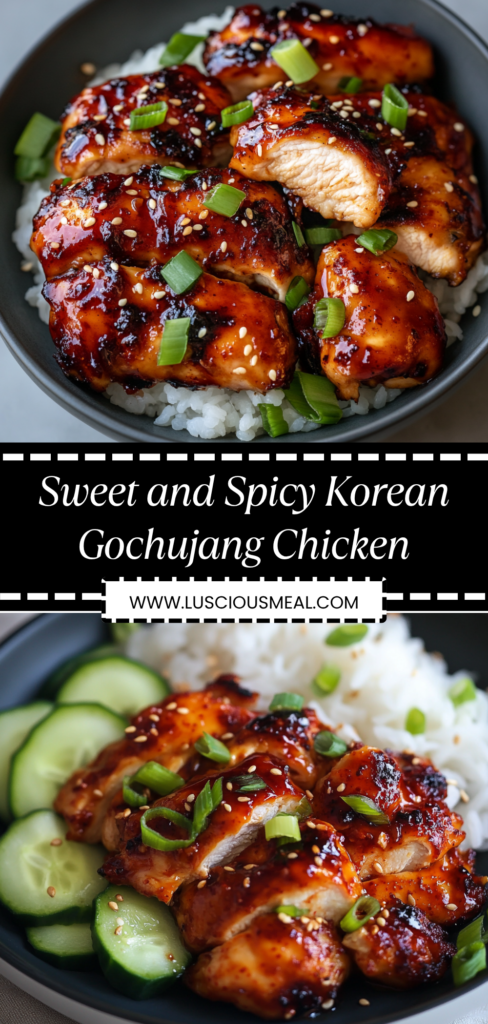
This is the chicken that converts skeptics into Korean food devotees—tender pieces glazed in a crimson sauce that delivers waves of flavor with each bite. First comes sweetness, then a slow-building heat that makes you reach for another piece, followed by that deep, fermented complexity only gochujang can provide. It’s the perfect introduction to Korean cooking, transforming a simple weeknight dinner into something that rivals your favorite Korean restaurant’s offerings.
Ingredients
For the Chicken:
- 2½ pounds chicken thighs (bone-in, skin-on for best results)
- 2 tablespoons gochugaru (Korean chili flakes)
- 1 tablespoon kosher salt
- 1 teaspoon black pepper
- 2 tablespoons vegetable oil
For the Marinade:
- 3 tablespoons gochujang (Korean chili paste)
- 2 tablespoons soy sauce
- 1 tablespoon rice wine or mirin
- 2 teaspoons sesame oil
- 4 cloves garlic, minced
- 1 tablespoon fresh ginger, grated
For the Glaze:
- ¼ cup gochujang
- 3 tablespoons honey
- 2 tablespoons brown sugar
- 2 tablespoons soy sauce
- 1 tablespoon rice vinegar
- 1 tablespoon sesame oil
- 2 cloves garlic, minced
- 1 teaspoon fresh ginger, grated
- 1 tablespoon water
- 1 teaspoon cornstarch
For Garnish:
- 2 green onions, sliced thin
- 1 tablespoon sesame seeds, toasted
- 1 fresh red chili, sliced (optional)
- Cilantro leaves (optional)
For Serving:
- Steamed white rice
- Kimchi
- Pickled radishes
- Lettuce leaves for wrapping
Instructions
- Prepare the Chicken: Pat chicken completely dry with paper towels. Score the skin in a crosshatch pattern, cutting through skin but not into meat. This allows marinade penetration and creates crispy edges. Season all over with gochugaru, salt, and pepper.
- Create the Marinade: In a large bowl, whisk together gochujang, soy sauce, rice wine, sesame oil, garlic, and ginger until smooth. Add seasoned chicken, turning to coat completely. Cover and refrigerate for at least 2 hours, preferably overnight.
- Bring to Temperature: Remove chicken from refrigerator 30 minutes before cooking. This ensures even cooking. Preheat oven to 425°F.
- Initial Sear: Heat vegetable oil in a large oven-safe skillet over medium-high heat. Remove chicken from marinade (reserve marinade), and place skin-side down. Sear for 5-6 minutes without moving until skin is golden and crispy.
- Flip and Transfer: Turn chicken skin-side up. Pour reserved marinade around (not over) chicken. Transfer skillet to oven and roast for 25-30 minutes until internal temperature reaches 165°F.
- Make the Glaze: While chicken roasts, combine all glaze ingredients except water and cornstarch in a small saucepan. Bring to a simmer over medium heat. Mix cornstarch and water to create slurry, whisk into simmering glaze. Cook 2-3 minutes until thickened and glossy.
- Rest and Baste: Remove chicken from oven and let rest 5 minutes. Transfer to serving platter. Brush generously with half the glaze, allowing it to pool in the scored cuts.
- Final Touches: Sprinkle with green onions and toasted sesame seeds. Serve with remaining glaze on the side for extra coating.
Recipe Notes
- Prep Time: 20 minutes (plus marinating time)
- Marinating Time: 2-24 hours
- Cook Time: 40 minutes
- Total Active Time: 1 hour
- Servings: 4-6
- Calories: 380 per serving
- Spice Level: Medium-hot (adjustable)
Understanding Gochujang: The Soul of Korean Cooking
Gochujang isn’t just another hot sauce—it’s a fermented masterpiece that took centuries to perfect. This thick, crimson paste combines Korean chili peppers, glutinous rice, fermented soybeans, and salt, then ages in earthenware pots called onggi. The result transcends simple heat, delivering umami depth, subtle sweetness, and complex fermentation notes that no substitute can match.
The fermentation process creates compounds that trigger multiple taste receptors simultaneously. Where Sriracha hits you with immediate vinegar-forward heat, gochujang builds slowly, revealing layers of flavor as it warms on your palate. The glutinous rice adds body and natural sweetness that balances the chili heat, while fermented soybeans contribute that mysterious savory quality that makes Korean food so addictive.
Quality matters enormously. Look for gochujang in Korean markets or the international aisle, checking the ingredient list—the best versions list chili pepper powder, rice, fermented soybean powder, and salt as primary ingredients. Avoid versions with corn syrup as the first ingredient. The paste should be thick enough to coat a spoon, with a deep red-brown color and complex aroma.
The Art of Korean Marinading
Korean marinades work differently than Western versions. Instead of just flavoring the surface, they’re designed to penetrate deeply and begin breaking down proteins. The combination of gochujang’s enzymes, soy sauce’s salt, and rice wine’s alcohol creates a three-pronged approach to tenderization.
That scoring technique isn’t just for show. Each cut creates channels for marinade penetration while increasing surface area for caramelization. The crosshatch pattern also helps render fat from the skin, resulting in crispier texture. Make cuts about ¼-inch apart and just through the skin—deeper cuts can cause meat to dry out.
Time transforms everything. Two hours gives basic flavor, but overnight marinating allows the gochujang’s fermented compounds to work their magic. The chicken develops a deeper color and more complex flavor profile. The meat becomes noticeably more tender as enzymes break down tough proteins into amino acids that enhance umami.
Mastering the Cooking Method
The sear-and-roast technique delivers the best of both worlds: crispy skin from direct heat and juicy meat from gentle oven cooking. That initial skin-side sear is crucial—it renders fat and creates the Maillard reaction that develops complex flavors. Resist the urge to move the chicken; it releases naturally when properly seared.
Oven temperature at 425°F hits the sweet spot. Hot enough to continue crisping the skin while cooking the meat through without drying. Lower temperatures result in flabby skin; higher risks burning the marinade sugars before the meat cooks through.
Pouring reserved marinade around, not over, the chicken serves dual purposes. It creates a flavorful cooking liquid that bastes the meat from below while preserving the crispy skin above. This liquid reduces during roasting, concentrating flavors and creating a secondary sauce that complements the glaze.
Glaze Chemistry and Technique
The glaze represents Korean cuisine’s mastery of balance. Honey and brown sugar provide sweetness that tempers gochujang’s heat while promoting caramelization. Rice vinegar adds brightness that cuts through richness. Sesame oil contributes nutty depth and authentic Korean flavor signature.
Temperature control during glaze-making prevents scorching. Medium heat allows sugars to dissolve without caramelizing prematurely. The cornstarch slurry thickens the glaze to optimal consistency—thick enough to cling to chicken but fluid enough to settle into scored cuts.
Timing the glaze application matters. Applied to resting chicken, the residual heat partially sets the glaze while keeping it glossy. Too early and it slides off; too late and it doesn’t adhere properly. That reserved glaze isn’t just extra—it allows diners to adjust heat and sweetness to preference.
Spice Level Customization
Gochujang comes in different heat levels, typically labeled 1-5. Level 3 provides medium heat suitable for most palates. But the beauty of this recipe lies in its adjustability:
For Mild: Use level 1-2 gochujang, reduce gochugaru to 1 tablespoon, increase honey by 1 tablespoon. Add the glaze gradually, tasting as you go.
For Fire-Breathers: Use level 4-5 gochujang, add 1 teaspoon of cheongyang chili powder to marinade, include fresh Thai chilies in garnish. Consider adding a drop of ghost pepper sauce to the glaze.
Building Heat Gradually: Start with less gochugaru in the dry rub, allowing diners to add heat via extra glaze or fresh chilies. This accommodates varying spice tolerances at one table.
Essential Side Dishes (Banchan)
Korean meals aren’t complete without banchan—small side dishes that provide textural and flavor contrasts:
Kimchi: The fermented cabbage’s sour-spicy profile cuts through the chicken’s richness while adding probiotics. Aged kimchi works better here than fresh.
Pickled Radish (Danmuji): Sweet-sour yellow radish provides palate-cleansing properties. Its crunch contrasts beautifully with tender chicken.
Lettuce Wraps (Ssam): Fresh lettuce leaves let diners create custom wraps, adding freshness and temperature contrast. Include perilla leaves for authentic Korean flavor.
Steamed Rice: Essential for absorbing extra glaze and tempering heat. Short-grain white rice is traditional, but brown rice adds nutty flavor.
Ingredient Substitutions and Variations
No Gochujang? While not ideal, mix: 2 tablespoons miso paste + 1 tablespoon chili flakes + 1 teaspoon sugar + 1 teaspoon rice vinegar. It lacks fermentation depth but approximates the flavor profile.
Chicken Options: Drumsticks work beautifully with adjusted cooking time. For boneless thighs, reduce oven time to 15-20 minutes. Chicken wings make amazing appetizers—just reduce initial sear time.
Vegetarian Version: Use extra-firm tofu, pressed and cubed, or cauliflower florets. Reduce marinade time to 30 minutes and adjust cooking method to pan-frying or air-frying.
Seafood Adaptation: Salmon or shrimp take this glaze beautifully. Reduce marinade time to 15 minutes for seafood to prevent over-curing from the salt.
Advanced Flavor Layering
Double Gochujang Technique: Use aged gochujang in marinade for depth, fresh gochujang in glaze for brightness. The contrast adds complexity.
Fruit Additions: Grated Asian pear in the marinade adds natural enzymes for tenderization plus subtle sweetness. Pineapple juice works similarly.
Umami Boosters: Add 1 teaspoon of dashida (Korean beef stock powder) to the marinade, or 1 tablespoon of fish sauce to the glaze for deeper savory notes.
Smoke Elements: Finish with a sprinkle of smoked gochugaru or add liquid smoke to the glaze for barbecue-like depth.
Troubleshooting Common Issues
“Too Spicy!”: Balance with dairy—serve with a yogurt-based sauce. Add more honey to remaining glaze. Increased rice portions help absorb heat.
“Skin Isn’t Crispy”: Ensure chicken was completely dry before marinating. Increase initial sear time. Place under broiler for 2-3 minutes after glazing.
“Glaze Is Too Thick/Thin”: Adjust with water or additional cornstarch slurry. Remember it thickens as it cools, so err on the thinner side.
“Chicken Is Dry”: Likely overcooked—use a meat thermometer next time. Dark meat should reach 165-170°F, not higher. Let rest fully before cutting.
“Not Enough Flavor”: Probably under-marinated. Next time, marinate longer and make deeper scores. Brush with glaze multiple times while resting.
Make-Ahead and Storage
This dish excels as meal prep. Marinate chicken up to 48 hours for intensified flavor. The glaze keeps refrigerated for two weeks, ready for quick dinners. Cooked chicken stores for 4 days refrigerated, though skin loses crispness.
For parties, cook chicken through step 5, hold warm in 200°F oven up to 1 hour. Glaze just before serving to maintain texture. The glaze can be made days ahead and gently reheated.
Freezing works but changes texture slightly. Freeze marinated raw chicken up to 3 months. Thaw overnight in refrigerator and cook as directed. The marinade prevents freezer burn while adding flavor.
Serving Suggestions
Traditional Korean Style: Present on a large platter surrounded by banchan. Provide individual rice bowls and encourage ssam (lettuce wrap) assembly. Include ssamjang (Korean dipping sauce) alongside the extra glaze.
Modern Fusion: Slice and serve over mixed greens with sesame dressing. Or stuff into bao buns with quick-pickled vegetables. The glazed chicken makes incredible rice bowls topped with fried eggs.
Party Approach: Cut into smaller pieces for appetizers. Provide toothpicks and extra glaze for dipping. Garnish platter with colorful vegetables and fresh herbs for visual appeal.
The Cultural Context
This style of glazed chicken represents modern Korean cooking—honoring traditional ingredients while embracing global influences. The sweet-spicy combination reflects Korean cuisine’s evolution, particularly its adaptation for international palates while maintaining authentic flavors.
Gochujang chicken has become a gateway dish, introducing newcomers to Korean flavors in an approachable format. It appears in Korean fried chicken shops, barbecue restaurants, and home kitchens, each version slightly different but united by that distinctive gochujang character.
Final Thoughts
This gochujang chicken embodies what makes Korean cuisine so compelling—the balance of sweet, spicy, and umami that keeps you reaching for just one more piece. It’s proof that bold flavors don’t require complicated techniques, just quality ingredients treated with respect. Master this recipe and you’ll understand why Korean food has captured global attention. The combination of crispy skin, juicy meat, and that glossy, addictive glaze creates a dish that satisfies on every level, turning a simple chicken dinner into a memorable feast that’ll have everyone asking when you’re making it again.