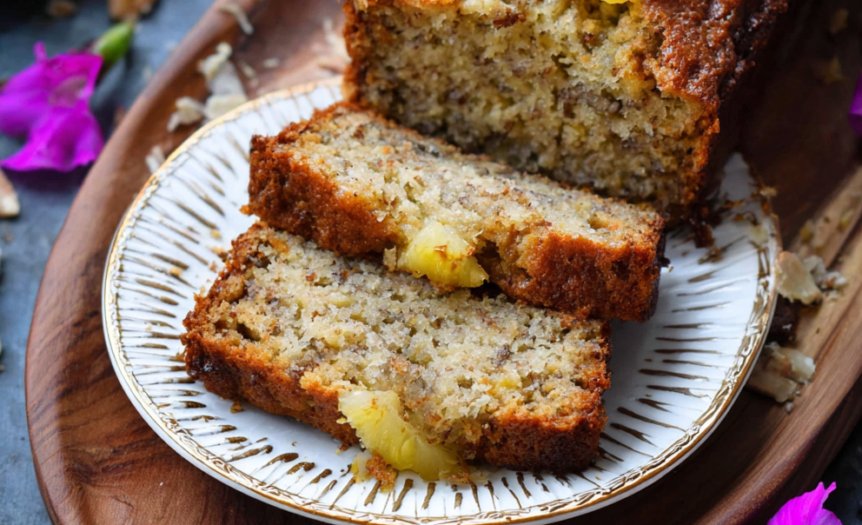
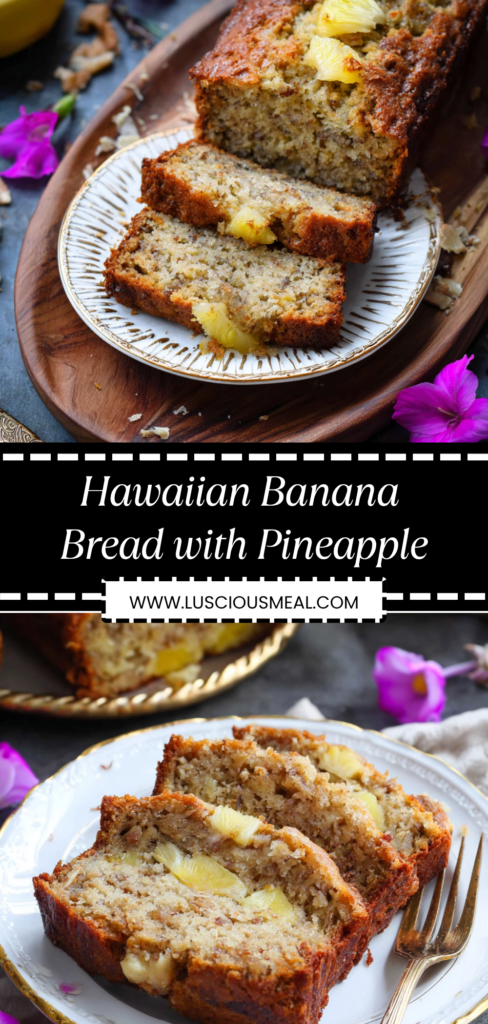
This is the banana bread that makes you close your eyes and imagine ocean breezes—where ripe bananas meet juicy pineapple, toasted coconut, and a hint of rum, creating a tropical paradise in every slice. It’s what happens when classic comfort food takes a vacation to the islands, returning transformed with layers of flavor that transport you straight to a Hawaiian beach, no plane ticket required. One bite and you’ll understand why this isn’t just banana bread—it’s an escape.
Ingredients
For the Bread:
- 2 cups all-purpose flour
- 1 teaspoon baking soda
- ½ teaspoon baking powder
- ½ teaspoon salt
- 1 teaspoon cinnamon
- ½ teaspoon nutmeg
- ½ cup unsalted butter, melted and cooled
- ¾ cup light brown sugar, packed
- ¼ cup granulated sugar
- 2 large eggs, room temperature
- 1 teaspoon vanilla extract
- 1 teaspoon rum extract (or 2 tablespoons dark rum)
- 3 large very ripe bananas, mashed (about 1½ cups)
- ½ cup crushed pineapple, well-drained
- ½ cup sweetened coconut flakes
- ½ cup macadamia nuts, chopped (optional)
For the Pineapple Glaze:
- 1 cup powdered sugar
- 3 tablespoons pineapple juice (reserved from crushed pineapple)
- 1 tablespoon butter, melted
- ½ teaspoon vanilla extract
- Pinch of salt
For the Topping:
- ¼ cup coconut flakes, toasted
- 2 tablespoons macadamia nuts, chopped
- Dried pineapple pieces (optional)
Instructions
- Prepare Your Paradise: Preheat oven to 350°F. Grease a 9×5 inch loaf pan and line with parchment paper, leaving overhang for easy removal. This double insurance prevents sticking of the sugar-rich batter.
- Drain the Pineapple: Place crushed pineapple in fine-mesh strainer over bowl. Press with spoon to extract juice—reserve for glaze. Pat pineapple with paper towels to remove excess moisture. This prevents soggy bread.
- Mix Dry Ingredients: In medium bowl, whisk together flour, baking soda, baking powder, salt, cinnamon, and nutmeg. The spices complement tropical flavors without overwhelming them.
- Combine Wet Ingredients: In large bowl, whisk melted butter with both sugars until smooth. Add eggs one at a time, beating well after each. Stir in vanilla extract and rum extract. The mixture should be glossy and well-combined.
- Mash and Fold: Add mashed bananas to wet ingredients. The bananas should be very ripe—black spots mean more sweetness and flavor. Fold in gently to maintain some texture rather than creating complete puree.
- Create the Batter: Add dry ingredients to wet ingredients in two additions, folding gently just until combined. Don’t overmix—a few flour streaks are fine. Fold in drained pineapple, coconut, and macadamia nuts if using.
- Bake to Golden: Pour batter into prepared pan, smoothing top. Bake 60-70 minutes until toothpick inserted in center comes out with just a few moist crumbs. If top browns too quickly, tent with foil after 45 minutes.
- Cool Properly: Cool in pan 15 minutes, then use parchment to lift out. Cool completely on wire rack before glazing—at least 1 hour. The bread continues cooking and setting during this time.
- Make the Glaze: Whisk together powdered sugar, reserved pineapple juice, melted butter, vanilla, and salt until smooth. Consistency should be thick but pourable—adjust with more juice or sugar as needed.
- Finish with Flair: Pour glaze over cooled bread, letting it drip down sides. Immediately sprinkle with toasted coconut and macadamia nuts while glaze is wet. Let set 15 minutes before slicing.
Recipe Notes
- Prep Time: 20 minutes
- Bake Time: 60-70 minutes
- Cooling Time: 1 hour 15 minutes
- Total Time: 2 hours 45 minutes
- Servings: 10-12 slices
- Calories: 320 per slice
The Tropical Transformation
Traditional banana bread is comfort food perfection, but adding pineapple elevates it to vacation-worthy status. The fruit’s acidity brightens the heavy banana sweetness while adding juicy pockets throughout. Unlike banana’s smooth integration, pineapple maintains distinct bursts of tropical flavor that make each bite interesting.
The crucial draining step can’t be skipped. Pineapple contains significant moisture that would throw off the carefully balanced wet-to-dry ratio. That reserved juice becomes liquid gold for the glaze, concentrating pineapple flavor without adding problematic moisture to the bread itself. Even well-drained, the pineapple contributes enough juice during baking to keep the bread incredibly moist.
Fresh pineapple seems logical but actually works poorly here. The fresh fruit’s enzymes can break down the bread’s structure, creating gummy pockets. Canned crushed pineapple has been heat-processed, deactivating these enzymes while maintaining flavor. It also has consistent sweetness and texture that fresh can’t guarantee.
Banana Ripeness Science
Those black-spotted bananas that look past their prime are actually at their peak for baking. As bananas ripen, starches convert to sugars, creating the sweetness that defines great banana bread. Very ripe bananas also mash more easily, incorporating better into batter while maintaining some textural interest.
The three-banana measurement isn’t arbitrary—it provides ideal moisture and flavor intensity. Fewer leaves bread dry and lacking banana impact; more creates dense, gummy texture. The 1½ cups mashed measurement accounts for size variations. When in doubt, err on the side of slightly more rather than less.
Room temperature bananas mash more easily and incorporate better than cold. If your bananas aren’t quite ripe enough, bake them in their peels at 300°F for 15-20 minutes until blackened. This accelerates the ripening process, though naturally ripened always taste superior.
Coconut Considerations
Sweetened coconut flakes provide better flavor and texture than unsweetened in this application. The added sugar helps them caramelize slightly during baking, creating delightful crispy edges. Unsweetened coconut can taste dry and bland by comparison. The sweetness also balances the pineapple’s acidity.
Toasting coconut for the topping intensifies flavor and adds textural contrast. Spread on baking sheet and toast at 325°F for 5-7 minutes, stirring frequently. It browns quickly—watch carefully. The difference between perfectly golden and burnt is mere seconds. Cool completely before using as garnish.
Some prefer shredded coconut for more even distribution, while flakes provide better visual impact and textural interest. Both work—choose based on preference. For coconut haters (they exist!), simply omit. The bread remains delicious, just less tropically complex.
The Macadamia Question
Macadamia nuts are the luxury addition that pushes this from great to extraordinary. Their buttery richness and slight crunch provide perfect contrast to the soft bread. Toasting before adding intensifies their flavor—5 minutes in a dry skillet until fragrant and lightly golden.
The cost of macadamias leads many to substitute. Chopped cashews provide similar buttery notes at lower cost. Pecans or walnuts work but change the flavor profile from tropical to more traditional. For nut-free versions, add extra coconut or nothing—the bread stands alone beautifully.
Chop nuts medium-fine for even distribution. Too large and they create structural weak points where bread can break; too fine and you lose textural interest. That optional designation acknowledges not everyone appreciates nuts in their quick breads, no matter how perfectly they complement the flavors.
Mixing Method Mastery
The two-bowl method ensures proper texture. Overmixing develops gluten, creating tough, dense bread rather than tender crumb. Mix wet and dry separately, then combine with minimal stirring. The batter should look rough and slightly lumpy—perfectionist smooth mixing guarantees disappointing texture.
Adding dry ingredients in two batches prevents the overwhelming that leads to overmixing. Fold gently from bottom to top, rotating bowl as you work. Stop the moment flour disappears. Those last few streaks will incorporate during the folding in of add-ins.
The fold-in technique for pineapple and coconut prevents breaking down delicate ingredients. Use rubber spatula with gentle bottom-to-top motion. Distribute evenly but don’t obsess—some variation in each slice adds charm. The goal is incorporation, not homogenization.
Temperature and Timing
That 60-70 minute range accounts for oven variations and pan materials. Dark pans cook faster than light; glass takes longer than metal. The toothpick test remains the gold standard—a few clinging crumbs indicate perfection. Completely clean means overbaked; wet batter means more time needed.
The 15-minute pan cooling prevents breaking while allowing structure to set. Too short and the bread falls apart when removed; too long and trapped steam makes the bottom soggy. Using parchment overhang eliminates the precarious inversion moment—simply lift straight up.
Complete cooling before glazing isn’t just patience-testing—it’s necessary. Warm bread causes glaze to melt and absorb rather than creating that beautiful glossy coating. The bread also continues developing flavor during cooling as moisture redistributes and flavors meld.
Glaze Glory
The pineapple glaze transforms good bread into tropical spectacular. Using reserved pineapple juice concentrates flavor while utilizing every bit of ingredient. The butter adds richness and helps glaze set with slight shine. Vanilla rounds out flavors while salt enhances sweetness.
Consistency adjustment requires finesse. Too thick and it won’t flow attractively; too thin and it soaks in rather than coating. Temperature affects consistency—warm glaze flows more than cool. If it thickens while working, microwave 10 seconds to restore fluidity.
Work quickly once glazing begins. Pour down center, letting it naturally flow to edges. Use offset spatula to guide, not spread. The organic drips down sides look better than perfect coverage. Immediately add toppings while glaze is wet for proper adhesion.
Storage Strategies
Proper storage maintains the bread’s incredible moistness. Wrap tightly in plastic wrap, then foil for double protection. Room temperature storage for 3 days preserves best texture. Refrigeration extends life to a week but can dry the crumb slightly.
This bread freezes exceptionally well. Wrap individual slices for grab-and-go convenience. Freeze up to 3 months. Thaw at room temperature or toast directly from frozen. The high sugar and fat content prevents freezer damage, maintaining quality remarkably well.
For gifting, wait to glaze until just before giving. Include small container of glaze for recipient to apply. This prevents glaze from softening during transport and allows fresh presentation. Include storage instructions for maximum enjoyment.
Variations on Paradise
Tropical Rum Cake Style: Brush warm bread with rum simple syrup. Replace water in glaze with rum. Adults only but incredibly delicious.
Mango Madness: Replace half the pineapple with diced dried mango. Add mango extract to glaze. Tropical complexity increases exponentially.
Lime Coconut: Add 2 tablespoons lime zest to batter. Replace pineapple juice in glaze with lime juice. Garnish with candied lime peel.
Chocolate Chip Tropical: Fold in ½ cup white chocolate chips. They melt slightly, creating pockets of creamy sweetness that complement fruit beautifully.
Healthy Hawaiian: Use whole wheat flour for half the all-purpose. Replace some sugar with honey. Add chia seeds for nutrition boost.
Troubleshooting Paradise
“Bread sank in middle”: Too much leavening or oven door opened too early. Check expiration dates and resist peeking until final 10 minutes.
“Dense and heavy”: Overmixed batter or too much fruit. Mix minimally and ensure proper draining of pineapple.
“Bland flavor”: Bananas not ripe enough or spices old. Use very ripe bananas and fresh spices for maximum impact.
“Soggy bottom”: Underbaked or pineapple not drained properly. Ensure proper baking time and thorough draining.
“Dry texture”: Overbaked or incorrect measurements. Check oven temperature and measure carefully, especially flour.
The Aloha Factor
This bread embodies the spirit of aloha—warmth, generosity, and joy shared through food. It’s the kind of baking that creates memories, whether served at brunches, given as gifts, or enjoyed with afternoon coffee. The tropical flavors transport you momentarily from daily routine to island paradise.
Making this bread fills your kitchen with aromas that rival any expensive candle—banana, pineapple, toasted coconut, and warm spices creating an olfactory vacation. It’s aromatherapy you can eat, proving that baking feeds more than just hunger.
Final Thoughts
This Hawaiian Banana Bread with Pineapple proves that classic recipes benefit from tropical vacation. By incorporating island flavors while respecting the original’s appeal, we create something both familiar and exotic. The combination of sweet bananas, tangy pineapple, rich coconut, and buttery macadamias delivers paradise in every slice. Master this recipe and you’ll have a signature bake that brings sunshine to any table, regardless of weather or latitude. Sometimes the best souvenirs are the ones you create in your own kitchen.