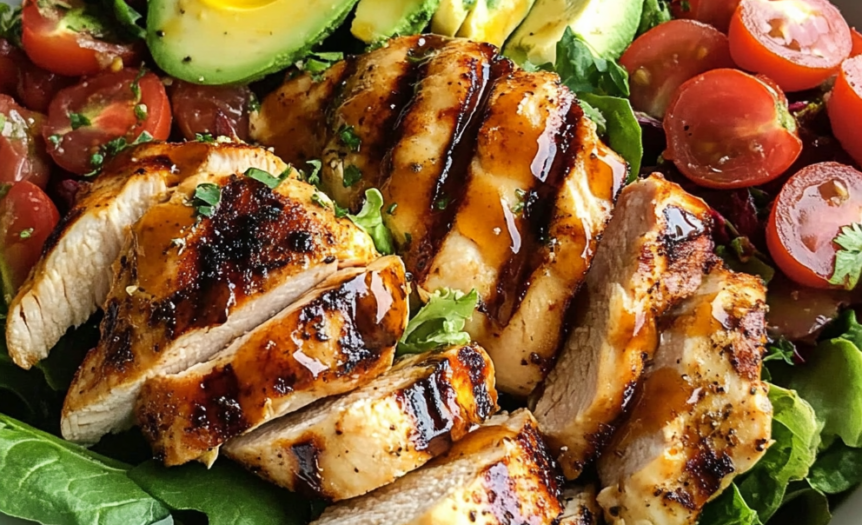
This paleo-friendly take on the classic Cobb salad transforms the restaurant favorite into a nutrient-dense powerhouse that doesn’t sacrifice any of the satisfying flavors or textures that make the original so beloved. Perfectly grilled chicken breast provides lean protein, while a rainbow of fresh vegetables, creamy avocado, and hard-boiled eggs create layers of flavor and nutrition that keep you satisfied for hours. The homemade honey Dijon dressing ties everything together with its perfect balance of sweet and tangy notes, proving that eating clean doesn’t mean giving up the foods you love—it means making them better.
Ingredients
For the Grilled Chicken:
- 4 boneless, skinless chicken breasts (6-8 oz each)
- 3 tablespoons extra virgin olive oil
- 2 tablespoons fresh lemon juice
- 2 cloves garlic, minced
- 1 teaspoon dried oregano
- 1 teaspoon smoked paprika
- ½ teaspoon garlic powder
- ½ teaspoon onion powder
- 1 teaspoon salt
- ½ teaspoon black pepper
For the Honey Dijon Dressing:
- ¼ cup extra virgin olive oil
- 3 tablespoons apple cider vinegar
- 2 tablespoons Dijon mustard
- 2 tablespoons raw honey
- 1 tablespoon fresh lemon juice
- 1 clove garlic, minced
- ½ teaspoon salt
- ¼ teaspoon black pepper
- 1 tablespoon fresh chives, finely chopped
For the Salad Base:
- 8 cups mixed greens (romaine, arugula, and spinach)
- 2 cups cherry tomatoes, halved
- 1 large cucumber, diced
- 1 large avocado, sliced
- 4 hard-boiled eggs, halved
- ½ red onion, thinly sliced
- 1 cup sugar snap peas, trimmed and halved
- ½ cup radishes, thinly sliced
For the Turkey Alternative:
- 8 oz nitrate-free turkey, sliced and pan-seared
- 1 tablespoon coconut oil for cooking
- ¼ teaspoon smoked paprika
- Salt and pepper to taste
For Garnish:
- ¼ cup toasted pumpkin seeds
- 2 tablespoons fresh herbs (chives, parsley, or dill)
- Lemon wedges for serving
Instructions
Step 1: Prepare the Chicken Marinade
In a shallow dish or resealable bag, whisk together olive oil, lemon juice, minced garlic, oregano, smoked paprika, garlic powder, onion powder, salt, and pepper to create a flavorful marinade.
Add the chicken breasts to the marinade, ensuring they’re completely coated. If using a dish, flip the chicken once to coat both sides. Marinate for at least 30 minutes at room temperature, or up to 4 hours in the refrigerator for deeper flavor penetration.
The acid in the lemon juice helps tenderize the chicken while the herbs and spices create a flavorful crust when grilled. Don’t marinate longer than 4 hours, as the acid can start to break down the protein too much.
Step 2: Perfect the Hard-Boiled Eggs
Place eggs in a single layer in a saucepan and cover with cold water by about 1 inch. Bring to a rolling boil over high heat, then immediately remove from heat and cover the pan.
Let stand for 12 minutes for perfectly set yolks with no green ring. Transfer eggs to an ice bath to stop the cooking process and make them easier to peel.
Once cooled, gently crack and peel the eggs under cool running water. The shells should slip off easily. Cut in half just before serving to maintain the best appearance.
Step 3: Create the Honey Dijon Dressing
In a small bowl, whisk together apple cider vinegar, Dijon mustard, raw honey, lemon juice, minced garlic, salt, and pepper until well combined. The mixture should be smooth and emulsified.
Slowly drizzle in the olive oil while whisking continuously to create a stable emulsion. The dressing should be creamy and well-integrated, not separated.
Stir in the fresh chives and taste for seasoning adjustments. The dressing should balance sweet, tangy, and savory notes. Let it sit for 15 minutes to allow the flavors to meld before using.
Step 4: Prepare the Fresh Components
Wash and thoroughly dry all greens, then tear or chop into bite-sized pieces. Mix the romaine, arugula, and spinach in a large serving bowl—this combination provides varied textures and flavors.
Halve the cherry tomatoes and place them on paper towels to drain excess moisture. This prevents the salad from becoming watery.
Dice the cucumber into uniform pieces, slice the red onion as thinly as possible, and trim the sugar snap peas. Arrange all vegetables in separate bowls for easy assembly.
Step 5: Master the Grilling Technique
Preheat your grill or grill pan to medium-high heat. Remove chicken from marinade and let excess drip off—too much marinade can cause flare-ups and uneven cooking.
Grill the chicken for 6-7 minutes on the first side without moving it, allowing proper searing and grill marks to develop. Flip and continue cooking for 5-6 minutes until the internal temperature reaches 165°F.
Let the chicken rest for 5 minutes before slicing—this allows the juices to redistribute throughout the meat, ensuring moist, tender results. Slice against the grain into ½-inch thick strips.
Step 6: Prepare the Turkey Alternative
If using turkey instead of or in addition to chicken, heat coconut oil in a large skillet over medium-high heat. Season the turkey slices with smoked paprika, salt, and pepper.
Sear the turkey for 2-3 minutes per side until heated through and slightly crispy on the edges. This adds textural interest and enhances the smoky flavor.
Remove from heat and let cool slightly before adding to the salad. The warm turkey creates a nice temperature contrast with the cool vegetables.
Step 7: Assembly Artistry
Arrange the mixed greens as the foundation in a large serving platter or individual bowls. This creates the canvas for your colorful toppings.
Arrange the grilled chicken, halved eggs, cherry tomatoes, cucumber, avocado slices, red onion, sugar snap peas, and radishes in organized sections over the greens. This classic Cobb presentation allows each person to get their preferred combination of ingredients.
Just before serving, drizzle the honey Dijon dressing over the entire salad, or serve it on the side for individual portion control.
Step 8: Final Touches and Presentation
Sprinkle toasted pumpkin seeds over the salad for added crunch and healthy fats. These provide a nutty flavor and satisfying texture contrast to the tender vegetables.
Garnish with fresh herbs like chives, parsley, or dill for color and additional flavor complexity. The herbs also add a fresh, bright note that enhances the overall eating experience.
Serve with lemon wedges on the side for those who enjoy extra citrus brightness. The additional acid helps cut through the richness of the avocado and eggs.
Prep Time: 25 minutes | Marinate Time: 30 minutes | Cook Time: 15 minutes | Total Time: 1 hour 10 minutes | Servings: 4 | Calories: 485 per serving
Understanding Paleo Principles in Salad Making
The paleo approach to this classic Cobb salad focuses on whole, unprocessed foods that our ancestors would have recognized. This means eliminating traditional Cobb ingredients like blue cheese and croutons while enhancing the natural flavors of vegetables, high-quality proteins, and healthy fats.
The beauty of paleo eating lies in how it naturally emphasizes nutrient density—every ingredient serves a purpose beyond just taste, providing vitamins, minerals, healthy fats, or complete proteins that support optimal health.
By focusing on seasonal vegetables and high-quality animal proteins, this salad becomes not just a meal but a nutrient powerhouse that satisfies hunger while supporting energy levels throughout the day.
Chicken Marination Science and Technique
The marinade for this chicken serves multiple purposes beyond just flavor enhancement. The acid from lemon juice begins to break down the protein fibers, creating more tender meat, while the oil helps carry fat-soluble flavors into the meat.
The combination of dried and fresh aromatics creates layers of flavor—oregano and smoked paprika provide earthy depth, while fresh garlic adds pungent brightness that penetrates the meat during marination.
Timing is crucial with marinades containing acid. Thirty minutes to four hours is the sweet spot for chicken breasts—long enough for flavor penetration but not so long that the acid over-tenderizes the meat and creates a mushy texture.
Mastering Honey Dijon Emulsification
Creating a stable honey Dijon dressing requires understanding the science of emulsification—the process of combining oil and water-based ingredients into a smooth, cohesive mixture.
The Dijon mustard acts as an emulsifier, containing natural compounds that help oil and vinegar combine smoothly. The honey adds sweetness while also contributing to emulsion stability through its natural sugars.
The key to successful emulsification is gradual oil incorporation while whisking vigorously. Adding oil too quickly can cause the emulsion to break, resulting in a separated, greasy dressing instead of the smooth, creamy consistency you want.

Vegetable Selection and Preparation Strategies
The vegetable combination in this salad is carefully chosen to provide varied textures, flavors, and nutritional profiles. Romaine provides crunch and acts as a neutral base, while arugula adds peppery bite and spinach contributes iron and folate.
Cherry tomatoes offer concentrated flavor and natural sweetness, while their smaller size makes them easier to eat in a composed salad. Halving them allows their juices to mingle with the dressing, enhancing overall flavor.
Sugar snap peas add satisfying crunch and natural sweetness while providing fiber and vitamin C. Their bright green color also contributes to the visual appeal that makes this salad as beautiful as it is delicious.
Protein Variety and Cooking Methods
While grilled chicken is the star protein, the addition of hard-boiled eggs provides different textures and a complete amino acid profile. Eggs also contain choline, which supports brain health and metabolism.
The optional turkey component adds variety and can accommodate different preferences or dietary needs. The quick searing method creates textural interest while warming the turkey slightly, creating pleasant temperature contrast in the finished salad.
For those following strict paleo guidelines, ensure any processed turkey is free from nitrates, sugar, and other non-paleo additives. Reading labels carefully ensures compliance with paleo principles.
Advanced Grilling Techniques for Perfect Chicken
Achieving perfectly grilled chicken requires attention to temperature, timing, and technique. Medium-high heat creates proper searing without burning, while the resting period after cooking ensures juicy results.
The key to avoiding dry chicken is not overcooking—use an instant-read thermometer to check for 165°F internal temperature. Carryover cooking will bring the temperature up a few more degrees during resting.
Slicing against the grain is crucial for tender bites. Look for the direction of the muscle fibers and cut perpendicular to them, creating shorter fibers that are easier to chew.
Nutritional Powerhouse Analysis
This salad provides an impressive nutritional profile with high-quality complete proteins from chicken and eggs, healthy monounsaturated fats from avocado and olive oil, and a wide array of vitamins and minerals from the diverse vegetable selection.
The combination of protein and healthy fats helps stabilize blood sugar levels, preventing the energy crashes often associated with carb-heavy meals. This makes it ideal for sustained energy throughout the day.
The variety of colorful vegetables ensures a broad spectrum of antioxidants and phytonutrients, supporting immune function and overall health while providing fiber for digestive health.
Creative Seasonal Variations
This base recipe adapts beautifully to seasonal ingredient availability. Spring versions might include asparagus, peas, and fresh herbs, while summer variations could feature bell peppers, corn, and fresh berries.
Fall adaptations work well with roasted butternut squash, Brussels sprouts, and toasted nuts, while winter versions might include roasted root vegetables and pomegranate seeds for color and antioxidants.
The key is maintaining the balance of proteins, healthy fats, and vegetables while adapting to what’s fresh and available in your area.
Storage and Meal Prep Strategies
This salad is ideal for meal prep when components are stored separately. Cook chicken and eggs up to 3 days ahead, prep vegetables up to 2 days ahead, and store dressing for up to a week.
Assemble individual portions in containers with dressing on the side to prevent wilting. Add avocado just before eating to prevent browning, or toss cut avocado with lemon juice for longer storage.
The chicken can be grilled in larger batches and used throughout the week in various applications, making this an efficient use of prep time.
Equipment and Technique Optimization
A good grill or grill pan is essential for achieving the proper char and flavor on the chicken. Cast iron grill pans work well for indoor cooking and create attractive grill marks.
A high-quality chef’s knife makes vegetable prep faster and more enjoyable, while a mandoline can create perfectly uniform onion and radish slices for professional presentation.
Invest in a reliable instant-read thermometer for perfectly cooked chicken every time—this eliminates guesswork and ensures food safety.
Troubleshooting Common Issues
Dry Chicken: Usually caused by overcooking or insufficient marination time. Use a thermometer and don’t exceed 165°F internal temperature.
Broken Dressing: Occurs when oil is added too quickly or ingredients are at different temperatures. Start over with fresh mustard and add oil very slowly while whisking.
Wilted Greens: Prevent by thoroughly drying greens after washing and adding dressing just before serving. Store dressed salads no longer than 2 hours.
Bland Flavor: Often indicates under-seasoning or insufficient marination time. Taste and adjust seasonings in both the marinade and dressing.
Dietary Adaptations and Modifications
For those following AIP (Autoimmune Protocol), omit eggs and nightshade vegetables, substituting with compliant alternatives like cucumber and radishes for crunch.
Whole30 participants should ensure honey is omitted from the dressing during their elimination phase, substituting with compliant sweeteners like date paste if needed.
For those with egg allergies, additional avocado or nuts can replace the protein and richness that eggs provide while maintaining the salad’s satisfying nature.
Presentation and Entertaining Tips
For elegant entertaining, consider serving this as a composed salad with each ingredient arranged in attractive sections. This creates visual impact and allows guests to customize their portions.
Individual serving bowls work well for casual gatherings, while a large platter creates a beautiful centerpiece for buffet-style serving.
Consider providing the dressing in small individual containers for those who prefer to control their own portions, accommodating different dietary preferences and restrictions.
Final Thoughts
This Paleo Grilled Chicken Cobb Salad with Honey Dijon Dressing proves that healthy eating doesn’t require sacrificing flavor, satisfaction, or visual appeal. By focusing on high-quality whole foods and proper preparation techniques, this salad delivers everything you want from a great meal—outstanding taste, beautiful presentation, and nourishing ingredients that leave you feeling energized rather than sluggish.
The combination of perfectly grilled chicken, fresh seasonal vegetables, and homemade dressing creates a restaurant-quality experience at home while supporting your health goals. The technique of properly marinating and grilling the chicken, combined with the art of creating a stable, flavorful dressing, provides skills that will serve you well in countless other recipes.
Whether you’re following paleo principles strictly or simply looking for a delicious, nutritious meal that happens to be grain and dairy-free, this salad delivers satisfaction on every level. The beautiful array of colors, textures, and flavors makes it as appropriate for special occasion entertaining as it is for weeknight family dinners, proving that the best recipes are those that nourish both body and soul while bringing people together around the table.